Connectivity
Flex Plus stations support cellular, Ethernet, and Wi‑Fi network connections. An active, reliable internet connection is necessary to enable all station features. Refer to the subsections below for configuration details.
Cellular Connectivity
A consistently strong cellular signal is needed before installers can activate the vehicle charging station. Weak or sporadic signal can affect crucial aspects of the charging station, including:
-
Accuracy in reporting
-
Ability for drivers to use the mobile app
-
Ability for customer support to troubleshoot problems
-
Support for advanced features such as Power Management or Waitlist
A strong signal is also required for the ChargePoint Assure maintenance and management programs.
ChargePoint stations use cellular data connections to reach ChargePoint Cloud Services. This allows secure, PCI-compliant data connections without requiring any other form of internet connectivity at an install site or imposing additional network management responsibilities on a site host.
Each station has its own cellular connection.
Signal Strength and Quality
You must use a cellular signal detection device (such as a Siretta Snyper LTE Long Term Evolution or equivalent) to take signal strength readings at the exact proposed mounting location of the charging station.
You must test the LTE Long Term Evolution signal strength at the proposed mounting location of every station and ensure the location meets the minimum RSRQ at -12.5 dB or better, for RSRP measured at -90 dBm or better. Refer to the graph for acceptable combinations.
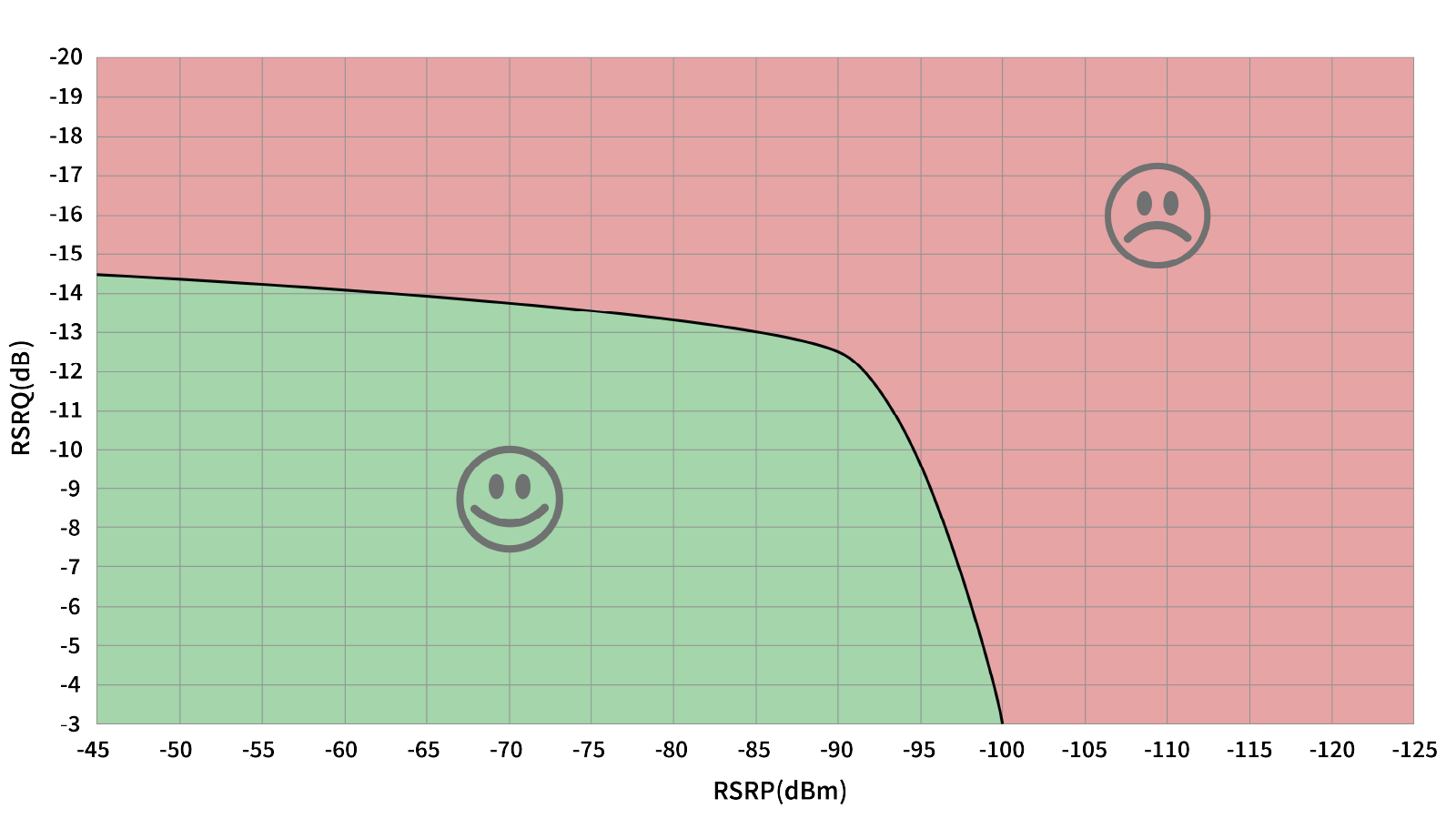
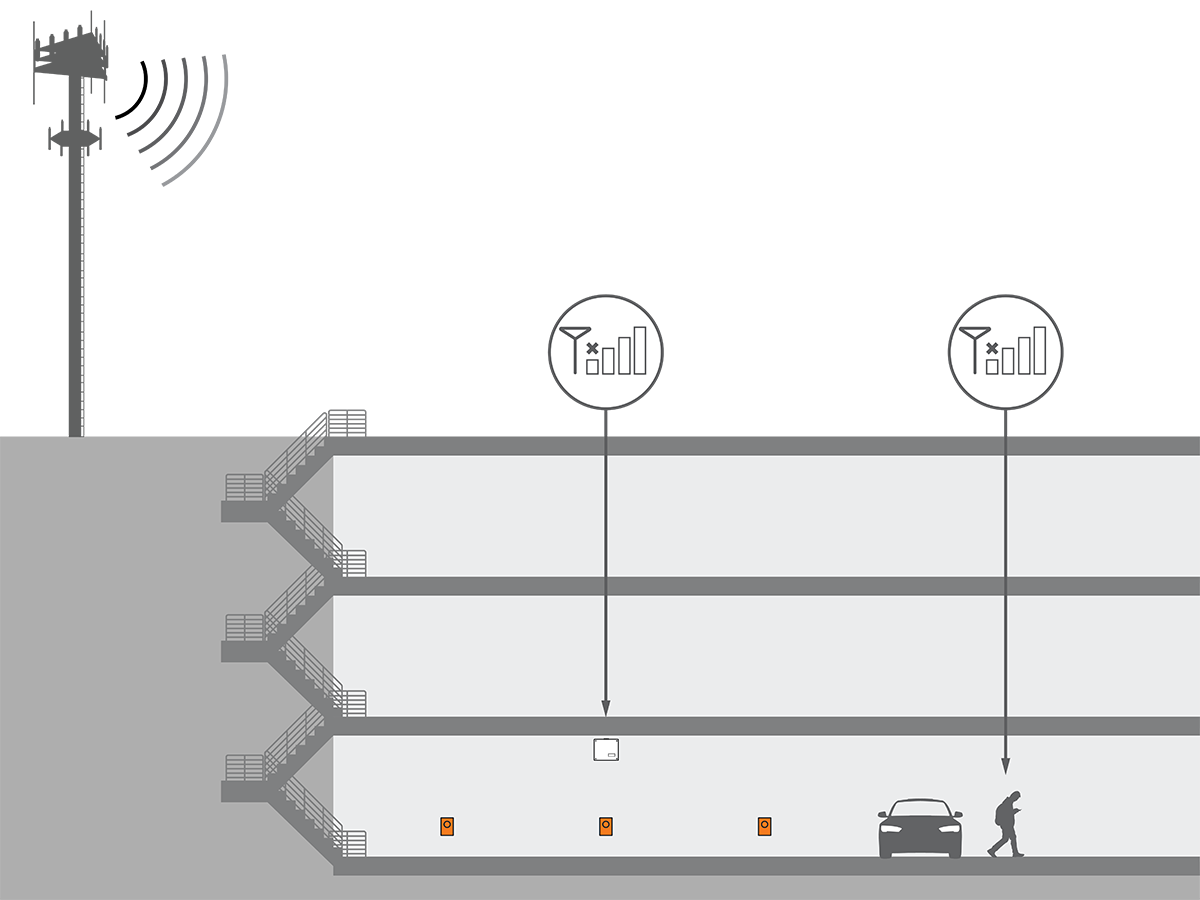
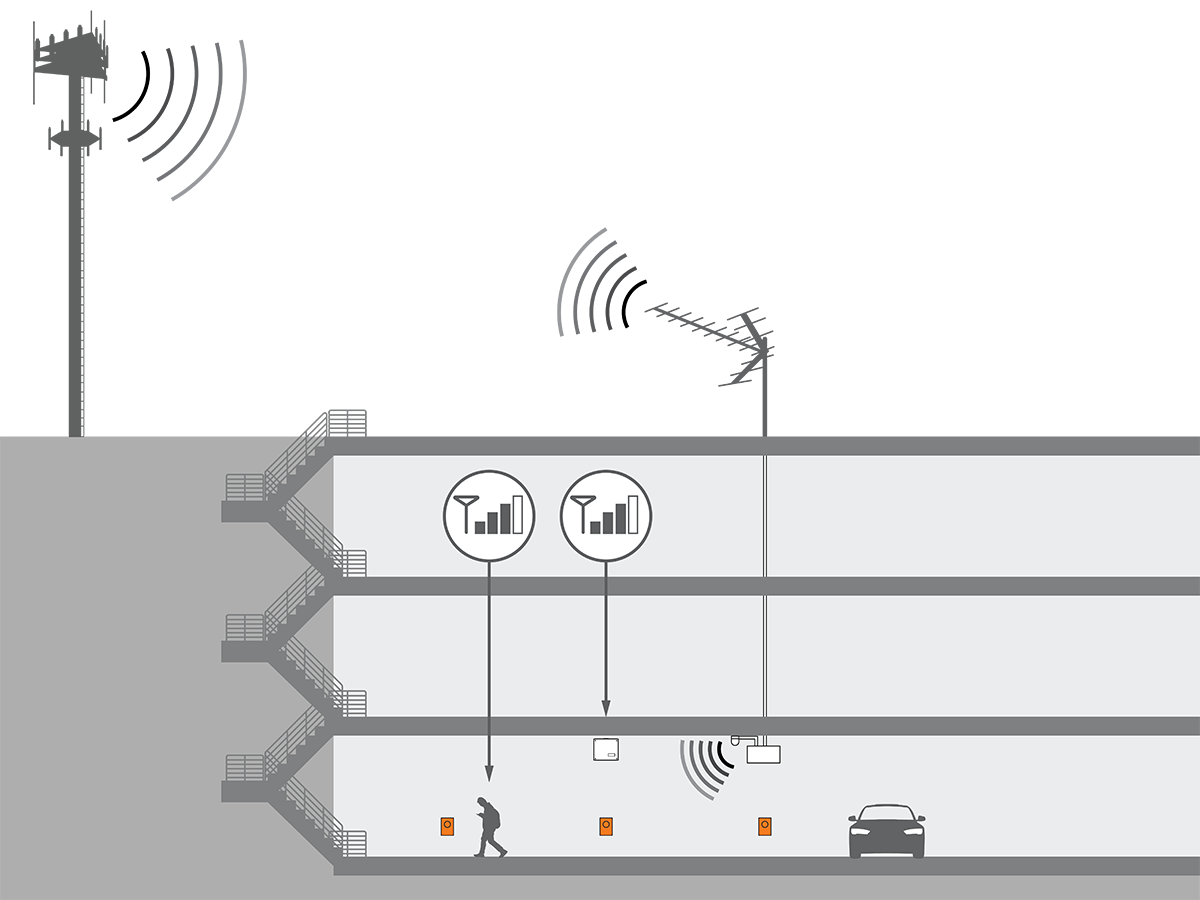
If the signal strength is weaker than this, take cellular readings at the location where any cellular signal booster antennas will be installed. Ensure enough signal exists for that repeater model. Install repeaters to boost the strength of the cellular signals. Repeaters are often required when installing charging stations in an underground garage or enclosed parking structure.
For other regions, or if the site does not have strong signal on these bands, contact your ChargePoint representative for additional solutions.
ChargePoint strongly recommends a consultation with a cellular connectivity specialist before all installations. A consultation can verify:
-
Service with a supported carrier on a supported LTE
Long Term Evolution band -
Available signal and local noise levels on applicable bands
-
Site changes to correctly meet your needs, both for station bandwidth and other phone coverage for customer or tenant satisfaction
Repeaters
Some sites require repeaters to ensure strong signal to all stations. If a repeater is required, look for a model with these features:
-
Specifically LTE
Long Term Evolution-compatible on the listed bands -
Multi-carrier
-
Multi-band
-
Not already dedicated to FirstNet or other first responder-specific networks
-
Auto-gain recommended
Distributed Antenna System), micro/nano/pico/femto-cells, and carrier- or band-specific signal boosters.
Ethernet Connectivity
The Ethernet network configuration must meet the following conditions to support reliable station connectivity:
-
A Local Area Network (LAN
Local Area Network) must be available on site with an open Ethernet port on the switch or router. The LAN Local Area Network is managed by the site host, and the charging station requires only a standard Ethernet port for connectivity.ChargePoint provides and supports the Ethernet interface internal to the charging station; all external network infrastructure and configuration are the responsibility of the site host.
-
The LAN
Local Area Network must be configured to use DHCP Dynamic Host Configuration Protocol. -
The LAN
Local Area Network must support IPv4. ChargePoint requires the use of IPv4 currently. -
If the LAN
Local Area Network is a shared network, it must provide sufficient capacity and device isolation. ChargePoint recommends an isolated network. -
If the LAN
Local Area Network uses an outbound firewall, it must allow the following connections:-
HTTPS over TCP port 443
-
VPN over TCP ports 52007–52017
-
NTP
Network Time Protocol over UDP port 123; DNS Domain Name System over UDP port 53
-
-
Site connectivity must be validated.
-
An IP address must be assigned (Link State)
-
The VPN server must be reachable.
-
The Ethernet cable must meet the required specification for the length of the run:
-
For runs under 100 m: outdoor‑rated Cat6 STP
Shielded Twisted Pair or higher (Cat6a, Cat7, Cat7a, Cat8). -
For runs between 100 m and 200 m: use an outdoor‑rated, shielded Ethernet cable specifically engineered and certified for extended‑distance operation (100–200 m).
-
-
Ethernet runs must not exceed 200 m.
-
The cable shield must be properly grounded.
Wi-Fi Connectivity
Reliable wireless communication is critical for Flex Series stations that rely on Wi‑Fi. Because ChargePoint does not validate or manage customer Wi‑Fi networks, the site host is responsible for ensuring that their network can provide the coverage, stability, and performance required for proper station operation.
Wi-Fi Network Availability and Configuration
The installation environment must account for the following factors to maintain a reliable Wi‑Fi connection:
-
A Wi‑Fi network must be available at the installation location for each charging station. The Wi-Fi
Wireless Fidelity network is managed by the site host. ChargePoint is only responsible for the wireless interface within the EV Electric Vehicle charging station. -
Wi‑Fi signal strength at each charger location must be sufficient to support reliable communication. ChargePoint recommends a minimum signal strength: -65 dBm or better at the charger mounting location.
-
The site must provide the Wi‑Fi band(s) supported by the station (2.4 GHz and/or 5 GHz). ChargePoint recommends 2.4GHz for improved range and wall penetration.
-
The Wi‑Fi network must be configured to broadcast its SSID
Set Service Identifier. Hidden networks are not supported. -
The Wi‑Fi network must use DHCP
Dynamic Host Configuration Protocol to assign IP addresses. DHCP Dynamic Host Configuration Protocol is required. -
The network must support IPv4 addressing. ChargePoint requires the use of IPv4 currently.
-
If the Wi‑Fi network is shared with other devices (such as guest Wi‑Fi, corporate devices, or IoT equipment), it must have sufficient capacity and bandwidth to support the charging stations without degradation. ChargePoint recommends using a dedicated or isolated network (such as a VLAN or separate SSID
Set Service Identifier) for EV Electric Vehicle charging stations.
Security and Authentication
The Wi‑Fi network configuration must meet the following conditions to ensure reliable station connectivity:
-
The Wi‑Fi network must use a supported security protocol (WPA2‑PSK). WPA3 and WPA2‑Enterprise are not supported.
-
MAC
Message Authentication Code address filtering must be disabled on the Wi‑Fi network. MAC Message Authentication Code address filtering is not supported. -
Proxy servers and captive portals must be disabled for the charger’s Wi‑Fi connection. Captive portals and interactive login pages are not supported.
Firewall and Network Access Requirements
If the network uses an outbound firewall, it must allow the following connections:
-
HTTPS over TCP port 443
-
VPN over TCP ports 52007–52017
-
NTP
Network Time Protocol over UDP port 123 -
DNS
Domain Name System over UDP port 53