Connectivity
A consistently strong cellular signal is needed before installers can activate the vehicle charging station. Weak or sporadic signal can affect crucial aspects of the charging station, including:
-
Accuracy in reporting
-
Ability for drivers to use the mobile app
-
Ability for customer support to troubleshoot problems
-
Support for advanced features such as Power Management or Waitlist
A strong signal is also required for the ChargePoint Assure maintenance and management programs.
ChargePoint stations use cellular data connections to reach ChargePoint Cloud Services. This allows secure, PCI-compliant data connections without requiring any other form of internet connectivity at an install site or imposing additional network management responsibilities on a site host.
Each station has its own cellular connection.
Celullar connection is needed only if there is no Ethernet to USB Universal Serial Bus network connection.
Signal Strength and Quality
You must use a cellular signal detection device (such as a Siretta Snyper LTE Long Term Evolution or equivalent) to take signal strength readings at the exact proposed mounting location of the charging station. If the charging station does not have its own cellular connection, take the signal strength reading at the proposed mounting location of the gateway station.
In North America, ChargePoint products all support LTE Long Term Evolution bands 2, 4, and 5. The most commonly supported carriers to check during site evaluation are:
-
US: AT&T, T-Mobile, and Verizon
-
Canada: Rogers, Telus, and Bell
In Europe, ChargePoint products all support LTE Long Term Evolution bands 1, 3, 7, 8, and 20. 900 and 1800 MHz are also supported for 2G fallback. Partners vary by country.
You must test the LTE Long Term Evolution signal strength at the proposed mounting location of every station and ensure the location meets the minimum RSRQ at -12.5 dB or better, for RSRP measured at -90 dBm or better. Refer to the graph for acceptable combinations.
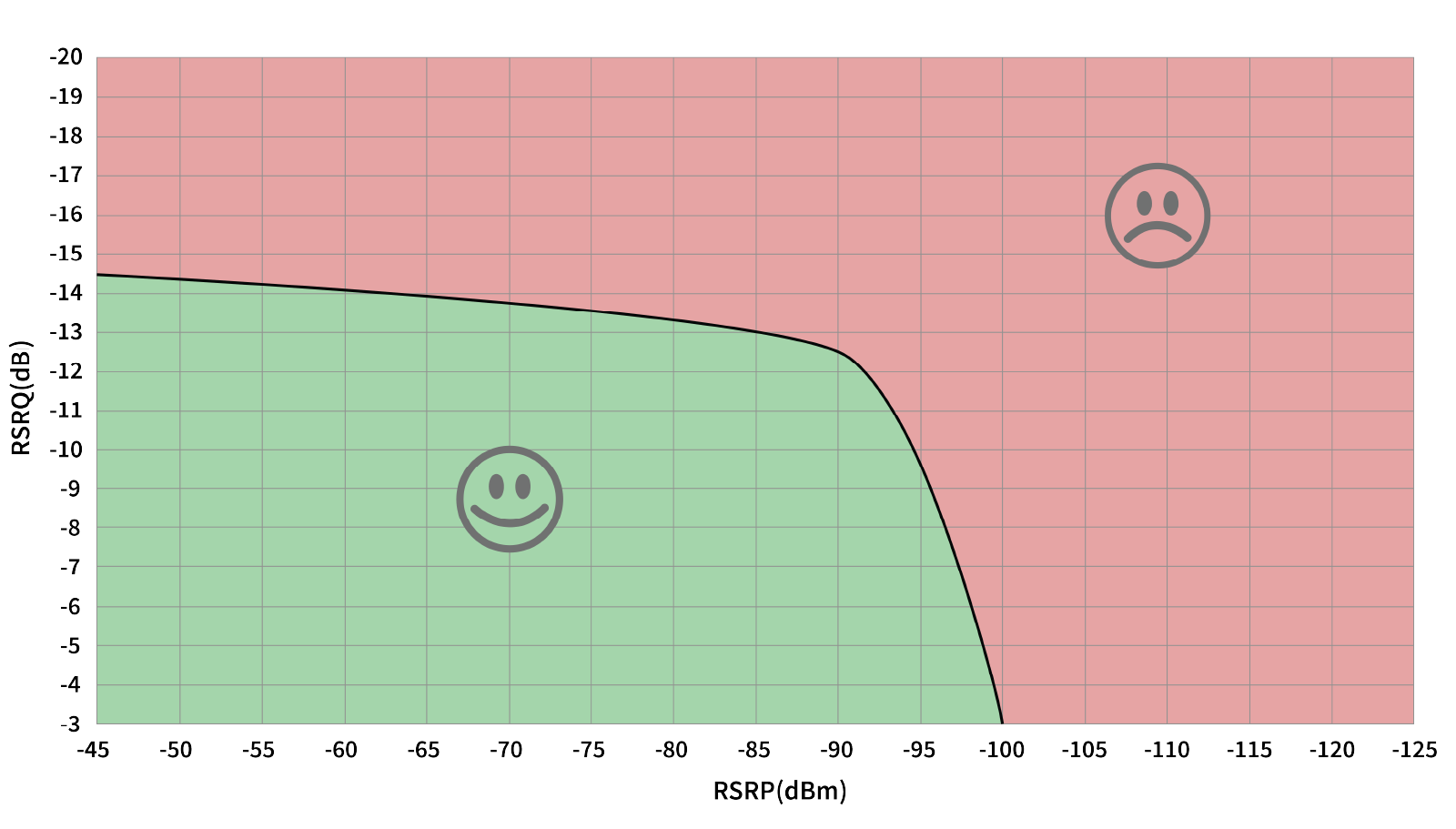
If the signal strength is weaker than this, take cellular readings at the location where any cellular signal booster antennas will be installed. Ensure enough signal exists for that repeater model. Install repeaters to boost the strength of the cellular signals. Repeaters are often required when installing charging stations in an underground garage or enclosed parking structure.
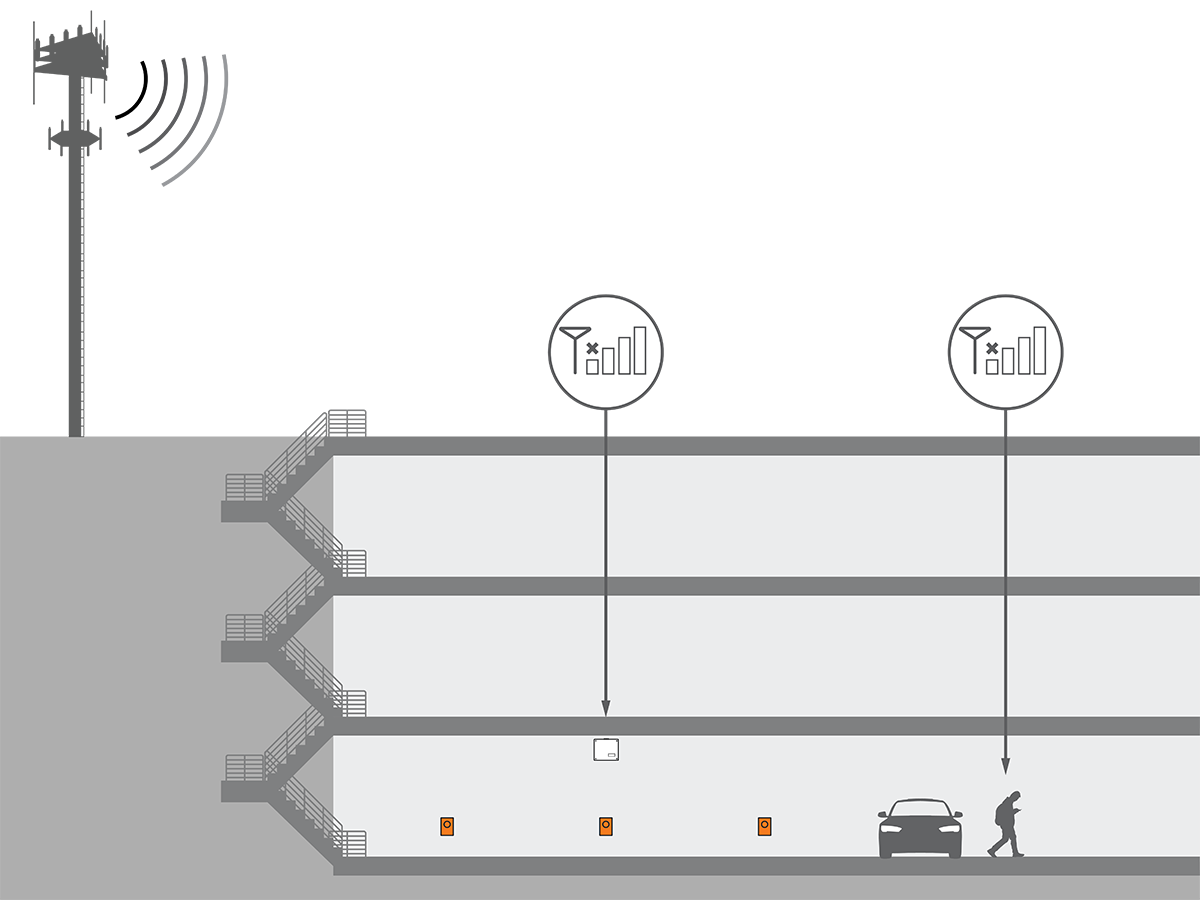
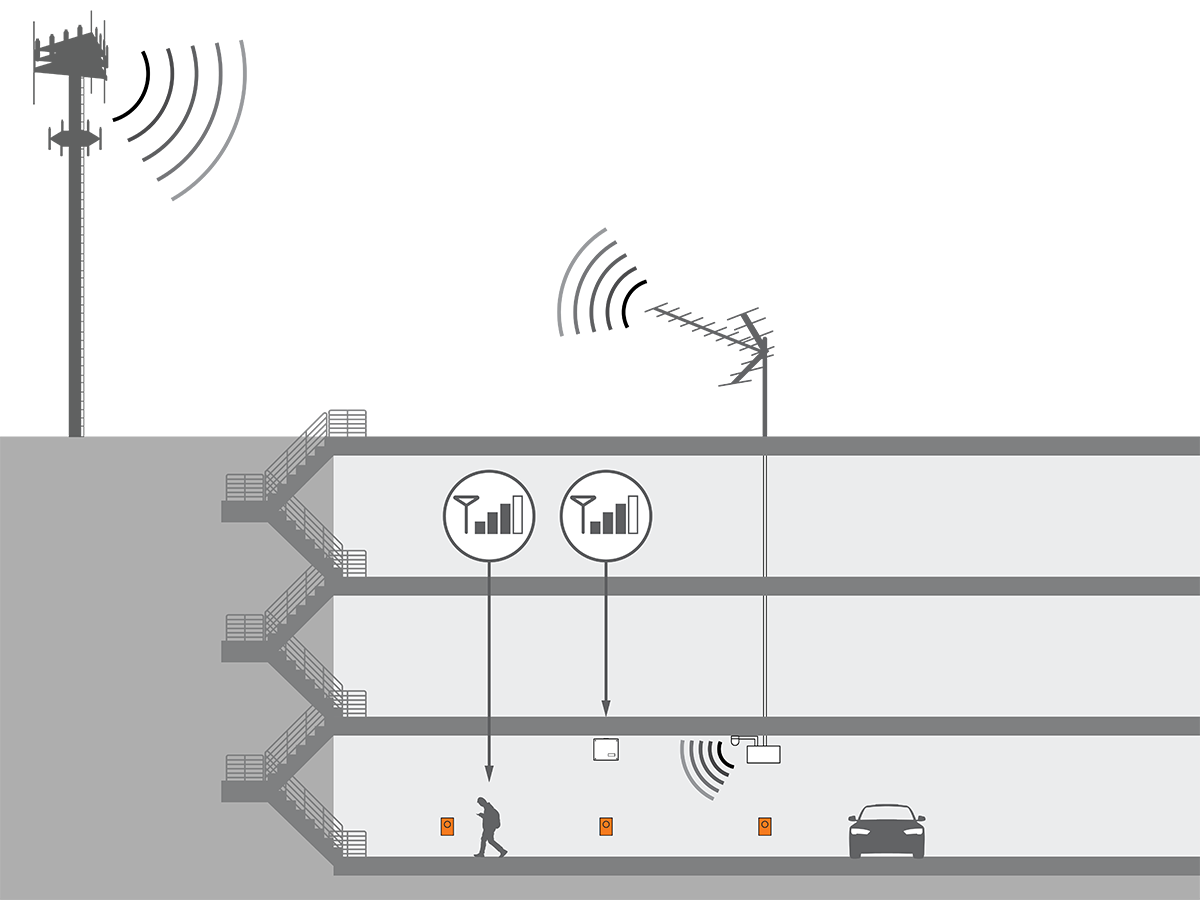
For other regions, or if the site does not have strong signal on these bands, contact your ChargePoint representative for additional solutions.
ChargePoint strongly recommends a consultation with a cellular connectivity specialist before all installations. A consultation can verify:
-
Service with a supported carrier on a supported LTE
Long Term Evolution band -
Available signal and local noise levels on applicable bands
-
Site changes to correctly meet your needs, both for station bandwidth and other phone coverage for customer or tenant satisfaction
Repeaters
Some sites require repeaters to ensure strong signal to all stations. If a repeater is required, look for a model with these features:
-
Specifically LTE
Long Term Evolution-compatible on the listed bands -
Multi-carrier
-
Multi-band
-
Not already dedicated to FirstNet or other first responder-specific networks
-
Auto-gain recommended
Distributed Antenna System), micro/nano/pico/femto-cells, and carrier- or band-specific signal boosters.
Repeaters are not allowed in France. Contact the French service provider for more information.