Prepare for Installation
This section describes how to prepare for the installation.
Check Site Readiness
To check site readiness, complete this checklist before you install Power Link 2000.
|
Express PlusPower Link 2000 Site Readiness Checklist |
|||||||
|---|---|---|---|---|---|---|---|
|
Power Blocks are installed at locations proposed in the site drawings. |
☐ | |||||
|
The concrete pad or concrete surface meets the mounting specifications given in the Express Plus Power Link 2000 Site Design Guide and/or is inspected and approved by a structural engineer for the dimensions and weights (as given in the Express Plus Power Link 2000 Site Design Guide) of the Power Link 2000 and its related components such as charging cable(s) and Cable Management Kit (CMK |
☐ | |||||
|
Wires and conduits meet the requirements given in the site drawings. |
☐ | |||||
|
The electrical equipment is installed and labeled in accordance with the National Electrical Code (NEC |
☐ | |||||
|
The installation site meets the drainage, ventilation guidelines, and clearances given in the Express Plus Power Link 2000 Site Design Guide. |
☐ | |||||
|
The slope at the installation site does not exceed 20 mm per meter (0.25 in per ft). If necessary, use a grinder or a hammer and chisel to remove any concrete that is not level with the rest of the concrete pad or surface. |
☐ | |||||
|
Sufficient space is available to use a forklift or other lifting equipment, unpack, remove packing materials, and allow two people to freely move throughout the site. |
☐ | |||||
|
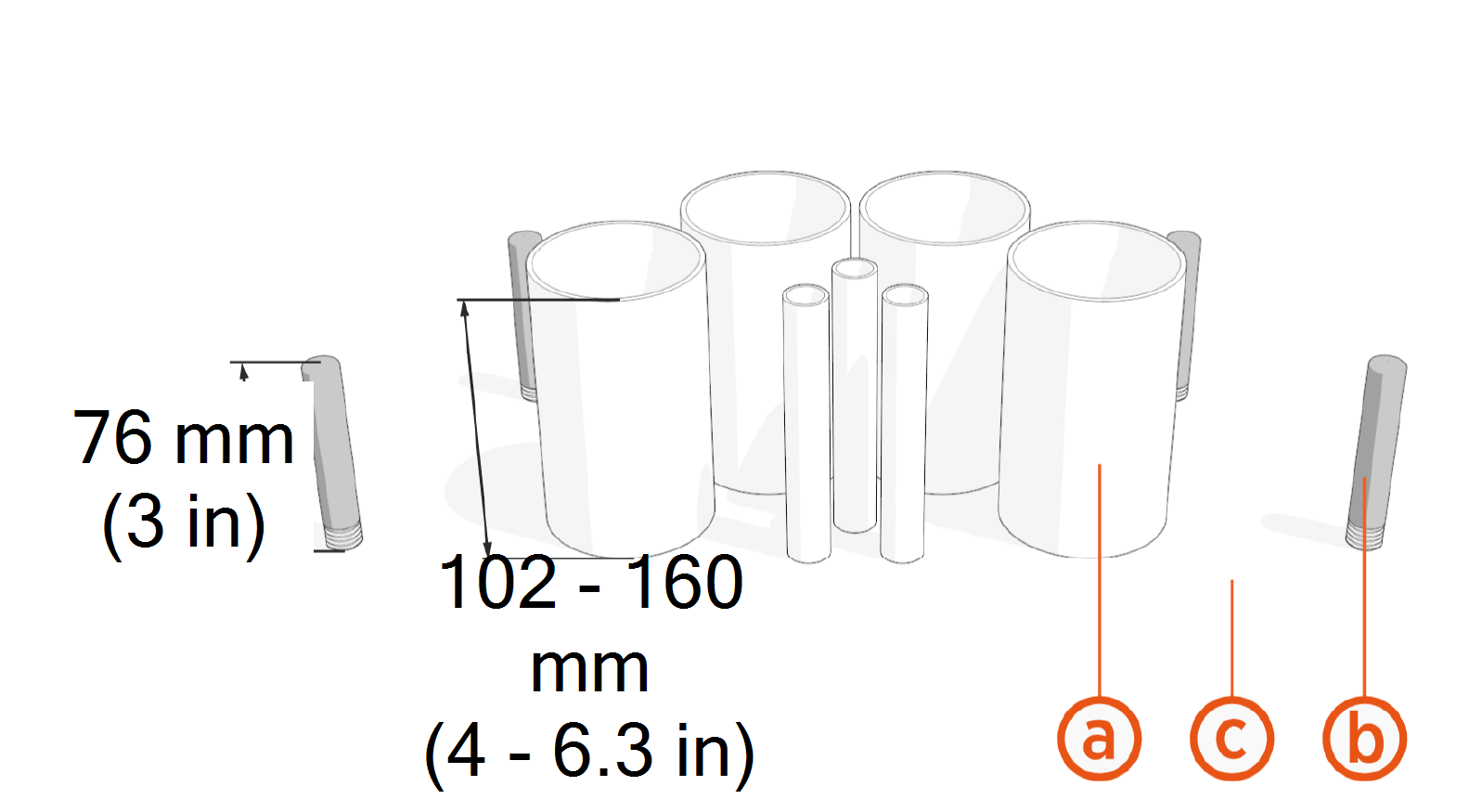
The anchor bolts, conduits, and concrete pad meet the requirements listed below:
|
☐ | |||||
|
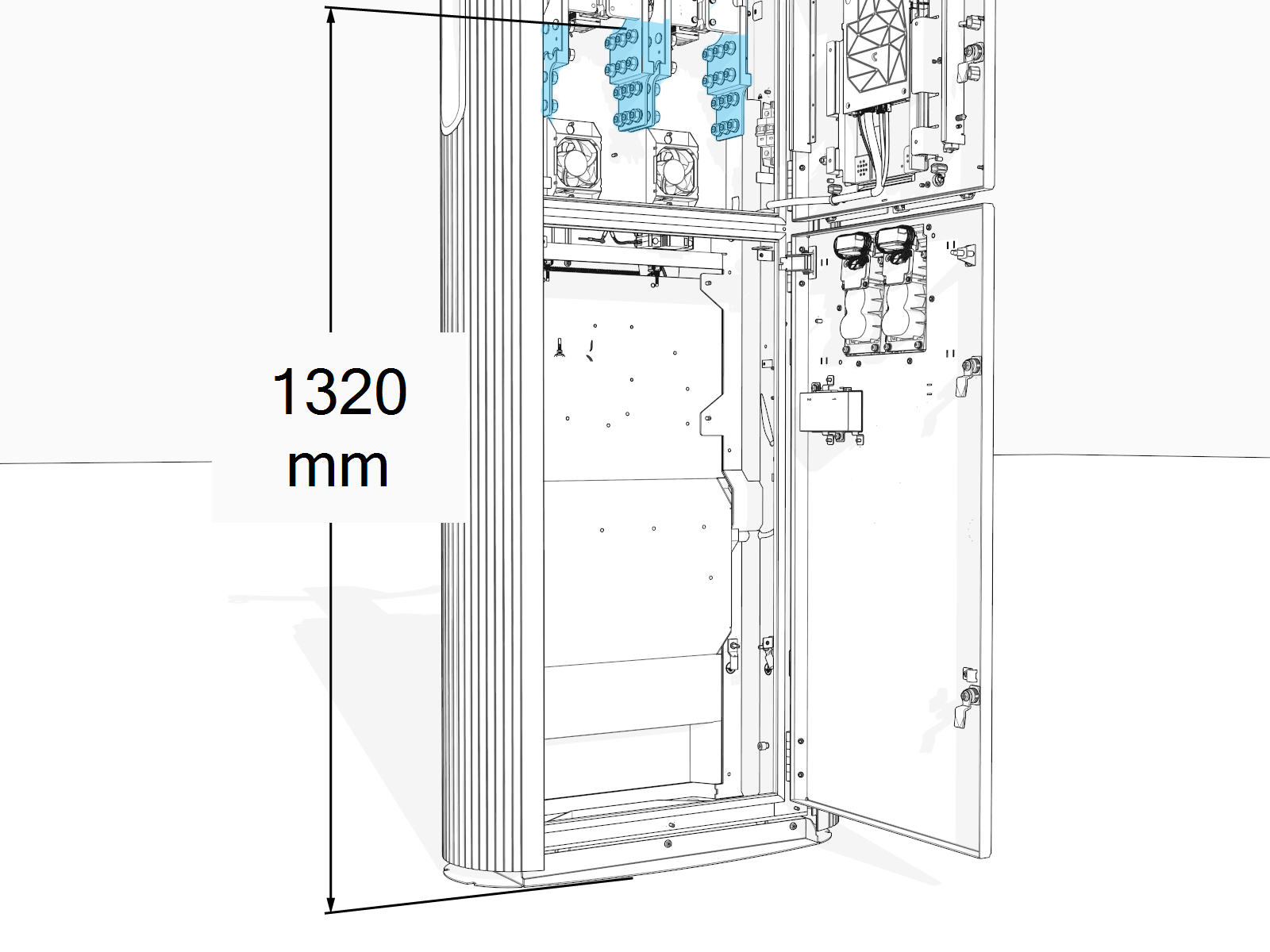
In regions that use conduits, wires can be pulled before or after mounting the Power Link 2000. If you want to pull wires before mounting or if the site is using armored cables directly buried and exposed from underground, make sure that the wires reach the bus bars at the following height.
|
☐ | |||||
Check Electrical Readiness
For electrical input and output specifications, refer to the Power Link 2000 Datasheet and Express Plus Power Link 2000 Site Design Guide at ChargePoint Product Reference Documentation .
Understand Wire Landing Locations
Depending on configuration, the pedestal-mount Power Link 2000 has one or two HV DC High Voltage Direct Current power paths, named A and B. Each power path has two wire landings, an upper landing and a lower landing. Power Link 2000s with a single charging cable are configured with Power Path B landings only.
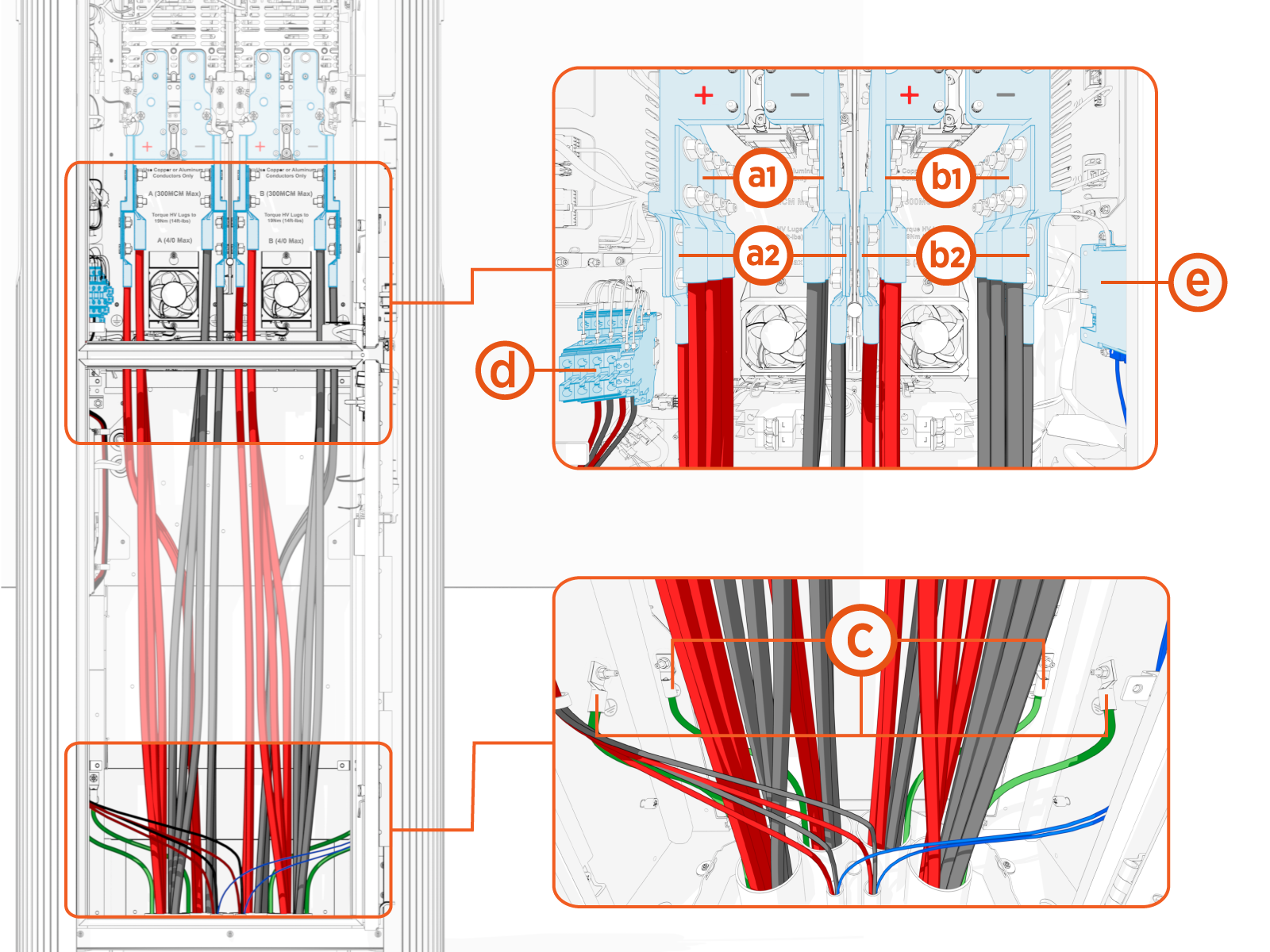
(a1) HV DC High Voltage Direct Current Power Path A, upper landing
(a2) HV DC High Voltage Direct Current Power Path A, lower landing
(b1) HV DC High Voltage Direct Current Power Path B, upper landing
(b2) HV DC High Voltage Direct Current Power Path B, lower landing
(c) Ground
(d) LV DC Low Voltage Direct Current
(e) Ethernet
Bring These Tools and Resources
Installing the Power Link 2000 requires at least two people. Additionally, the installer must bring the following tools and materials. These are not provided by ChargePoint.
Comply with these guidelines to prevent component damage.
-
Use tools suitable to torque metric fasteners. All fasteners used on the Power Link 2000 are in metric sizes.
-
Use the given torque values to tighten the fasteners.
-
Ensure that the tools such as torque tool, multimeter, and Ethernet tester are calibrated.
Required Tools and Materials
|
|
Forklift with anti-slip forks
|
|
Stepladder |
|
|
Industrial vacuum cleaner |
|
Paper towel roll |
|
|
Wire brush (to remove any residue on anchor bolts) |
|
Duct seal compound |
|
|
Hard hat |
|
Cut-resistant gloves |
|
|
Safety glasses |
|
Cable ties |
|
|
Cable puller or fish tape |
|
Measuring tape or other tool to measure linear dimensions |
|
|
Level |
|
Lockout/Tagout equipment |
|
|
Multimeter (meter and probes rated for 1000 V) |
|
Ethernet tester such as a Klein Tools VDV526-052 VDV LAN |
|
|
Conduit cutter (refer to site plans for conduit sizes) |
|
Box cutter |
|
|
Wire cutters |
|
Wire strippers |
|
|
Lug crimping tool and die |
|
Ethernet (RJ45) connector crimping tool |
|
|
Torque wrench |
|
Torque screwdriver |
|
|
Shallow hex socket set (7 mm, 10 mm, 17 mm) and 24 mm deep socket |
|
Hex wrench set |
|
|
Torx screwdriver (T20, T30) |
|
T25 Security screwdriver |
|
|
Flathead screwdriver set, including 2.5 mm and 3.5 mm tip for terminal blocks |
|
Phillips head screwdriver set |
|
|
Torque paint pen |
|
Permanent marker |
|
|
Anti-oxidant joint compound (to make gastight joint between wire and lug) and wire pulling lubricant |
|
Dielectric grease |
|
|
Smartphone with:
|
|
|
|
|
|
|
|





































Wires and Terminations Required for Site
-
For AC and DC high voltage (HV
High Voltage), high current wiring, use copper or aluminum wires rated for 90 °C (194 °F).-
AC high current wires can be THHN
Thermoplastic High Heat-Resistant Nylon-Coated/THHW Thermoplastic High Heat-Tesistant, Water-Resistant/THW Thermoplastic Heat-Resistant, Water-Resistant-2/THWN-2 based on site condition (dry or wet) and rated for 600 V. -
DC HV
High Voltage wires can be XHHW/XHHW-2 based on site condition (dry or wet) and rated for 1000 V.
-
-
For low voltage (LV
Low Voltage) DC wiring, use only copper wires (XHHW/XHHW-2 based on site condition, dry or wet) rated for 1000 V and 75 °C (167 °F). -
Use copper lugs for copper wires and aluminum lugs for aluminum wires. The lugs must be nickel, tin, or silver plated compression (not mechanical) lugs. Nickel-plated lugs installed with dielectric grease is recommended.
|
Wire |
Quantity |
Size |
Termination |
|---|---|---|---|
|
HV DC Power Paths A and B (max. 500 A per landing) |
Max. 12 wires per Power Path (three wires per pole on each landing) |
Upper landings: Max. 150 mm2 (300 MCM)(*) |
Lug: Long barrel and tongue with two holes spaced 44.5 mm (1.75 in) apart and sized for M12 studs. Max. lug tongue width: 31 mm (1.25 in) for upper landings, 25.9 mm (1 in) for lower landings. Aluminum lug max. tongue thickness: 10 mm (0.4 in) for upper landings, 5 mm (0.2 in) for lower landing. |
|
Lower landings: Max. 120 mm2 (4/0 AWG |
|||
|
Ground |
Max. 6 wires (one per Power Block) |
Refer to the local code for size; max. 50 mm2 (1/0 AWG |
Lug: Short barrel and tongue with single hole, sized for M6 stud. |
|
Max. 8 wires (four wire pairs; each pair has one wire per pole) |
16 mm2 (6 AWG |
Stripped wire |
|
|
Ethernet |
Max. 4 cables |
Outdoor-rated Cat6 STP |
RJ45 connector |
|
Soft shutdown switch(***) |
2 wires |
2.5 mm2 (14 AWG |
Stripped wire |
(*) If utilizing both upper and lower landings, the maximum HV DC High Voltage Direct Current wire size is 120 mm2 (4/0 AWG American Wire Gauge).
(**) The required Ethernet cable type depends upon the cable run length. See the Express Plus Power Link 2000 Site Design for details.
(***) Soft shutdown switch is an optional feature.
Tightening Torque
|
Component (xFastener Quantity) |
Component Material |
Fastener |
Tool |
Torque |
|---|---|---|---|---|
|
Charging cable bus bar safety cover (x1 or x2) |
Plastic |
M4 |
T20 Torx |
1.7 Nm (15 in-lb) |
|
Top cap, front (x2) |
Plastic |
M4 |
T25 Security |
|
|
CMK tetherball (x5) |
Metal |
M4 |
T20 Torx |
2.8 Nm (25 in-lb) |
|
Standard holster (x4 or x8) |
Plastic |
M5 |
T25 Security |
|
|
Top cap, rear (x2) |
Plastic |
M5 |
T25 Security |
|
|
Charging cable assembly (x4 or x8) |
Metal |
M5 |
T25 Security |
4.5 Nm (40 in-lb) |
|
SCE mounting bracket (x4) |
Metal |
M5 |
8 mm socket |
|
|
Ethernet to USB (x2) |
Metal |
M5 |
8 mm socket |
|
|
Conduit opening sleeve or gland plate (x2) |
Metal |
M5 |
T25 Security |
|
|
Omni Port (x2) |
Metal |
M5 |
T25 Security |
|
|
Metal |
M5 |
T25 Security |
||
|
Side panels (x2 or x4) |
Metal |
M5 |
T25 Security |
|
|
Ground wire lug nut (up to x4) |
Metal |
M6 |
10 mm socket |
5.6 Nm (50 in-lb) |
|
Charging cable HV DC wire lug nuts(x8 or x16) |
Metal |
M6 |
10 mm socket |
|
|
Charging cable ground wire lug nut (x1 or x2) |
Metal |
M6 |
10 mm socket |
|
|
Metal |
M6 |
T25 Security |
||
|
CMK mast (x8) |
Metal |
M6 |
T30 Torx |
|
|
Overhead CMK screws (x4) |
Metal |
M6 |
T25 Security |
3.4 Nm (30 in-lb) |
|
Overhead CMK nuts (x4) |
Metal |
M8 |
13 mm socket |
12.2 Nm (108 in-lb) |
|
Metal |
M8 |
13 mm socket |
||
|
Tall CMK assembly (x4) |
Metal |
M10 |
6 mm hex |
13.5 Nm (120 in-lb) |
|
HV DC wire lug nuts (up to x48) |
Metal |
M10 |
17 mm socket |
19 Nm (14 ft-lb) |
|
Metal |
M16 |
24 mm deep socket |
54.2 Nm (40 ft-lb) |
|
|
Metal |
M16 |
24 mm deep socket |
94.9 Nm (70 ft-lb) |
|
|
LV wire terminal block set screws (up to x8) |
|
|
3.5 mm flathead screwdriver |
1.5 Nm (13.3 in-lb) |
|
|
|
2.5 mm flathead screwdriver |
0.6 Nm (5.3 in-lb) |
Power Link 2000 Packages

The crate is heavy and can cause injury or death if dropped. Do not stand or walk beneath the crate while it is being lifted. Take precautions against the crate tipping or sliding.
Leave components in the shipping crate until needed. When removing, protect them from damage (such as scratches) by placing them flat on a blanket or tarp, face up. Do not stand up cover panels, as they may be knocked or blown over. Cover charging connectors to prevent damage or ingress.
Package Configurations, Dimensions, and Weights
Power Link 2000 with non-LCC
Power Link 2000 with non-LCC Liquid Cooled Cable ship with the charging station enclosure, charging cable, and cable management kit (CMK Cable Management Kit) each placed in separate packages. Also, the cosmetic top cap and covers ship together in a separate package.
|
Package |
Variant |
Dimensions (L x W x H) |
Max. Weight |
|---|---|---|---|
|
Power Link 2000 non-LCC configuration (enclosure only) |
- |
2.34 x 0.96 x 0.61 m (92.25 x 38.13 x 24.13 in) |
173 kg (380 lbs) |
|
(non-LCC |
Standard length (5.8 m or 19 ft) |
0.72 x 0.58 x 0.22 m (28.45 x 22.74 x 8.75 in) |
23 kg (50 lbs) |
|
Medium length(7.6 m or 25 ft) |
32 kg (70 lbs) |
||
|
Standard |
1.12 x 0.65 x 0.24 m (44.13 x 25.75 x 9.5 in) |
28 kg (60 lbs) |
|
|
Tall |
1.87 x 0.35 x 0.40 m (73.50 x 14.75 x 16.13 in) |
41 kg (90 lbs) |
|
|
Overhead CMK |
0.45 x 0.40 x 0.18 m (17.50 x 15.88 x 7 in) |
12 kg (25 lbs) |
|
|
(top cap and covers) |
- |
1.11 x 0.53 x 0.64 m (44 x 21 x 25 in) |
15 kg (34 lbs) |
Power Link 2000 with LCC
Power Link 2000 with LCC Liquid Cooled Cable ship with the charging station enclosure, charging cables, and standard CMK Cable Management Kit placed in a single package. The charging cables and CMK Cable Management Kit mast are preinstalled on the charging station enclosure. The cosmetic top cap and covers ship together in a separate package.
|
Package |
Variant |
Dimensions (L x W x H) |
Max. Weight |
|---|---|---|---|
|
Power Link 2000 LCC configuration (enclosure with dual LCCs and standard CMK |
- |
2.49 x 1.12 x 0.82 m (98 x 44 x 32.38 in) |
318 kg (700 lbs) |
|
(top cap and covers) |
- |
1.11 x 0.53 x 0.64 m (44 x 21 x 25 in) |
15 kg (33 lbs) |
(*) The LCC Liquid Cooled Cable(s) and CMK Cable Management Kit mast ship preinstalled on the charging station enclosure.
Additional Kits
|
Package |
Variant |
Dimensions (L x W x H) |
Max. Weight |
|---|---|---|---|
|
Ethernet to USB |
- |
0.3 x 0.39 x 0.22 m (11.81 x 15.35 x 8.66 in) |
1.36 kg (3 lb) |
|
Card Reader Kit |
- |
0.89 x 0.63 x 0.29 m (35.13 x 24.75 x 11.38 in) |
0.5 kg (1 lb) |
|
Sequential Charging Kit |
- |
0.27 x 0.18 x 0.05 m (10.6 x 7.0 x 1.8 in) |
2.3 kg (5 lb) |
Power Link 2000 Non-LCC Configuration Package
Check the package for the following components:
For any missing component, contact chargepoint.com/support.
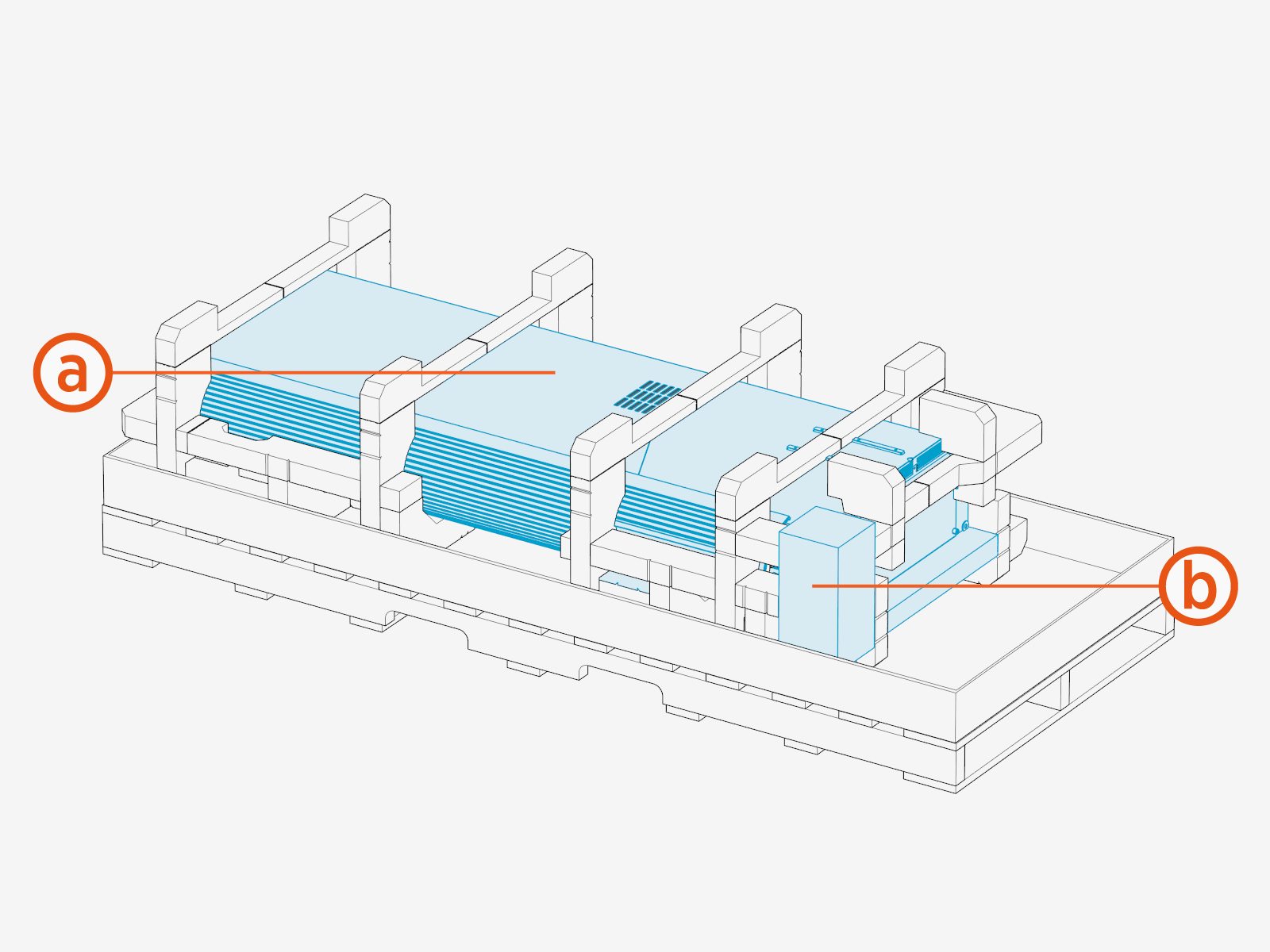
-
Power Link 2000 assembly
-
Install kit, which contains the following components:
-
M16 hex nuts and washers for mounting Power Link 2000 (x12)
-
T25 Security screwdriver
-
Sealant for sealing the conduit opening (x5)
-
Power Link 2000 LCC Configuration Package
Check the package for the following components:
For any missing component, contact chargepoint.com/support
.
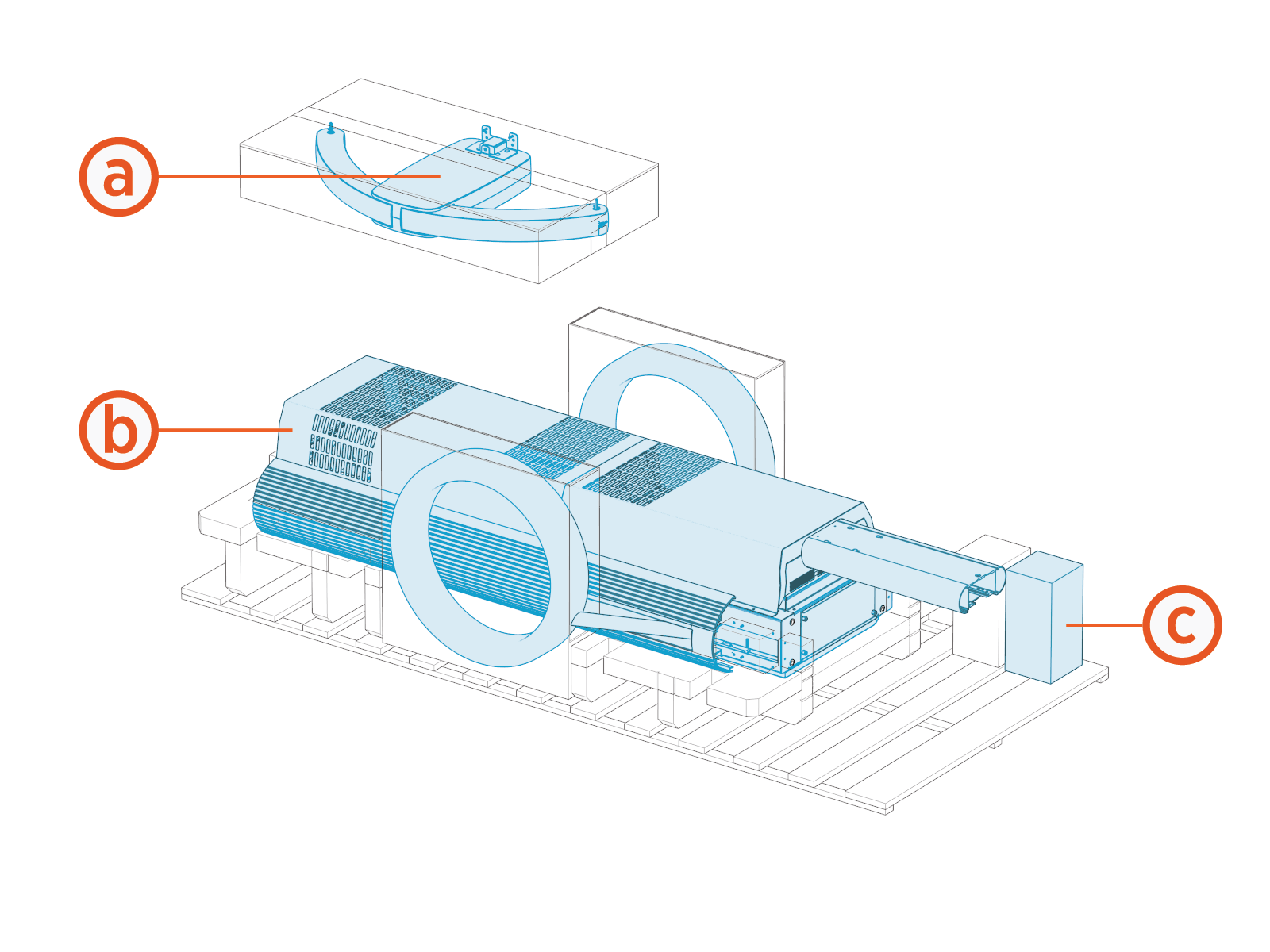
-
CMK
Cable Management Kit swingarm assembly with one or two swingarms -
Power Link 2000 assembly with pre-installed charging cables and CMK
Cable Management Kit mast -
Install kit, which contains the following components:
-
M16 hex nuts and washers for mounting Power Link 2000 (x12)
-
T25 Security screwdriver
-
Sealant for sealing the conduit opening (x5)
-
Cosmetic Kit Package
Check the cosmetic kit package for the following components:
For any missing component, contact chargepoint.com/support.
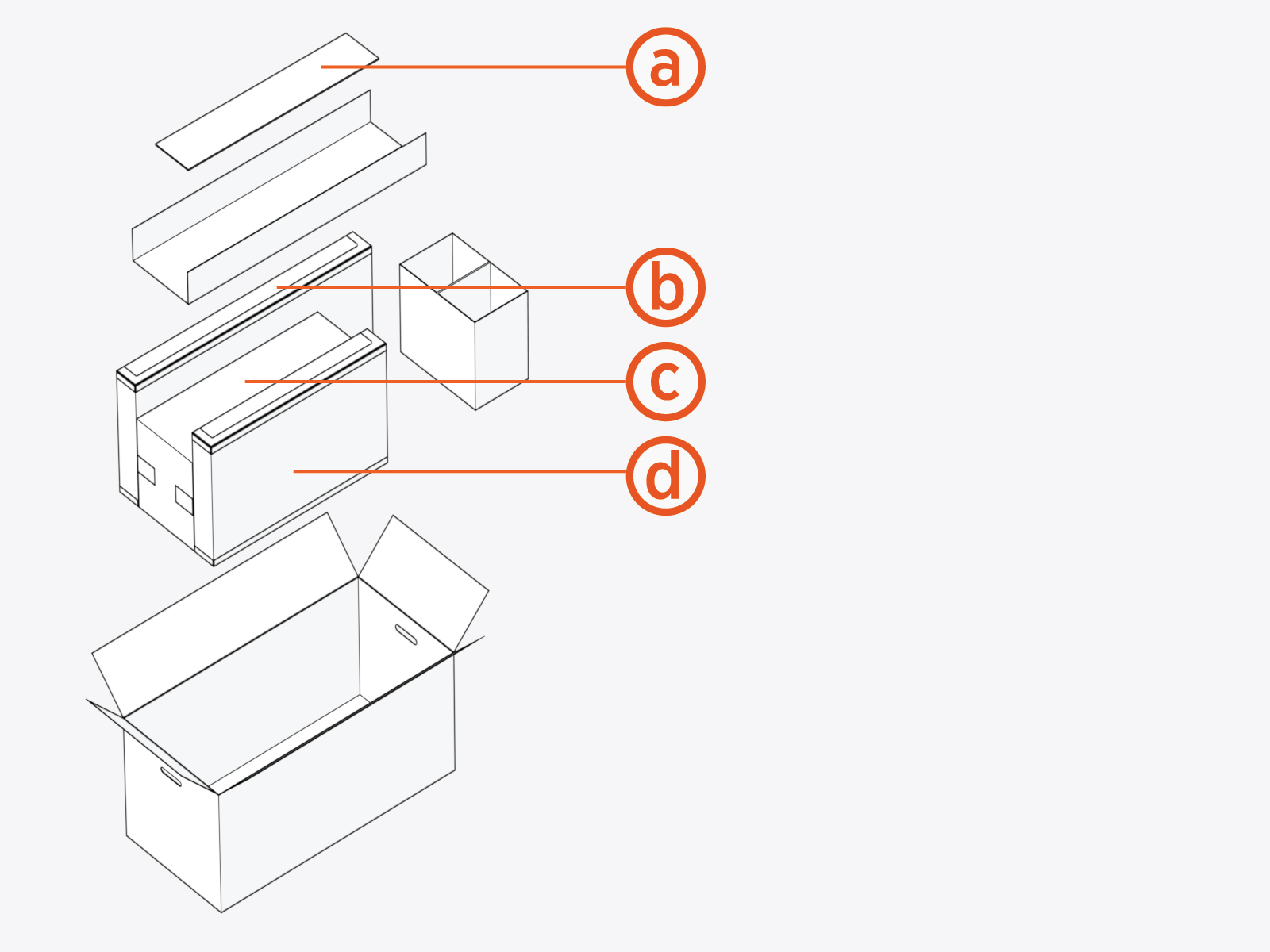
(a) CMK Cable Management Kit mast covers (front and rear)
(b) Power Link 2000 front lower cover
(c) Power Link 2000 top cap
(d) Power Link 2000 front upper cover
Disconnect Power
To disconnect power, complete the following steps:
- Before any procedure, disconnect the power.
- Follow local code and site lockout/tagout procedure to de-energize the station.
- Wait for energy to dissipate (approximately five minutes).
- Keep power off until all covers and panels are reinstalled and the work is complete.
-
Disconnect power at the site electrical panel.
Follow standard practice and local code to de-energize the applicable circuit and lock out/tag out the disconnect before proceeding.
-
Use a multimeter to test that the unit is de-energized.