Introduction
This topic describes how to design an installation site for the ChargePoint® Express 250 DC fast charging station and install the Concrete Mounting Template, before station installation. An Express 250 charging station can be installed to operate by itself (called Standalone) or to share power with one other Express 250 for higher throughput (called Paired).
- If the charging station is not installed, commissioned, or serviced by a ChargePoint certified technician using a ChargePoint-approved method, it is excluded from all ChargePoint and other warranties and ChargePoint is not responsible.
- You must be a licensed electrician and complete training at https://www.chargepoint.com/partners/training-certification to become ChargePoint certified and to access ChargePoint's web-based installer tools or ChargePoint Installer app.
Accessing ChargePoint Documentation
Access documents at ChargePoint Product Reference Documentation.
|
Document |
Content |
Primary Audiences |
|
Datasheet |
Full station specifications |
Site designer, installer, and station owner |
|
Site Design Guide |
Civil, mechanical, and electrical guidelines to scope and construct the site |
Site designer or engineer of record |
|
Concrete Mounting Template Guide |
Instructions to embed the charging station template in a concrete pad with anchor bolts and conduit placement (these may also be included in the Site Design Guide) |
Site construction contractor |
|
Surface Conduit Entry Kit Guide |
Instructions for sites where conduit cannot be run underground |
Installer |
|
Construction Signoff Form |
Checklists used by contractors to ensure the site is correctly completed and ready for product installation |
Site construction contractor |
|
Installation Guide |
Anchoring, wiring, and powering on |
Installer |
|
Operation and Maintenance Guide |
Operation and preventive maintenance information |
Station owner, facility manager, and technician |
|
Service Guide |
Component replacement procedures, including optional components |
Service technician |
|
Declaration of Conformity |
Statement of conformity with directives |
Purchasers and public |
Installing the Express 250 requires two people and takes approximately 3-4 hours. This time estimate does not include the time needed to pull DC and Ethernet cable for a Paired installation if it is not already done. Paired installation also requires contacting a ChargePoint support technician to perform any required software updates and configuration.
Pairing Two Express 250s
If a CPE250 is installed with one Power Module and Power Select is used, then the station cannot be paired.
The Express 250 can be installed either as a standalone system, or paired with another Express 250 using a DC connection to more flexibly share load. The two Power Modules in the base of each charging station can be shared in any combination according to charging need. This allows high power output in sites with space constraints.
To pair two charging stations, all of the following are required:
-
Additional conduit, ducting, or armored cable (according to region) correctly installed between the two charging stations for DC conductors and Ethernet wiring
-
Both stations must have 62.5 kW power enabled (not allowed on stations only enabled for 50 kW)
-
Both stations must be provisioned for full power back to the panel (not allowed on power select stations)
Initial Site Guidelines
An onsite evaluation is needed to determine conduit and wiring requirements from the panel to the proposed parking spaces, as well as to measure cellular signal levels and identify suitable locations for any necessary cellular signal booster equipment.
If you have pre-existing infrastructure or are using your own preferred electrical contractor to prepare your site, a completed Construction Signoff Form is required to certify compliance with electrical specification requirements, and to ensure everything was prepared to ChargePoint specifications.
Plan for Future Charging Capacity
ChargePoint recommends that you plan to install charging stations for 5-10% of parking spaces, or 10-15% for high EV Electric Vehicle adoption areas like California. Designing electrical infrastructure to support current and future needs for EV Electric Vehicle charging helps avoid costly later as demand for EV Electric Vehicle charging grows.
Consider these methods to prepare a site for future charging stations in a later phase of work:
-
Add extra capacity if electrical panels are being upgraded now
-
Use sub-panels as a way to shorten electrical paths
-
Oversize the conduit between the main electrical panel and future stations
-
Install pull or junction boxes at the end of an existing row of charging stations, to ease cable pulls for future stations
-
If a junction box or disconnect will be installed between rows of stations, oversize the wiring between the main panel and the junction box to prevent needing to re-pull wire later
Charging Station Placement
To help minimize costs, choose station locations that are as close as possible to the available electrical infrastructure. Selecting these types of locations helps minimize long conduit and wire runs, as well as any trenching work.
The layout considerations are as follows:
-
Determine appropriate ground anchoring locations where concrete exists or can be installed (no asphalt surfaces).
-
Consider locations where it will be easy to add future stations.
-
Determine optimum conduit layout to minimize linear conduit costs to multiple parking spaces. If possible, avoid or minimize trenching requirements, especially more costly trenching to run conduit under asphalt surfaces.
-
Evaluate existing electrical infrastructure to determine if the existing utility service and electrical panel capacity is sufficient. Identify costs for any necessary upgrades and/or a new dedicated electrical panel. ChargePoint recommends using a certified electrician to evaluate available capacity and identify any upgrades that may be required.
-
If a dedicated EV
Electric Vehicle electrical panel is required, choose a panel location in close proximity to the existing electrical supply. -
Measure cellular signal levels to ensure adequate cellular coverage at the station installation location. To ensure adequate signal strength in underground or enclosed parking structures, cellular repeaters may be required.
-
ChargePoint recommends to avoid locations under trees where sap, pollen, or leaves would fall on the charging station and increase the station owner’s site upkeep workload.
-
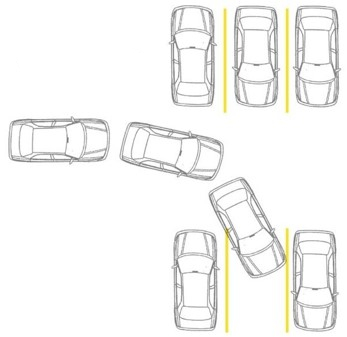
For stall parking, ChargePoint recommends using perpendicular parking stalls that allow a vehicle to enter either front-first or rear-first, to better accommodate the varied charge port locations on different EVs. Diagonal stall parking is not advised.
-
Choose adjacent parking spaces in an area with adequate lighting.
-
Consider how easily drivers can find the stations they need to access.
-
Check local requirements for accessibility and pathway width, sometimes called “path of travel”, to ensure station placement does not restrict sidewalk use.
-
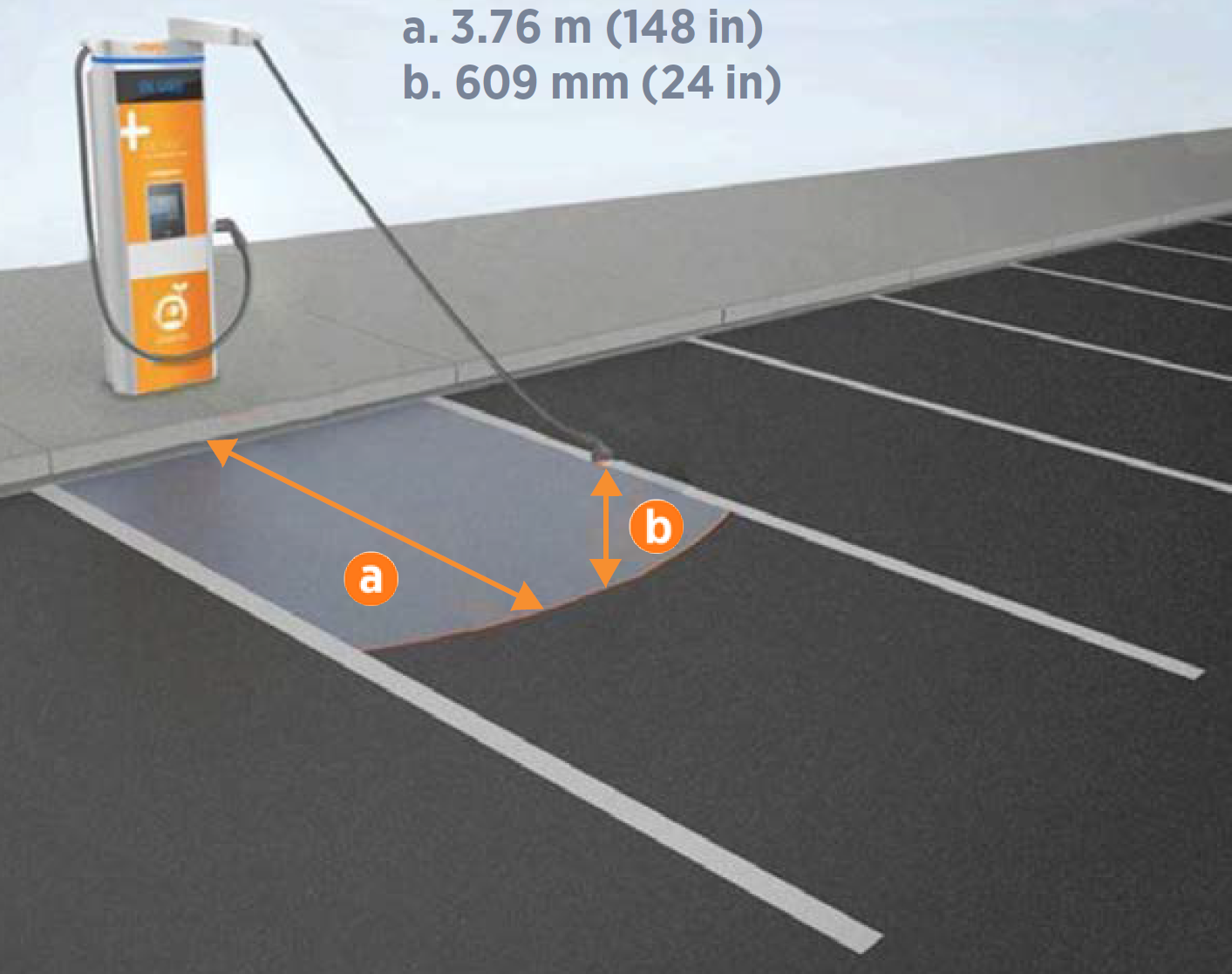
Building a pad into the head of a parking space (instead of on the sidewalk) is allowed if a) local code allows it compared to the minimum parking space length, and b) the pad meets all pad requirements listed in this document.
-
Note that the station's two charge cables are different types of connectors to maximize usability across EV
Electric Vehicle models. The cables cannot both be used at the same time. Therefore, do not position an Express 250 to share two parking spots.
-
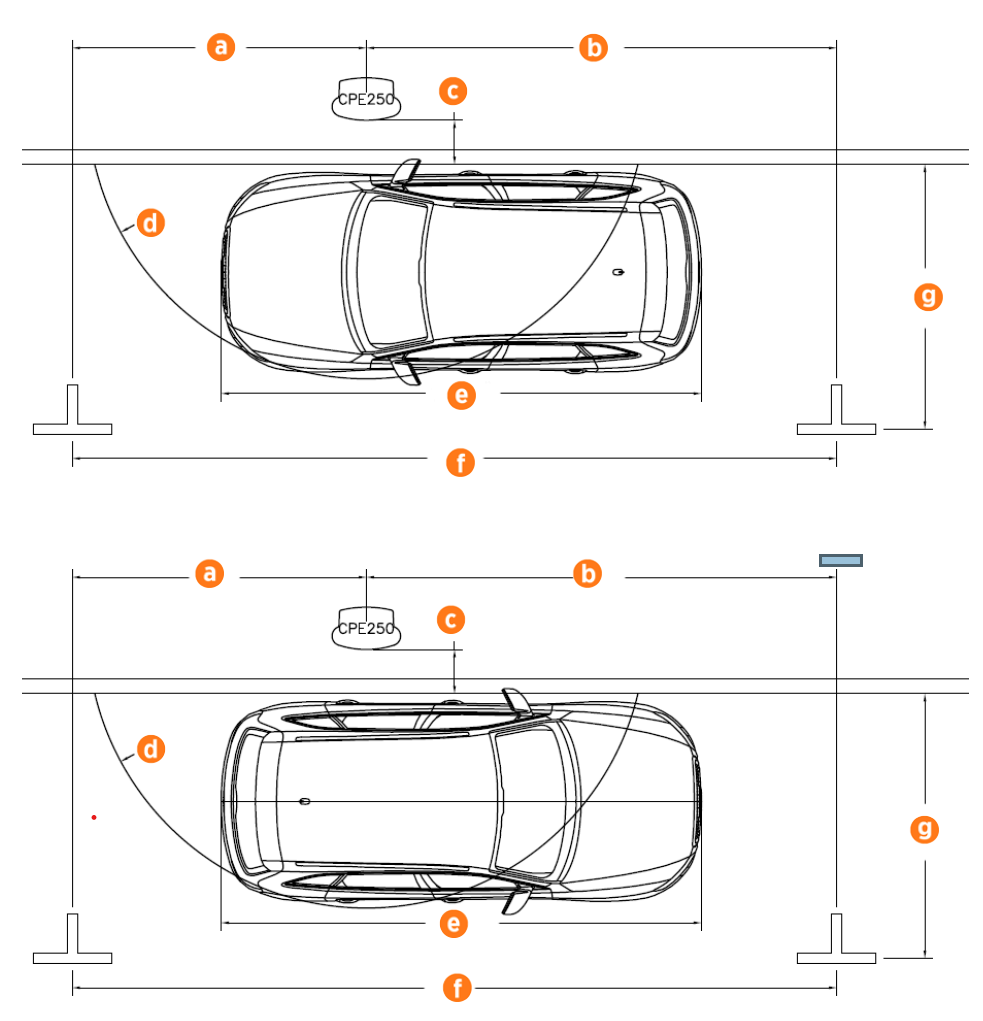
Pull-through parking (gas station model) is not recommended. If pull-through parking is used, ChargePoint recommends placing at least one charging station on each side of the island. This avoids situations where the charging station is on the opposite side of the vehicle from the charge port. Guidance for station placement in island or curbside parking is shown below.
-
Distance from left space marking: 3048 mm (120 in) maximum
-
Distance from right space marking: 4876.8 mm (192 in)
-
Distance from curb: 457.2 mm (18 in)
-
Distance from curb: 457.2 mm (18 in)
-
Example EV
Electric Vehicle length: 4978.4 mm (196 in) -
Recommended parking space length: 7924.8 mm (312 in)
-
Recommended parking space width: 2743.2 mm (108 in)