Connect Power Link 2000 Wires
Parts Needed
To prepare for connecting Power Link 2000 wires, find the following part from the Mast Components Kit:
-
Power Link 2000 to PD Controller LV DC
 Low Voltage Direct Current wire assembly
Wiring Overview
In the Pantograph Down 2000 system, the Power Link 2000 has wiring connections to the pantograph, PD Controller, and to Power Block and/or other Power Link 2000s. Before pulling and connecting wires at the Power Link 2000, study and understand the wiring information provided below. For wire quantities, sizes, and terminations, see Wires and Terminations Required for Site and refer to the site drawing.
Output to Pantograph, PD Controller, and Mast
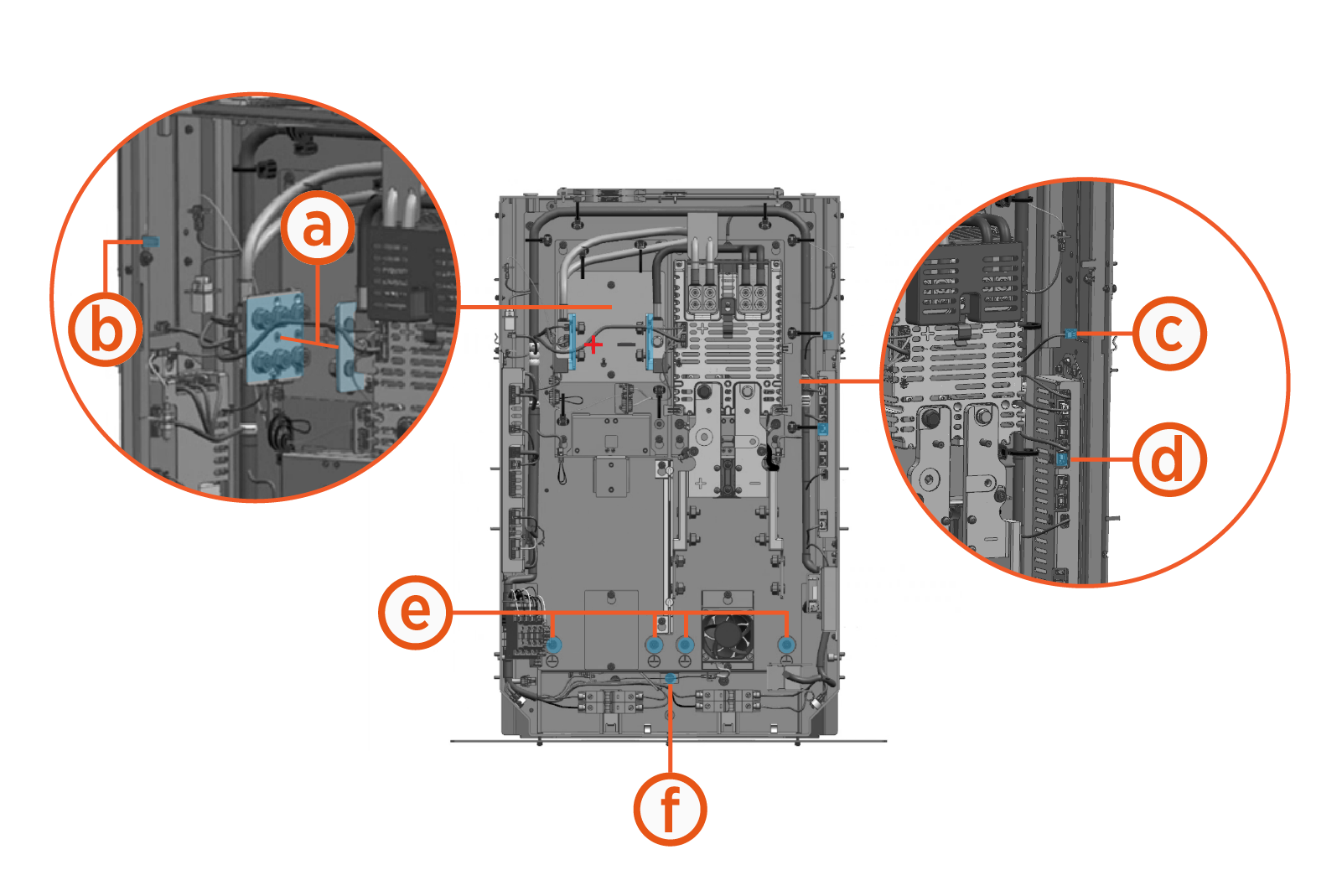
The mast-mount Power Link 2000 provides HV High Voltage DC output to the pantograph and LV DC Low Voltage Direct Current output (including chassis ground) to the PD Controller. There is also a ground connection between the Power Link 2000 and the Pantograph Down Mast. These wires and cables land within the Power Link 2000 at the locations shown below.
-
HV DC
High Voltage Direct Current output to pantograph -
High power ground to pantograph
-
LV
Low Voltage DC output to PD Controller -
Ethernet to PD Controller
-
Ground to mast (shared with high power ground)
-
Chassis ground to PD Controller
-
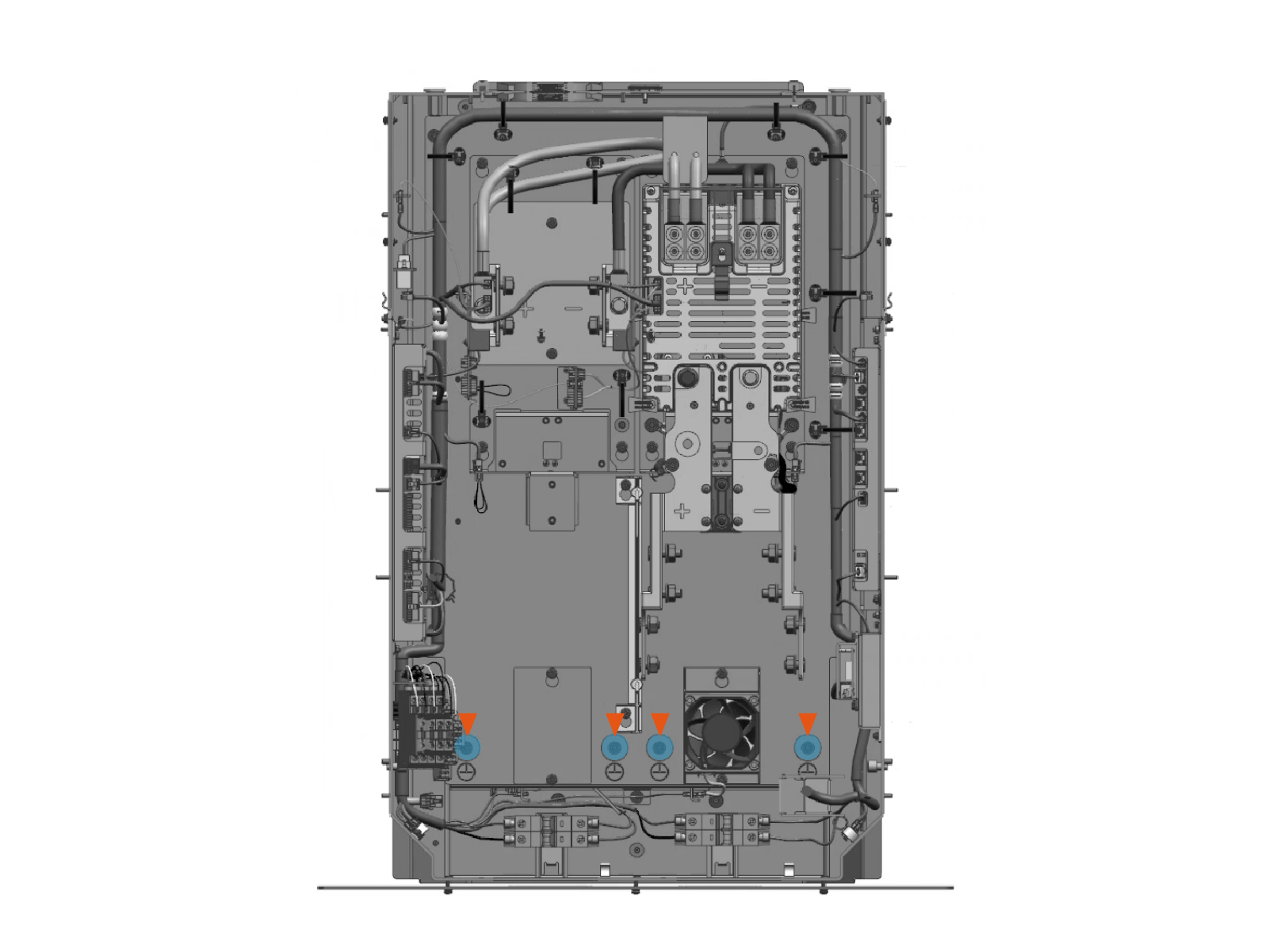
The ground wire connecting Power Link 2000 and the Pantograph Down Mast may land at any of the ground studs (e). These are the same landing locations for input high power ground wires.
-
A Power Link 2000 to PD Controller LV
Low Voltage DC wire assembly is provided in the Mast Components Kit.
-
The ground wire connecting between the Power Link 2000 and the Pantograph Down Mast exits the Power Link 2000 enclosure via cable gland (supplied by site).
HV DC Wires From Power Block or Power Link 2000
The mast-mount Power Link 2000 has a single HV DC High Voltage Direct Current power path, designated Power Path B, which accepts connection from Power Block outputs and/or can be connected to the power path of other Power Link 2000s.
High Voltage Direct Current power outputs, Output A and Output B. Although the Power Link 2000 power paths and Power Block outputs are similarly named, it does not mean Output B of a Power Block must connect to Power Path B of a Power Link 2000. Power Path B of the mast-mount Power Link 2000 may receive power from either Output A or Output B of a Power Block. The A and B designations serve only to identify separate power paths and outputs in each product.
Consult the site single line diagram carefully to understand the Power Block/Power Link 2000 interconnections specific for your site.
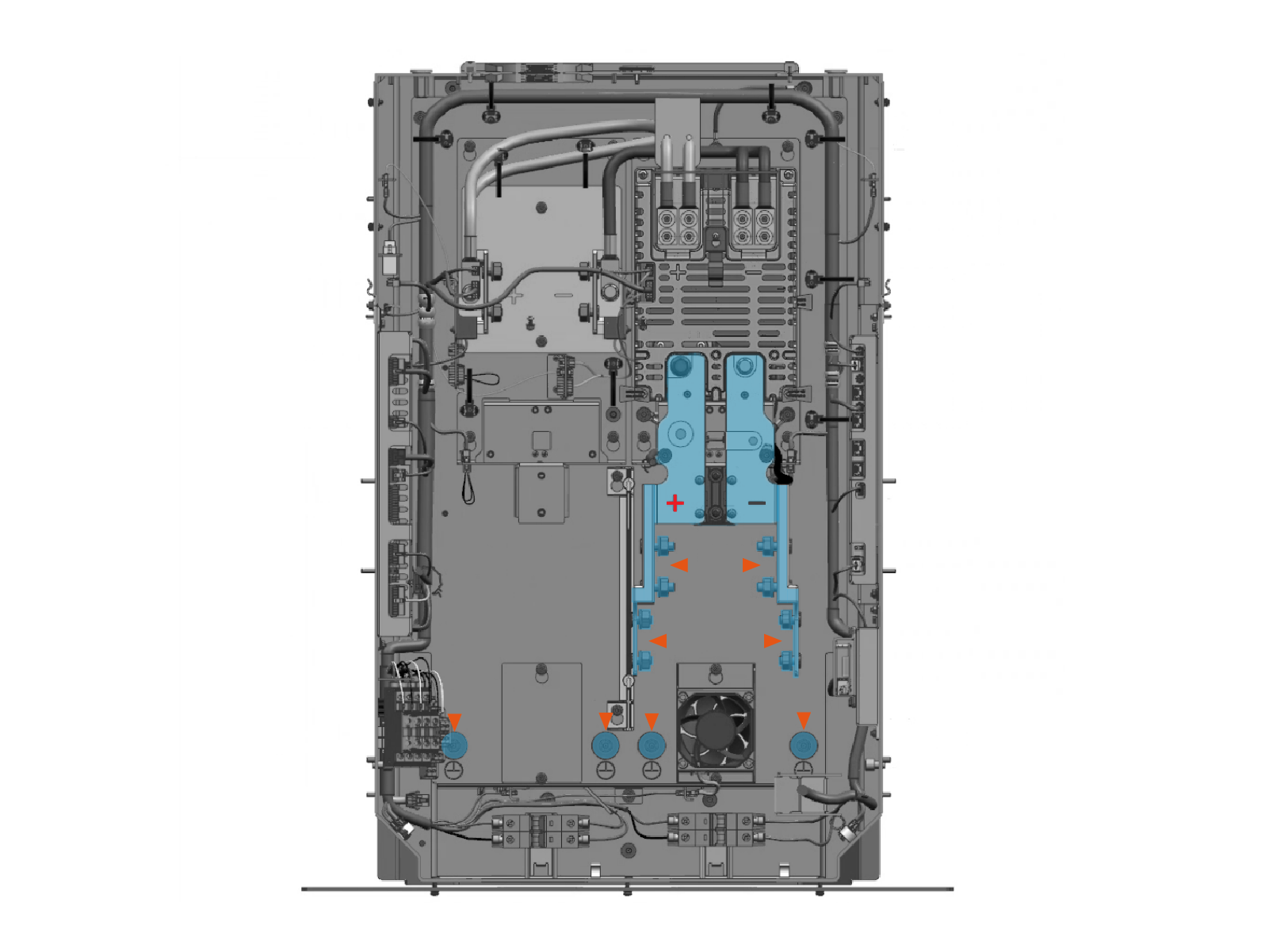
Wires connecting to the Power Link 2000 power path land within the interior of the Power Link 2000 enclosure at the terminals shown below. The power path has a set of upper landings and a set of lower landings.
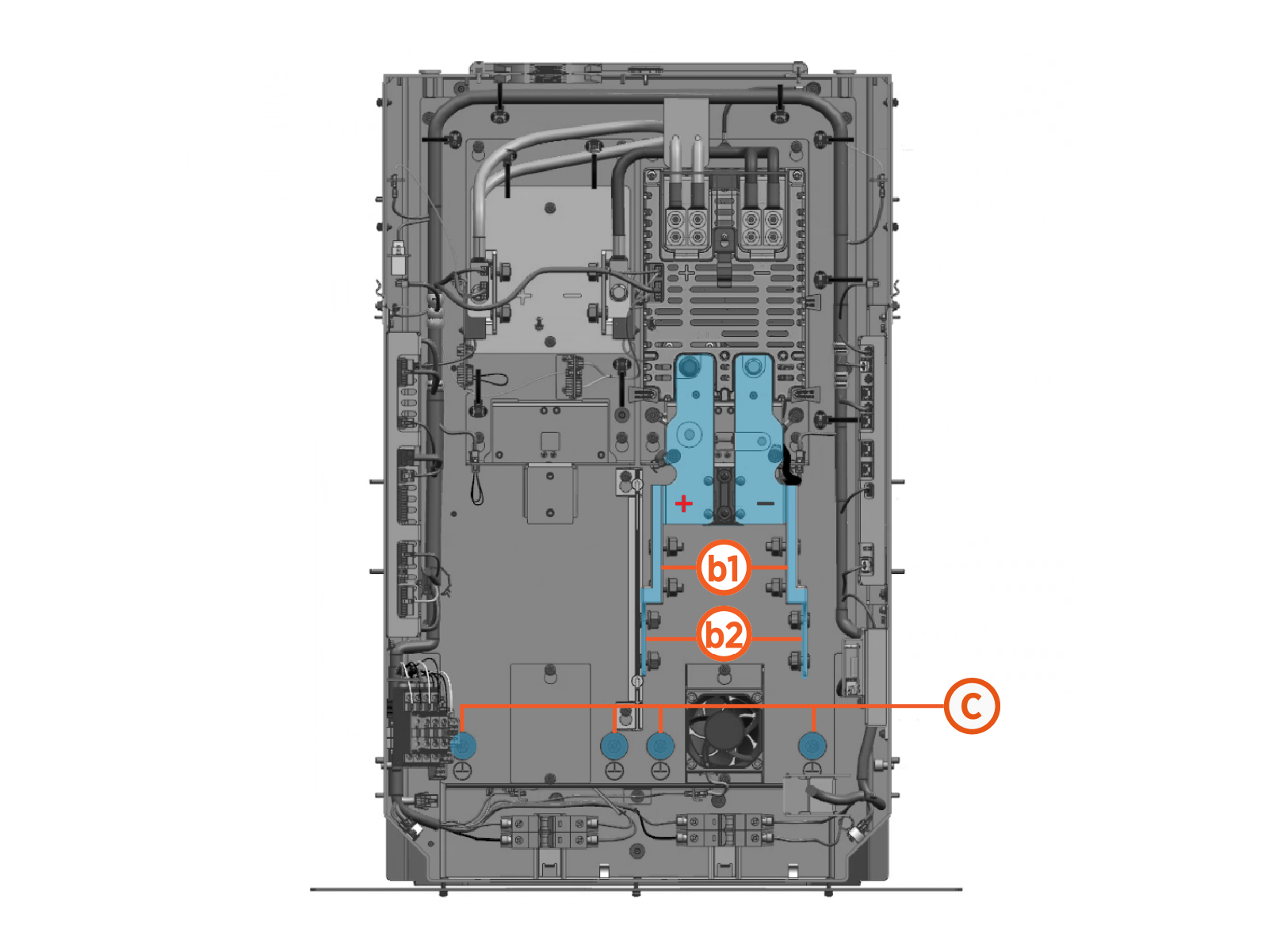
(b1) Power Path B, upper landing
(b2) Power Path B, lower landing
(c) High power ground (shared with ground to mast)
There are four high power ground studs (c). These are the same locations for landing the ground wire that connects from the Power Link 2000 to the Pantograph Down Mast. In some architectures, a Power Link 2000 may need to accept more ground wires than the number of landing studs. In these cases, two ground wires may stack onto a single stud.
LV DC From Power Block or Power Link 2000
Each Power Link 2000 has two LV DC Low Voltage Direct Current input ports and two LV DC Low Voltage Direct Current output ports for connection to Power Blocks and/or other Power Link 2000s. Power Link 2000 also has three Ethernet ports for connection with Power Blocks and/or other Power Link 2000s. At minimum, each Power Link 2000 has one LV DC Low Voltage Direct Current input and one Ethernet connection to a Power Block or Power Link 2000. Consult the site drawing. Note that Ethernet cables typically share conduit with LV DC Low Voltage Direct Current connections coming from the same Power Block or Power Link 2000.
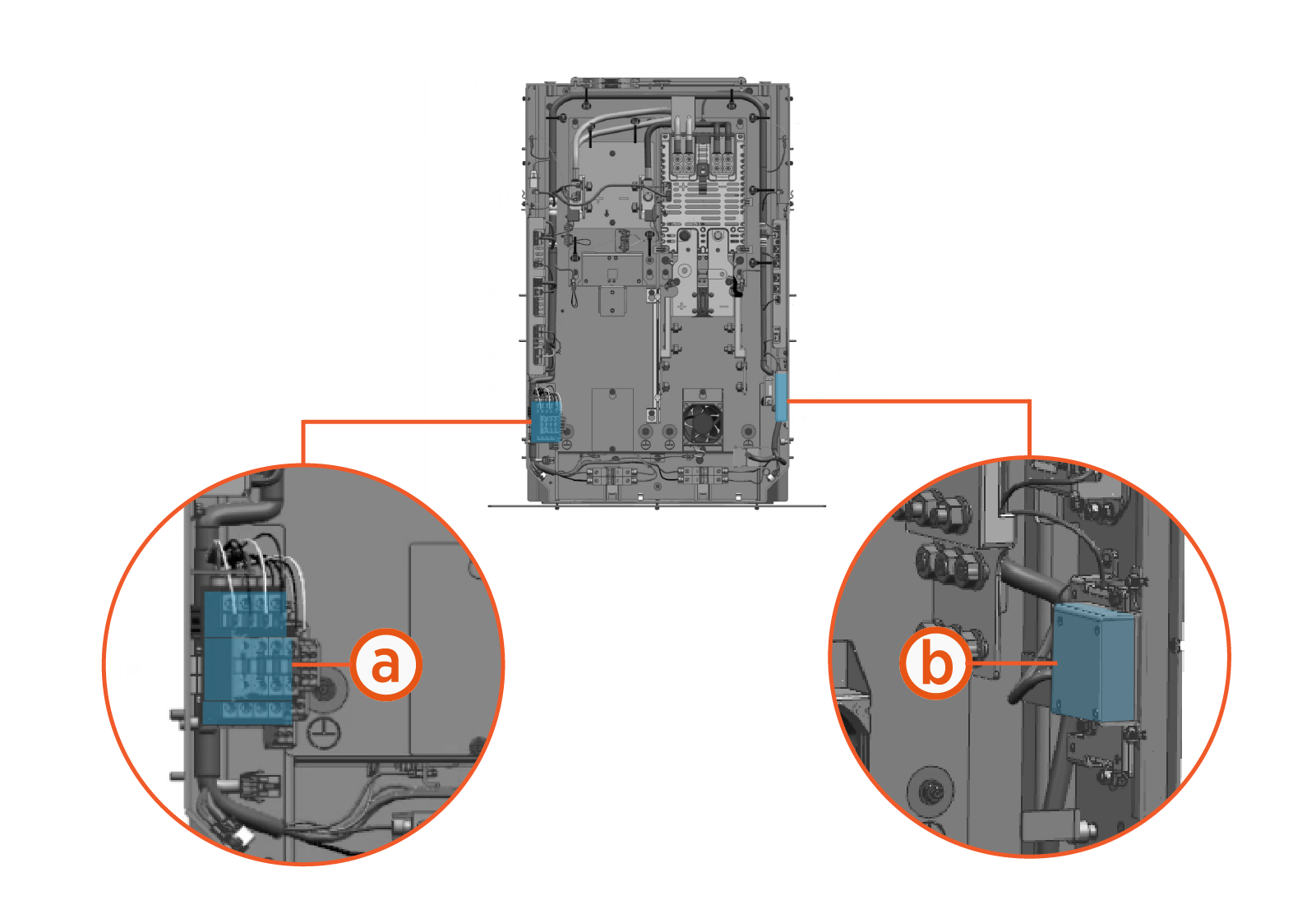
LV DC Low Voltage Direct Current wires and Ethernet cables associated with these types of connections land within the interior of the Power Link 2000 enclosure at the terminals shown below.
-
LV DC
Low Voltage Direct Current input/output -
Ethernet
Pull, Cut, and Connect Wires
HV DC Output to Pantograph Wires
-
At the 3-1/2 in conduit at the top of the Power Link 2000, pull the HV
High Voltage DC wires into the enclosure. -
Perform insulation resistance test on the HV DC
High Voltage Direct Current wires. Refer to the Express Plus High Voltage Wire Insulation Resistance Test Field Guide. -
Connect the HV DC
High Voltage Direct Current wires. See Wiring Overview for landing locations. See How To Connect HV DC Wires and How to Connect High Power Ground Wires.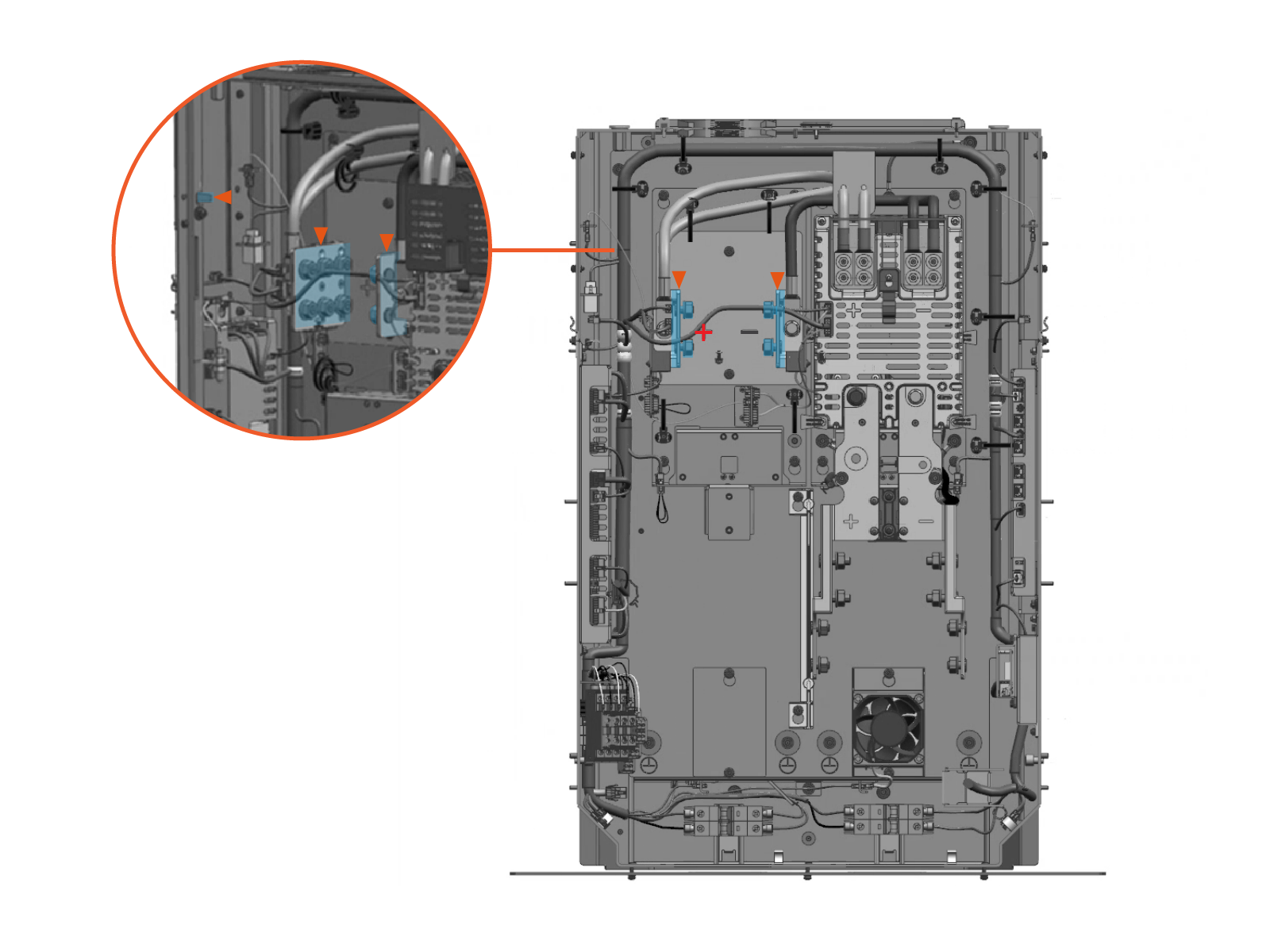
How to connect HV DC wires
Follow the procedure below for each HV High Voltage DC wire.
Make sure no wire material is exposed below the lug barrel. If necessary, heat shrink or tape the exposed area to meet the local code requirements.
Wipe off any remains of wire pulling lubricant if applied.
-
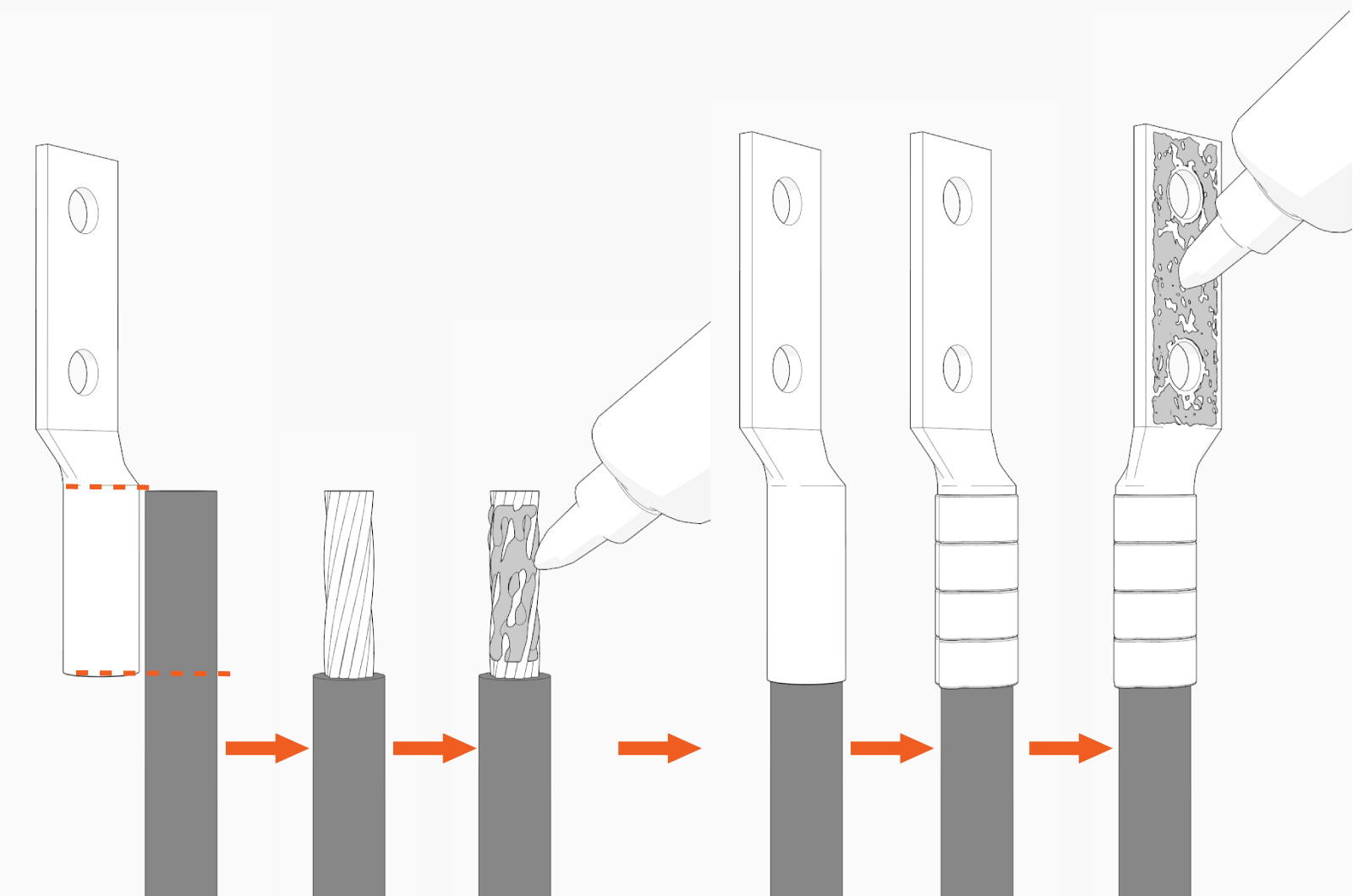
Prepare the wire:
-
Mark the lug's barrel height on the wire terminal.
-
Strip the jacket on the marked terminal. Use a suitable wire stripper, such as Klein tool.
-
If recommended by the wire manufacturer or local code, apply an anti-oxidant joint compound to the stripped wire material to make a gastight joint with the lug.
-
Insert the stripped terminal into the lug's barrel and crimp it. Use a suitable lug crimping tool and/or die recommended by the lug manufacturer.
-
Apply dielectric grease to the lug's tongue surface that comes in contact with the bus bars.
-
-
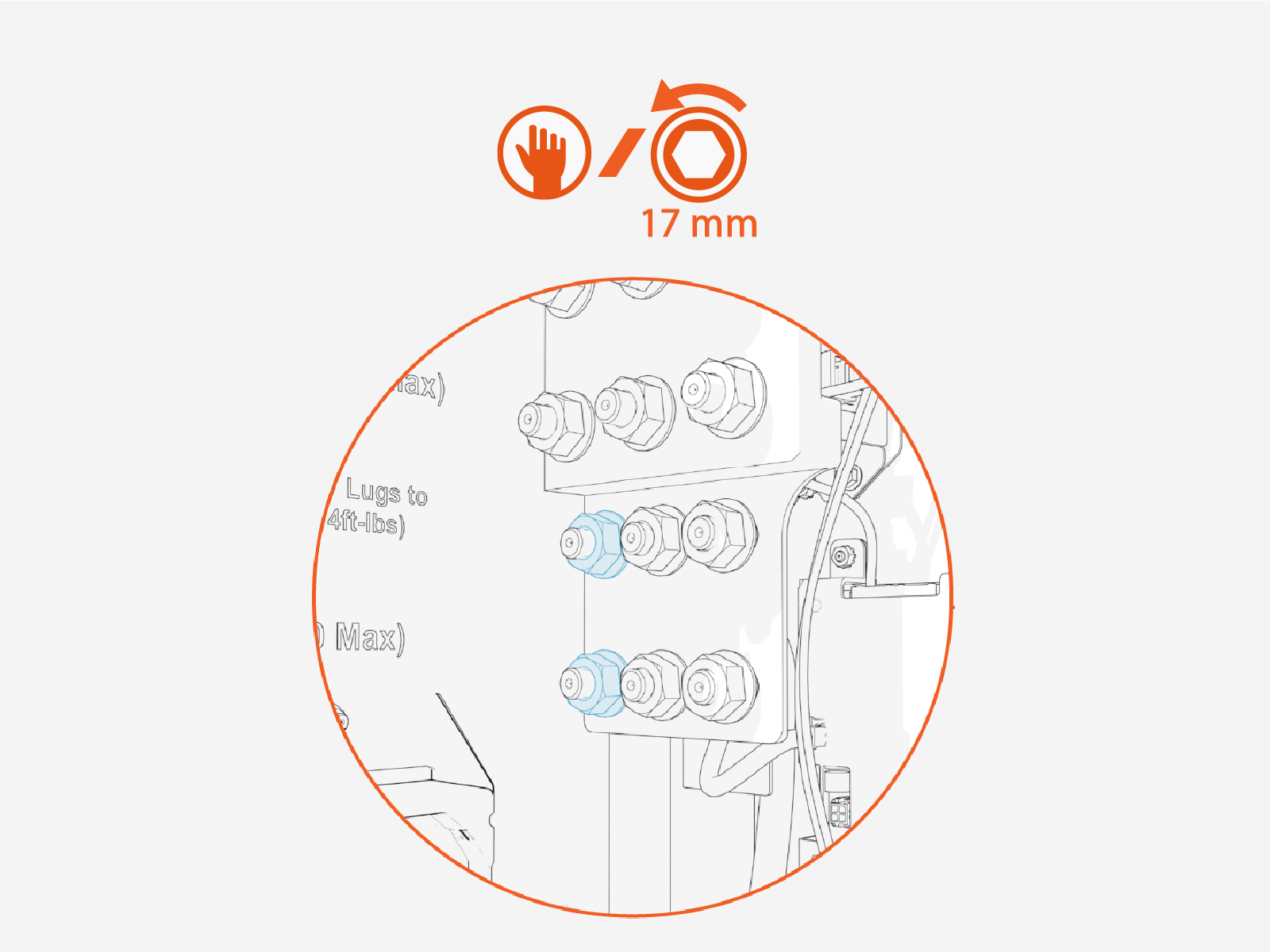
Remove lug nuts from the landing studs.
-
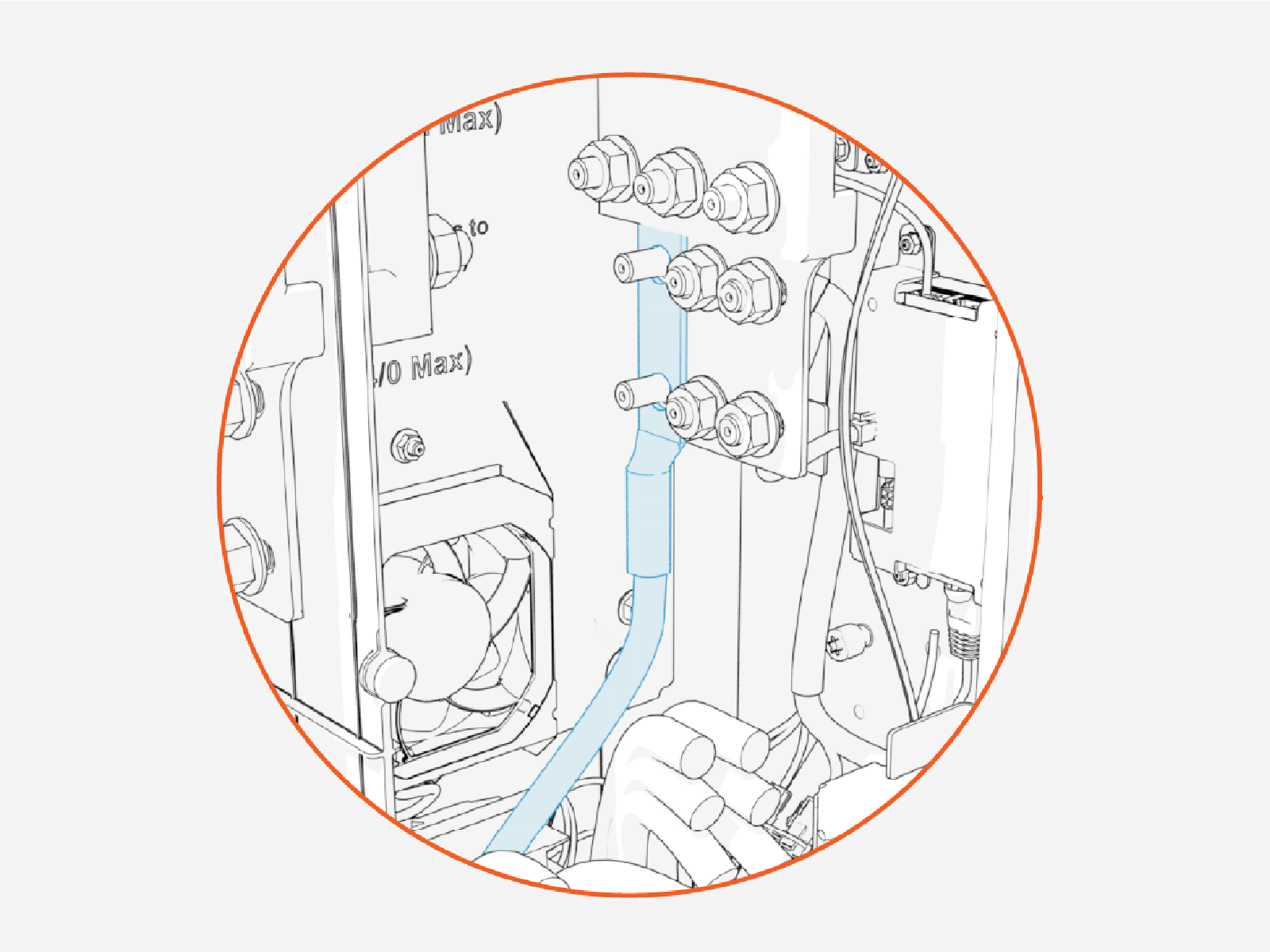
Install the prepared wire onto the studs.
When connecting the HV DC High Voltage Direct Current wires, install the red (+) wire's lug onto the bus bar's positive (+) pole and black (-) wires onto the bus bar's negative (-) pole.
-
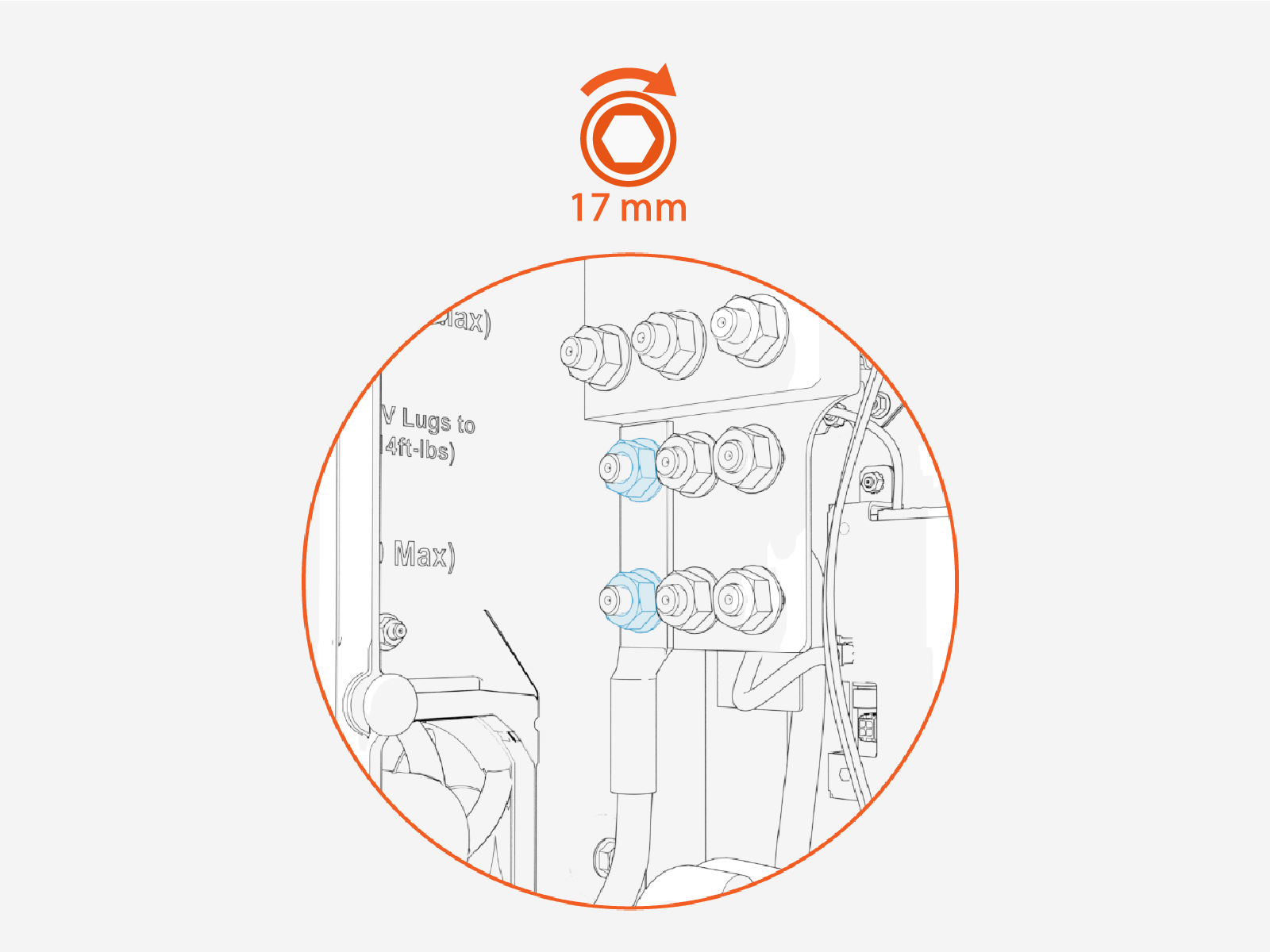
Reinstall and tighten the lug nuts.
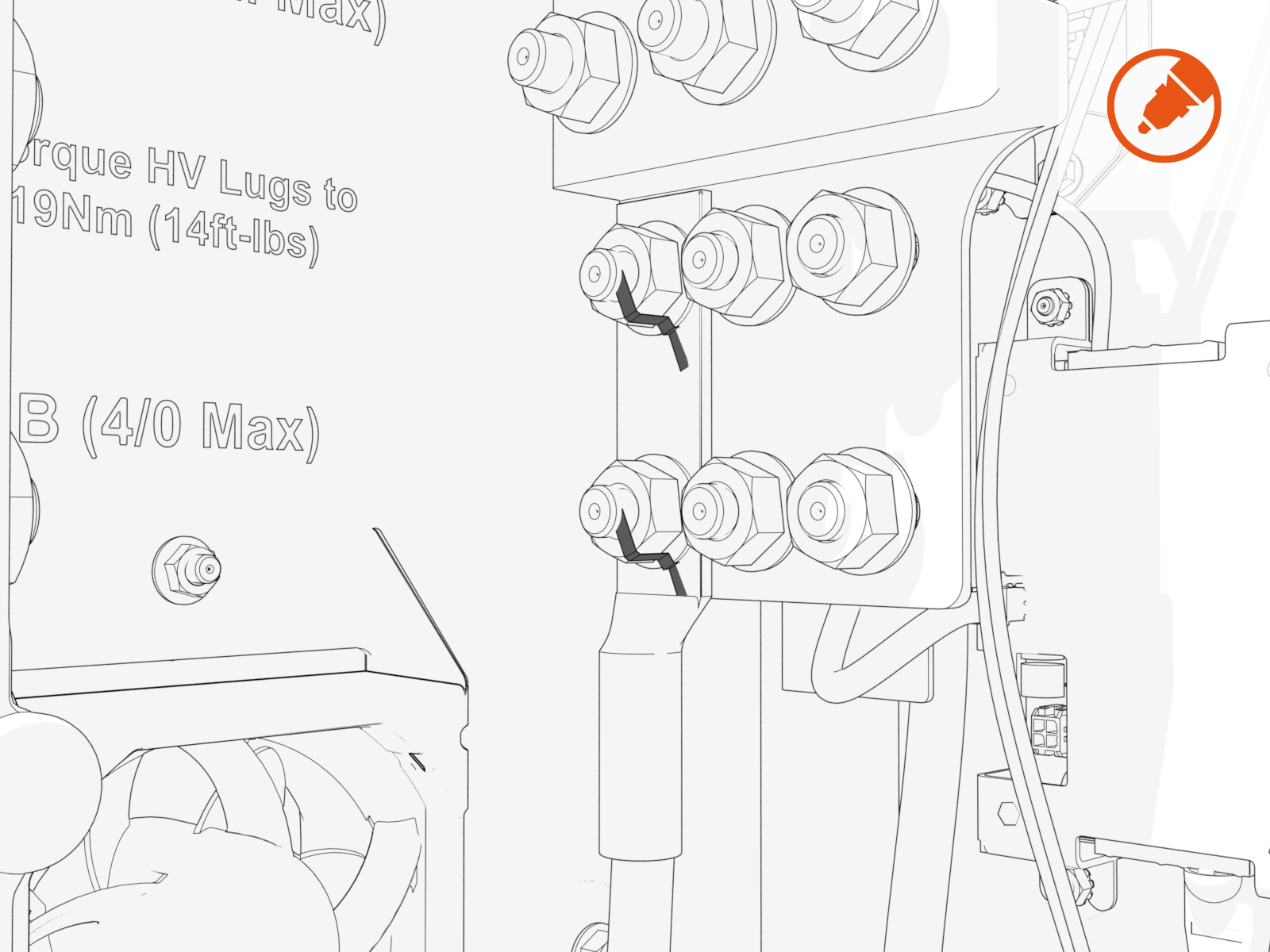
Torque the HV DC High Voltage Direct Current wire lug nuts to 19 Nm (14 ft-lb).
-
Apply torque marks. Torque marks are required to pass post-installation inspection.
How to connect high power ground wires
Follow the procedure below for each ground wire.
Make sure no wire material is exposed below the lug barrel. If necessary, heat shrink or tape the exposed area to meet the local code requirements.
Wipe off any remains of wire pulling lubricant if applied.
-
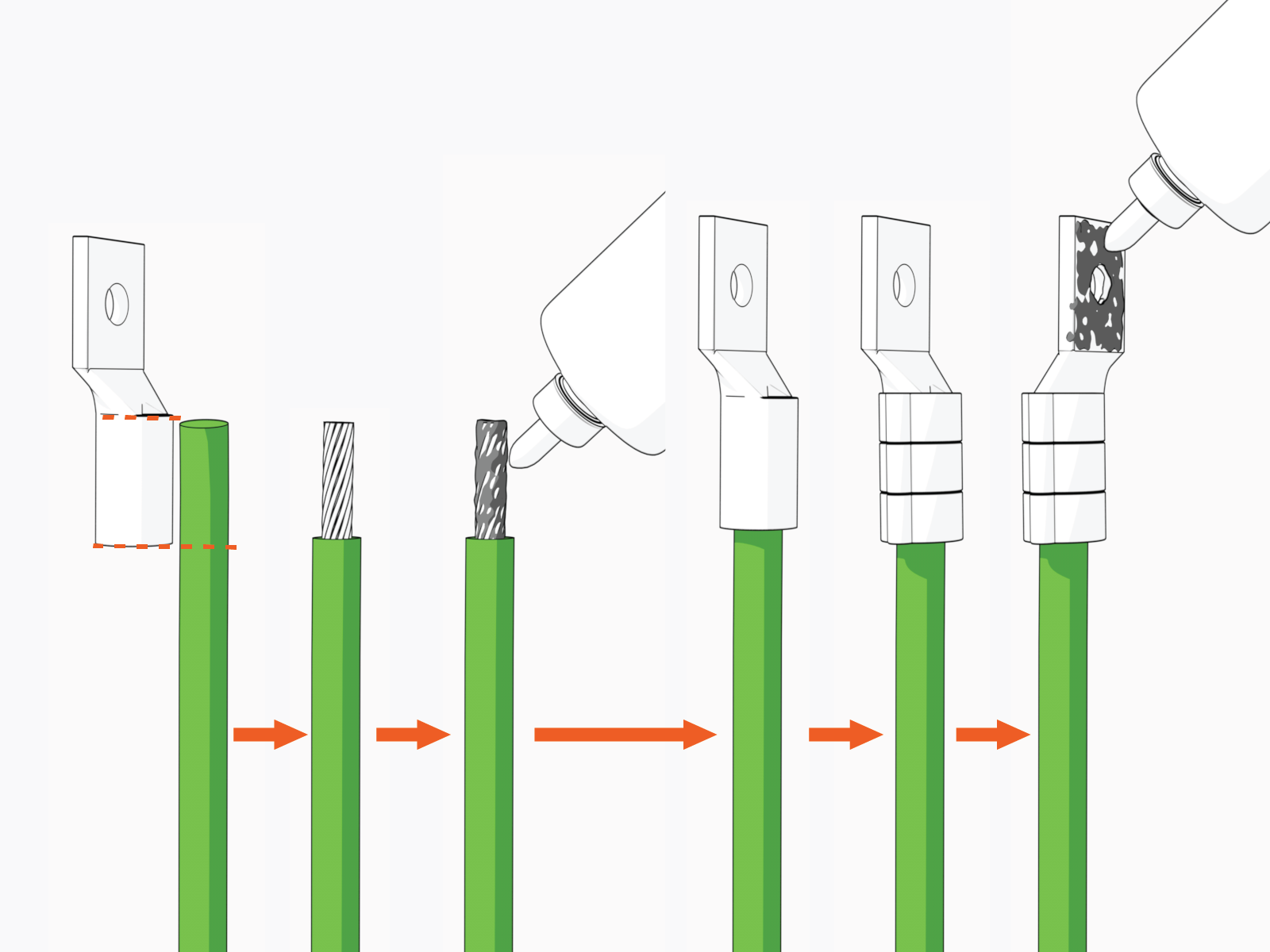
Prepare the wire:
-
Mark the lug's barrel height on the wire terminal.
-
Strip the jacket on the marked terminal. Use a suitable wire stripper, such as Klein tool.
-
If recommended by the wire manufacturer or local code, apply an anti-oxidant joint compound to the stripped wire material to make a gastight joint with the lug.
-
Insert the stripped terminal into the lug's barrel and crimp it. Use a suitable lug crimping tool and/or die recommended by the lug manufacturer.
-
Apply dielectric grease to the lug's tongue surface that comes in contact with the bus bars.
-
-
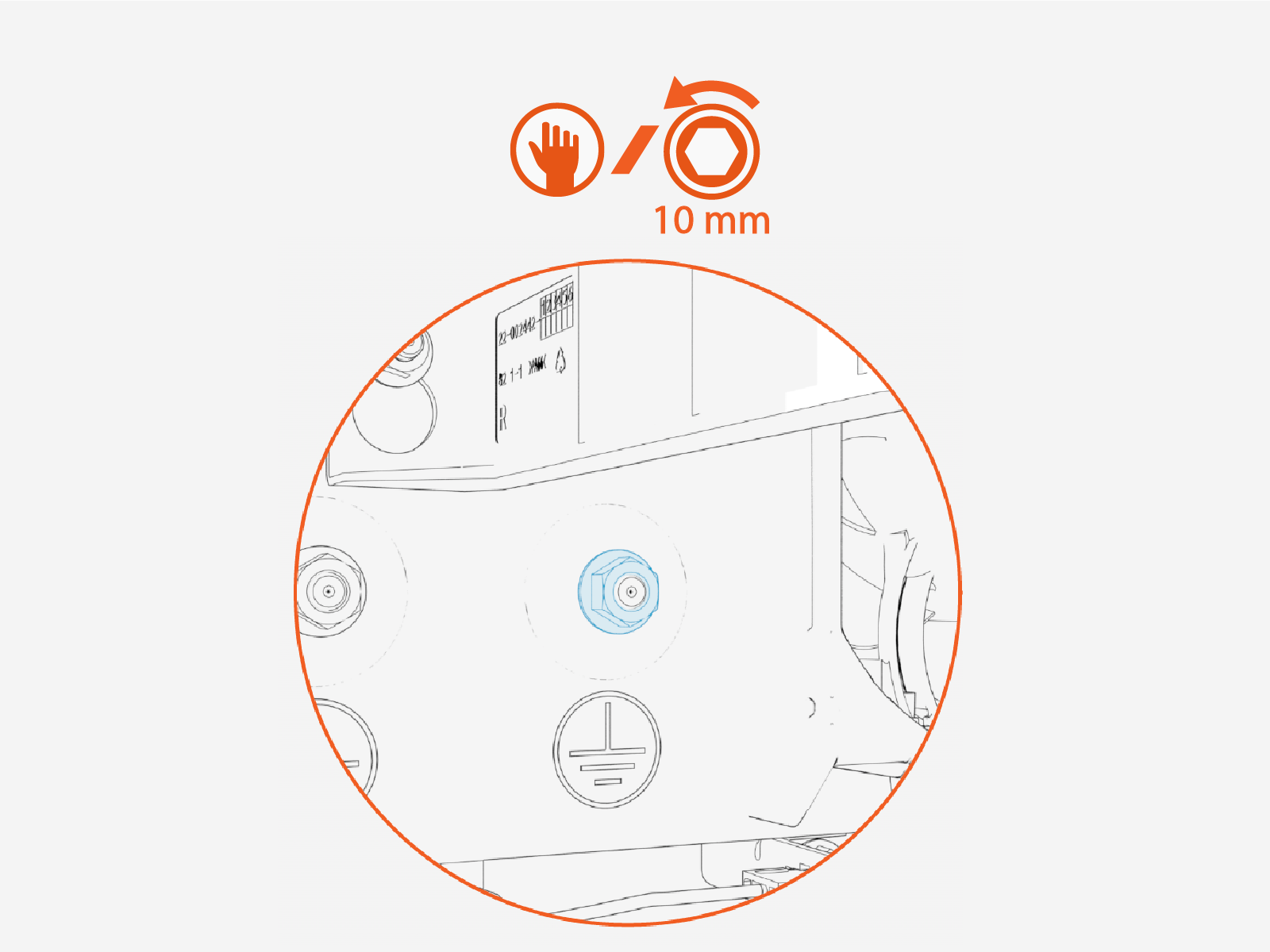
Remove lug nut from the ground stud.
-
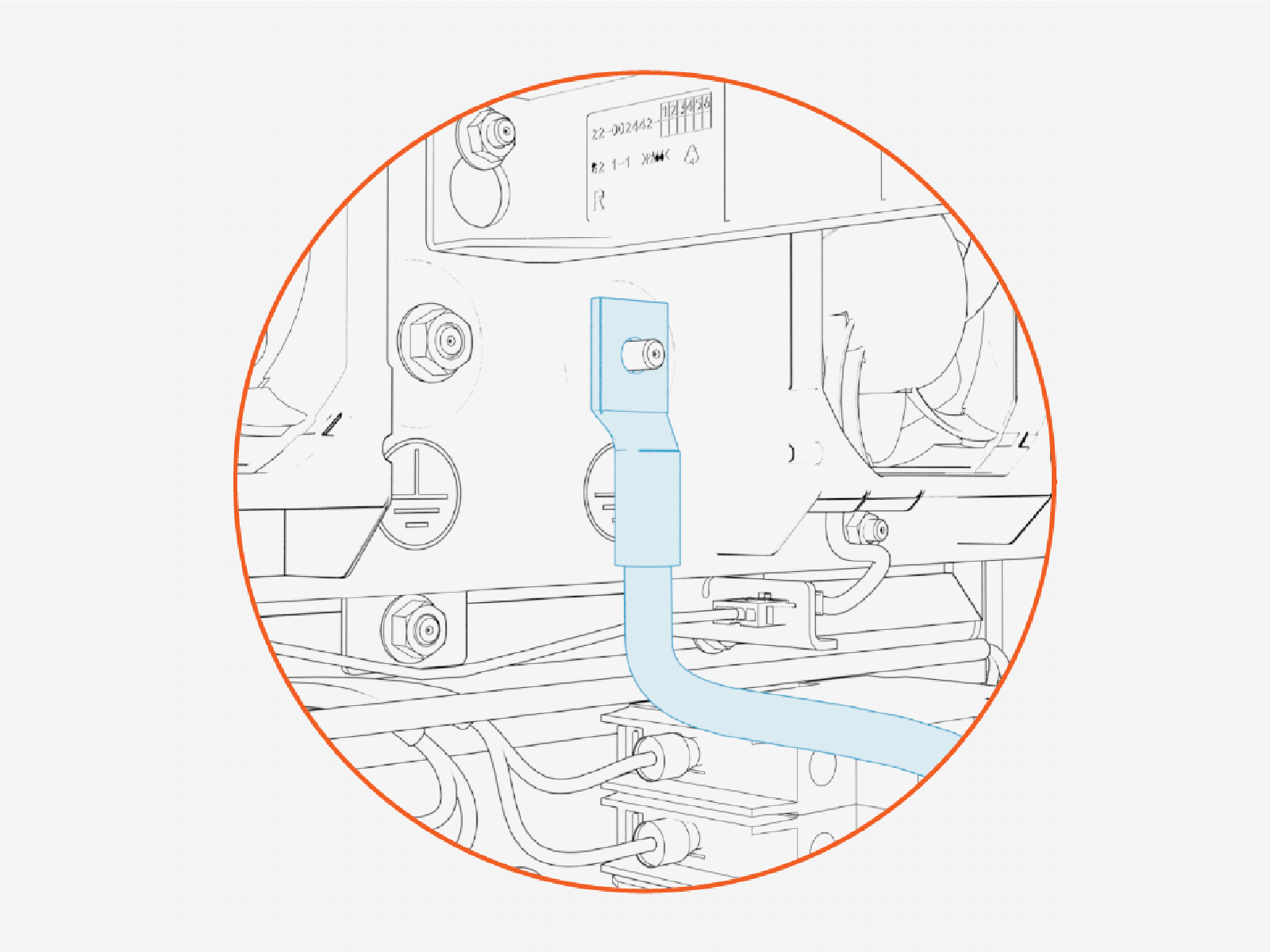
Install the prepared wire onto the stud.
If needed, two ground wires may stack onto a single stud.
-
Reinstall and tighten the lug nut.
Torque the ground wire lug nuts to 5.6 Nm (50 in-lb).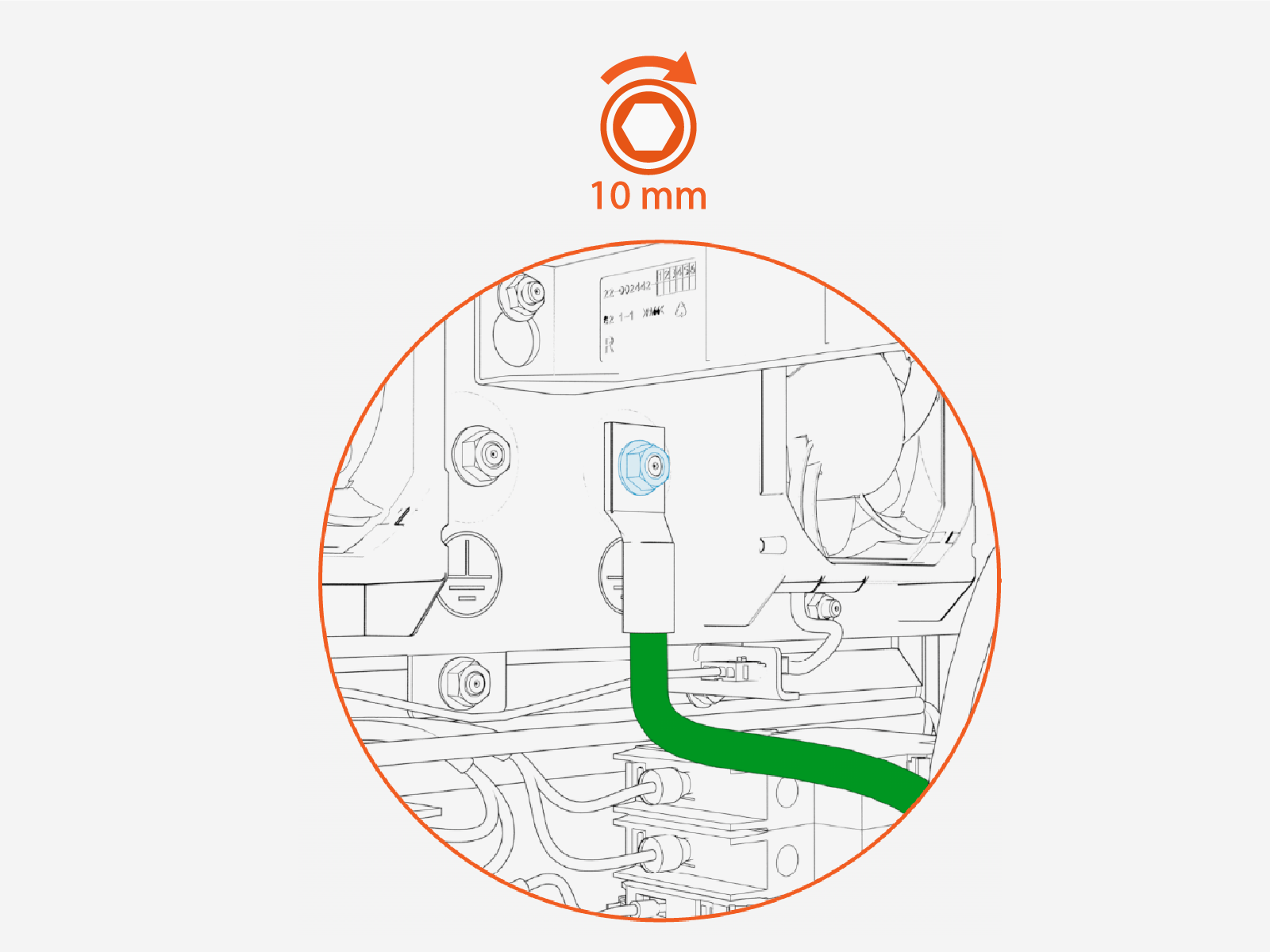
HV DC Wires From Power Block or Power Link 2000
-
Label the HV DC
High Voltage Direct Current and high power ground wires at both ends to allow for wiring to be traced during installation and future servicing. -
Pull the wires through conduit into the enclosure. If necessary, apply a non-conductive wire pulling lubricant.
-
Perform insulation resistance test on the HV DC
High Voltage Direct Current wires. Refer to the Express Plus High Voltage Wire Insulation Resistance Test Field Guide. -
Cut the wires to length for landing on their respective terminals. See Wiring Overview for landing locations. Take into account the length of the lug that will terminate each wire.
-
Connect the HV DC
High Voltage Direct Current wires. See How To Connect HV DC Wires and How to Connect High Power Ground Wires.Connect wires in the following order:Ground wires
Lower landing wires
Upper landing wires
LV DC Wires From Power Block or Power Link 2000
-
Label the LV DC
Low Voltage Direct Current and Ethernet wires at both ends to allow for wiring to be traced during installation and future servicing. -
Pull the LV DC
Low Voltage Direct Current and Ethernet wires into the enclosure. -
Connect the LV DC
Low Voltage Direct Current wires. See:
How to Connect LV DC Wires From Power Block or Power Link 2000
Follow the procedure below for each LV DC Low Voltage Direct Current wire pair.
-
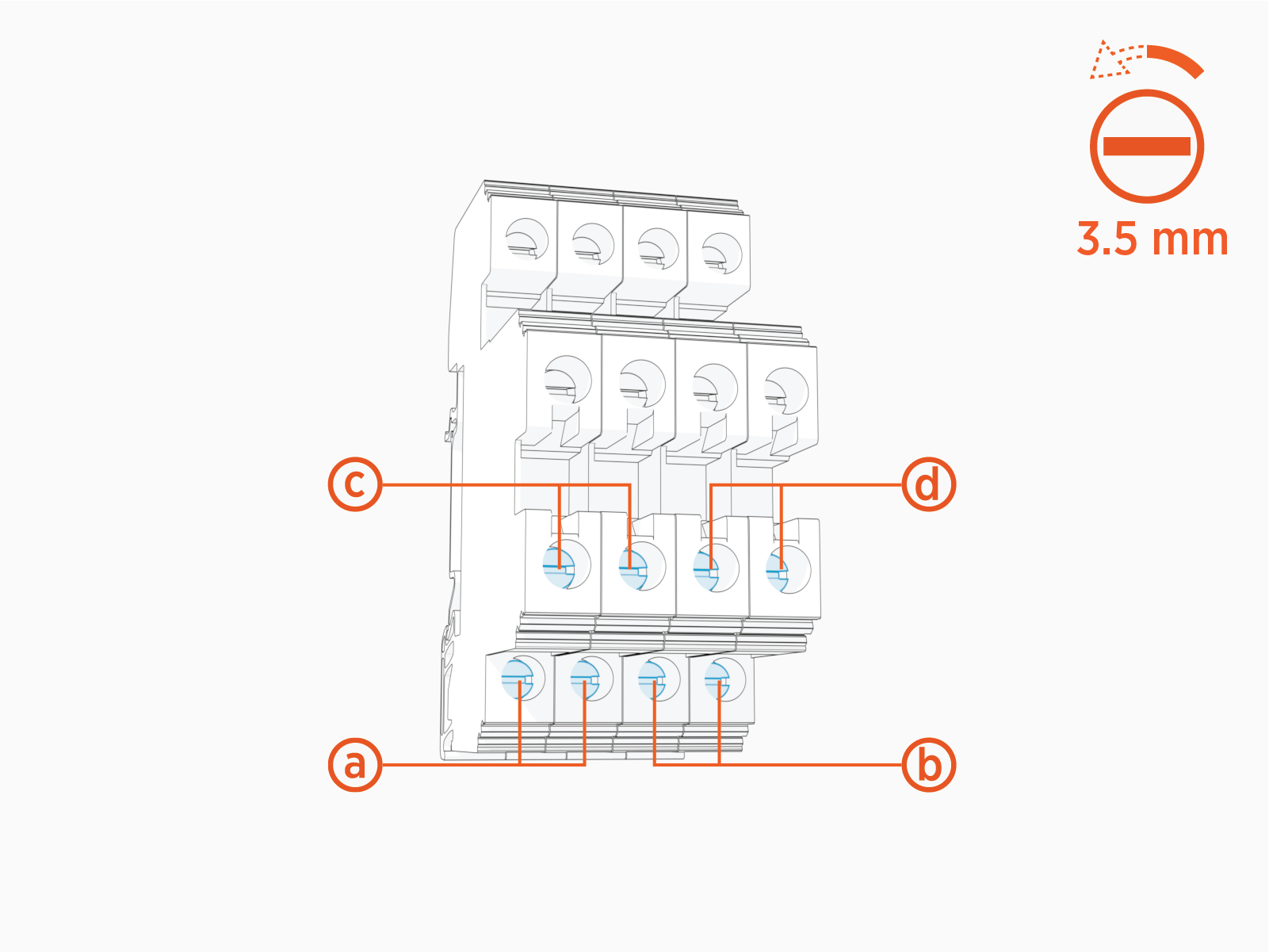
Identify the target wire insertion points for landing the LV DC
Low Voltage Direct Current input wire pair.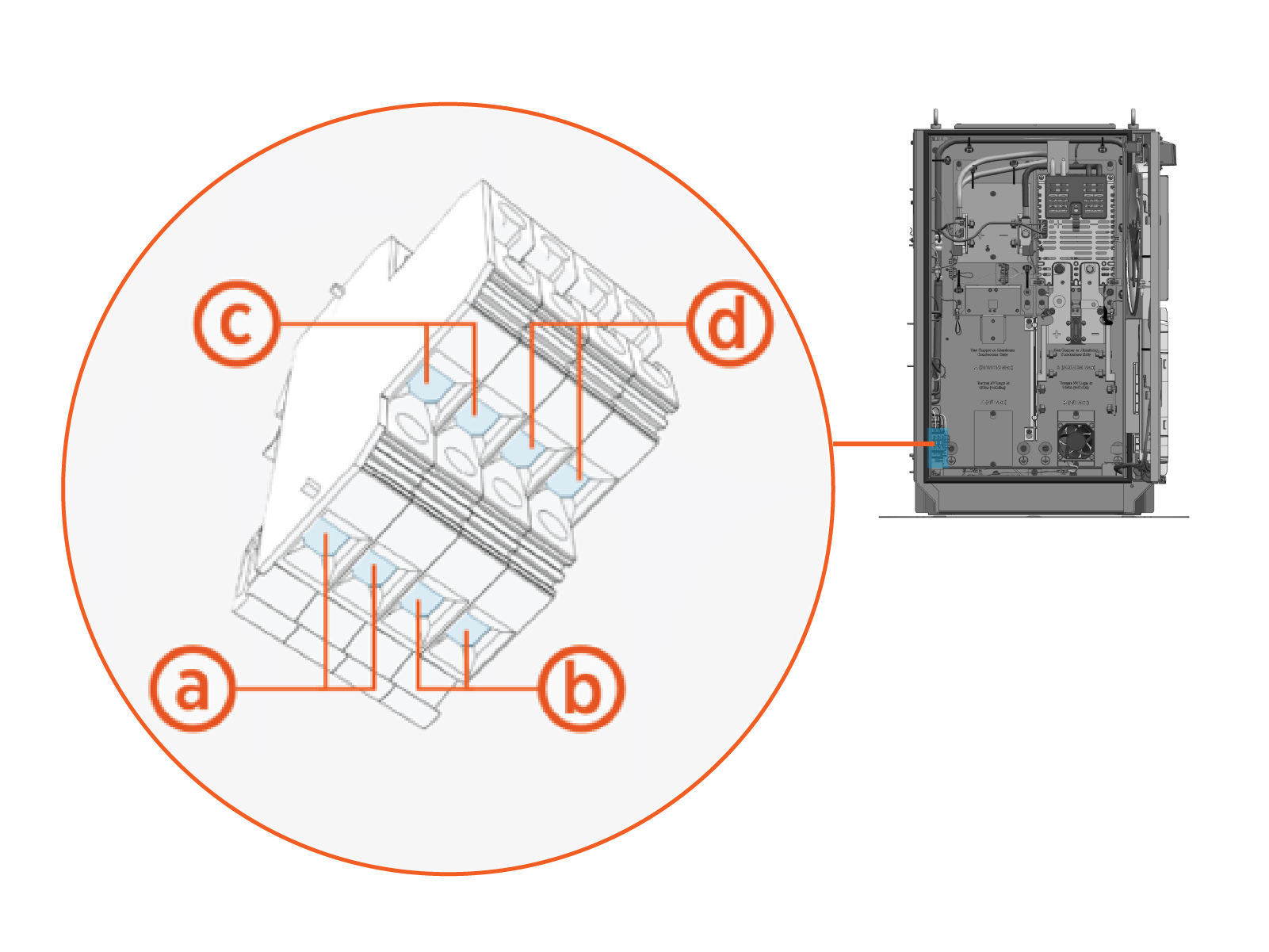
-
Input, primary
-
Input, secondary
-
Output, primary
-
Output, secondary
-
-
Cut wires to length for landing at the terminal.
-
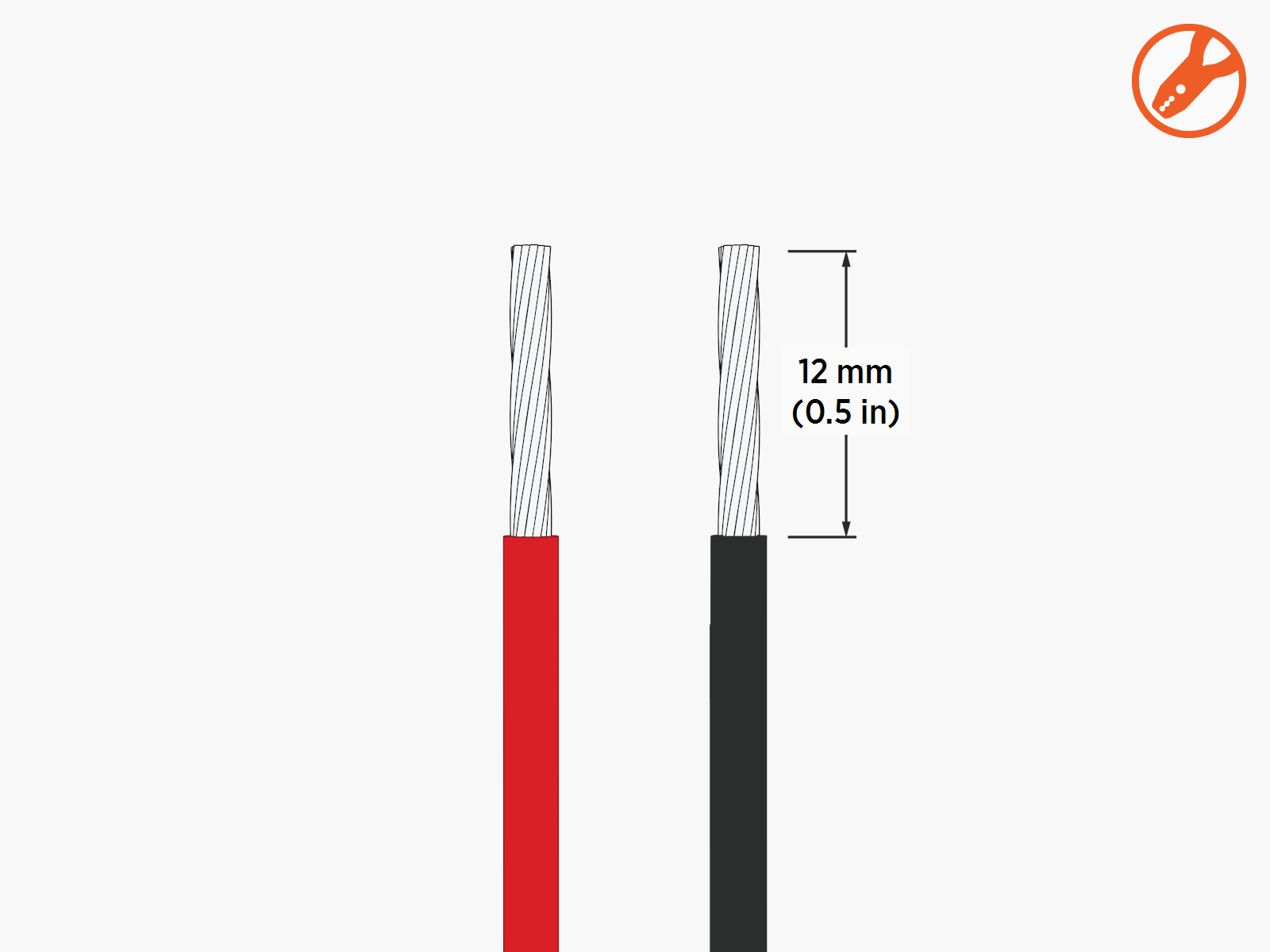
Strip the wire jackets.
-
Loosen the wire set screws (x2).
-
Input, primary
-
Input, secondary
-
Output, primary
-
Output, secondary
-
-
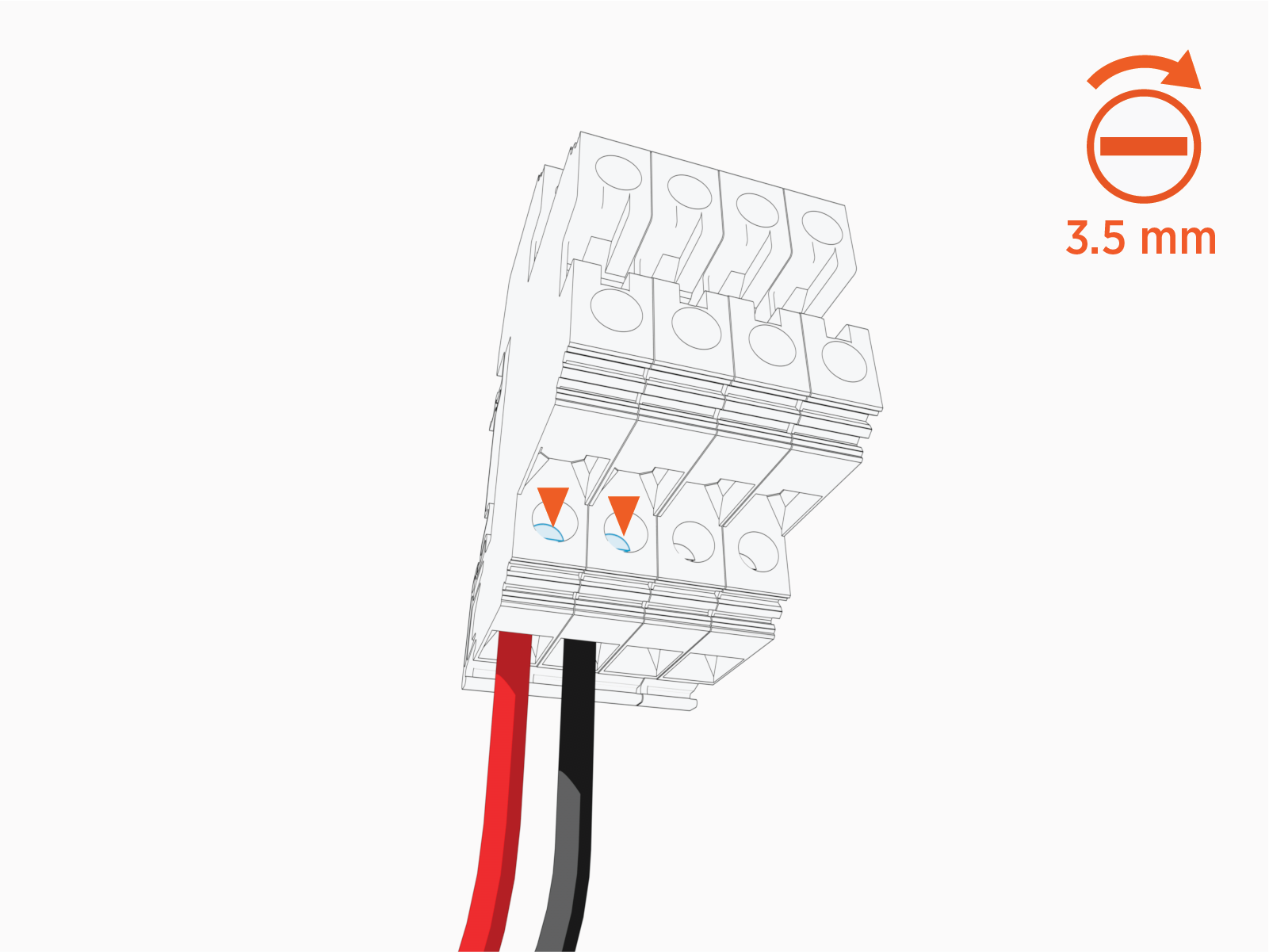
Route wires (x2) through the wireway clamps (if necessary use cable ties) and insert them into the LV
Low Voltage terminal block. For each wire pair, insert the positive (+) wire into the left terminal. Insert the negative (-) wire into the right terminal. -
Torque the screws (x2) to 1.5 Nm (13.3 in-lb). Push-pull to test that both wires (+ and -) are secured.
How to connect Ethernet cable from Power Block or Power Link 2000
Follow the procedure below for each Ethernet cable.
-
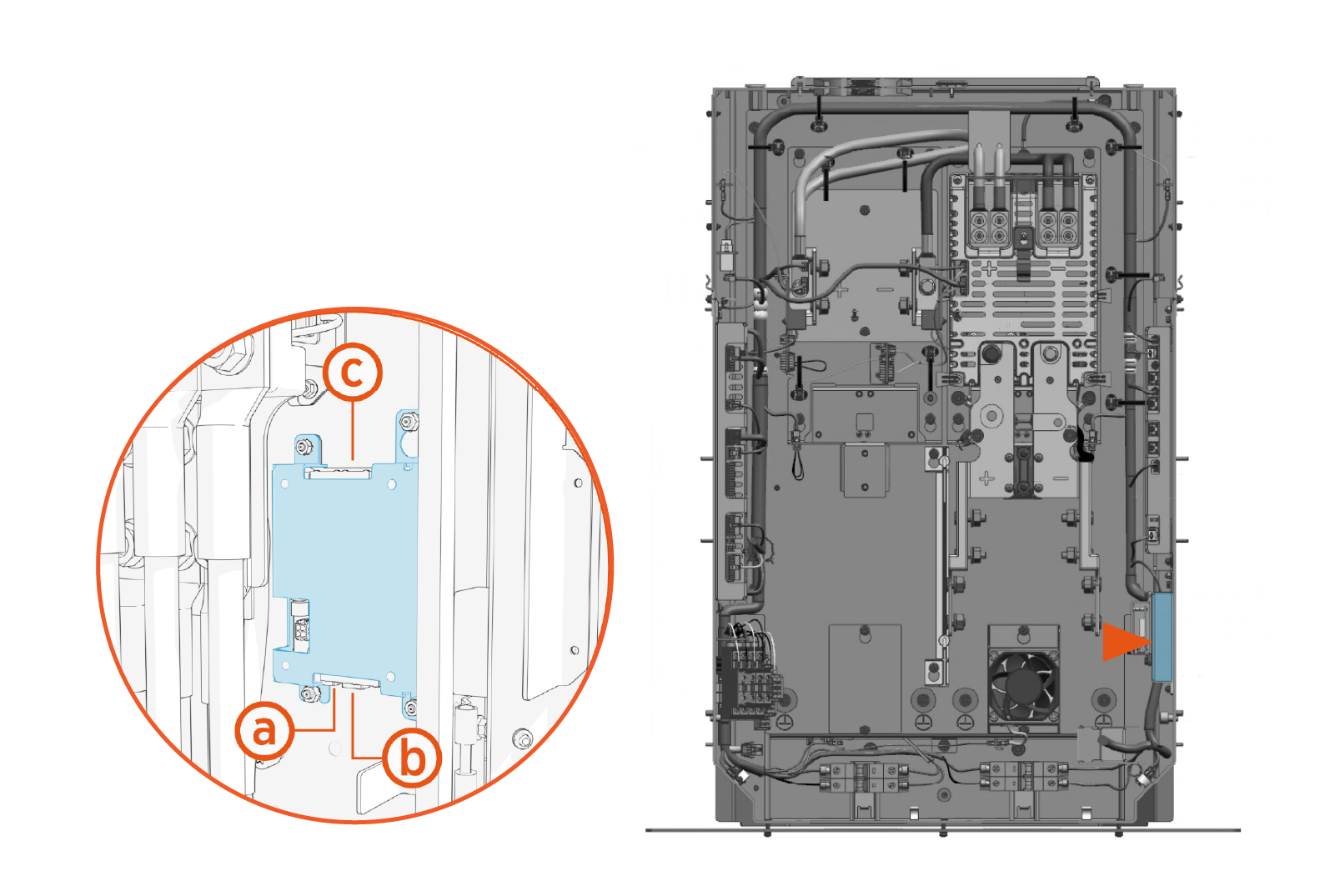
On the Smart Ethernet Switch, locate three ports for landing Ethernet cables.
-
Lower left port
-
Lower right port
-
Upper port
Cables may plug into any available port.
-
-
Trim Ethernet (Cat6 STP
Shielded Twisted Pair) cable terminal to length, allowing for a service loop. -
Field crimp a shielded RJ45 connector onto the Ethernet cable. Use straight-through T568B pattern.
-
For an Ethernet cable connecting from Power Block to Power Link 2000, do not ground the shield at this end of the cable. Ground the shield at the end of the cable that connects to the Power Block.
-
For an Ethernet cable connecting between Power Link 2000s, ground the shield at the cable end nearer to the Power Block (per Ethernet topology for the Express Plus cluster). Do not ground the shield at the other cable end.

-
-
Test the Ethernet cable for functionality.
If using a Paige OSP Shielded GameChanger cable for a wire run length greater than 100 m (328 ft), follow the test procedure specified by Paige. See Paige GameChanger Resources.

-
Route the cable through the wireway clamps and connect the cable at the Smart Ethernet Switch.
To establish a secure connection, the RJ45 connector latch must click into the Smart Ethernet Switch port.
LV Output to PD Controller
-
Familiarize yourself with the Power Link 2000 to PD Controller LV DC
Low Voltage Direct Current wire assembly. Understand which end of the wire assembly lands at the Power Link 2000. See Power Link 2000 to PD Controller LV DC wire assembly. -
Pull the LV DC
Low Voltage Direct Current wire assembly, Ethernet cable, and chassis ground wires through conduit. -
Connect the LV DC
Low Voltage Direct Current wires and Ethernet Cables. See:
How to connect LV DC output to PD Controller wire
-
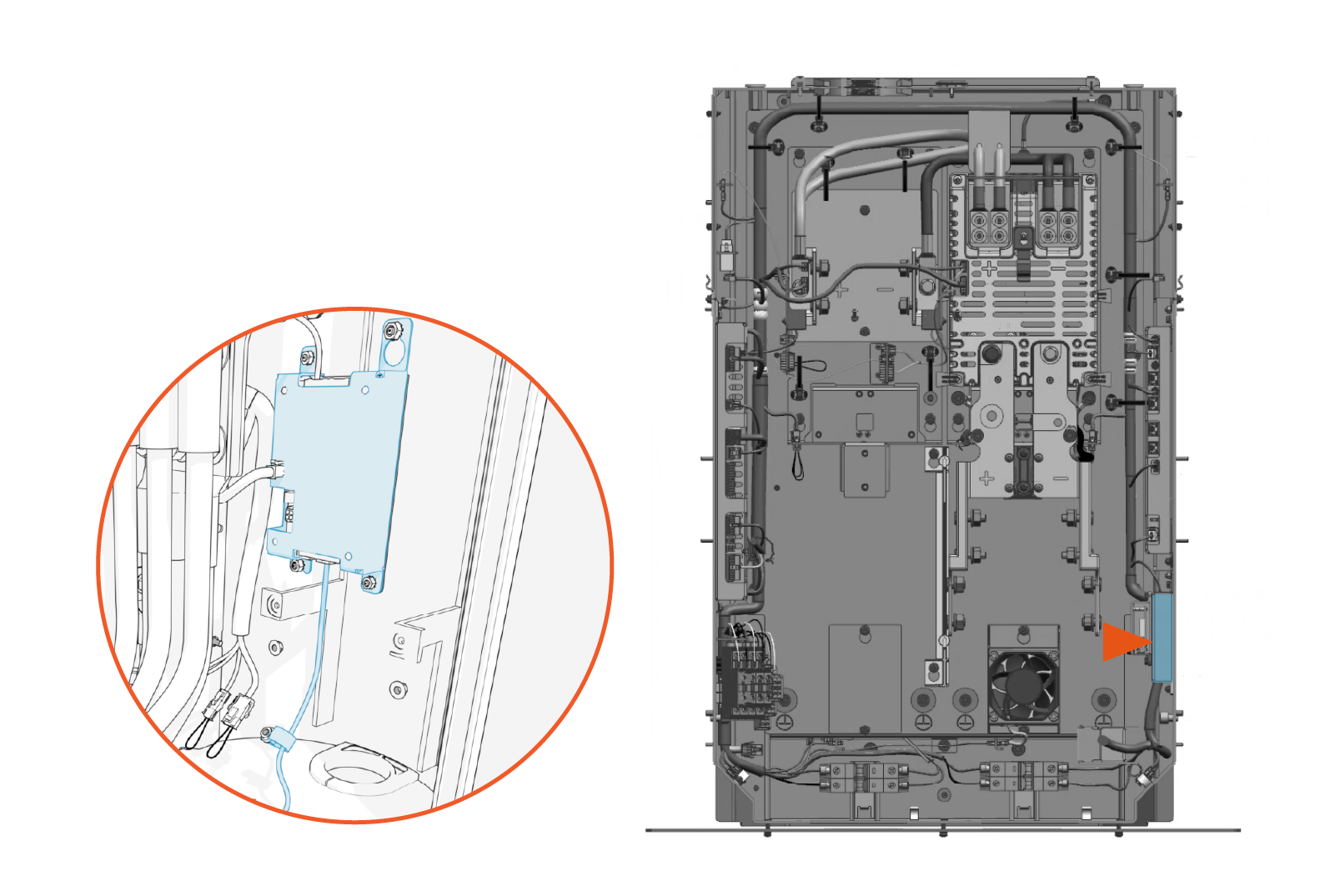
Route the Power Link 2000 to PD Controller LV DC
Low Voltage Direct Current wire assembly (with female microfit connector) to the wire shown below (with male microfit connector). Route the wires along the wall of Power Link 2000 enclosure.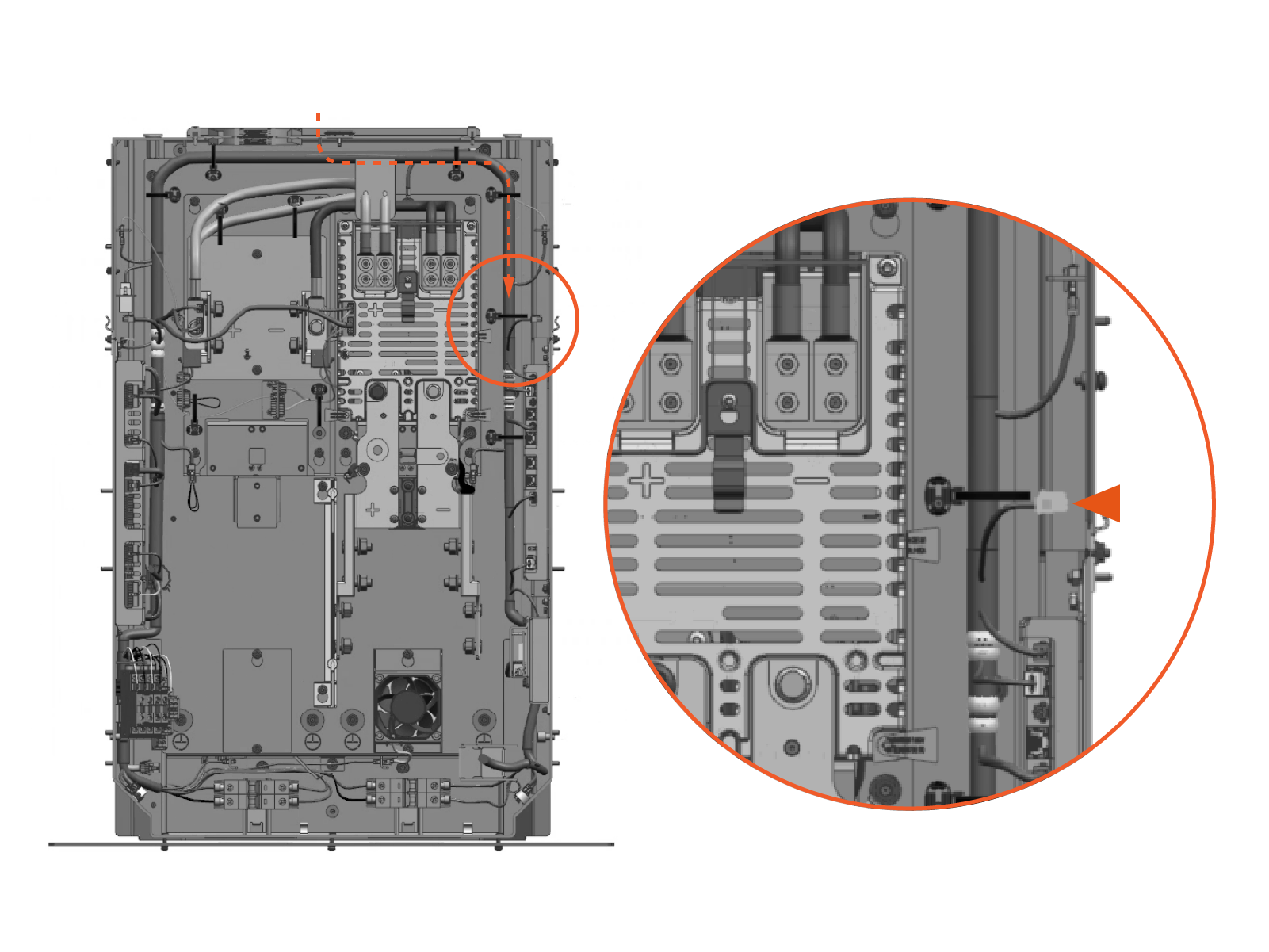
-
Connect the wires together. Make sure the microfit connectors snap together with an audible click.
-
To ensure the wires do not make contact with the HV DC
High Voltage Direct Current bus bars, use zip-ties to secure the LV DC Low Voltage Direct Current wire assembly to the main cable harness.
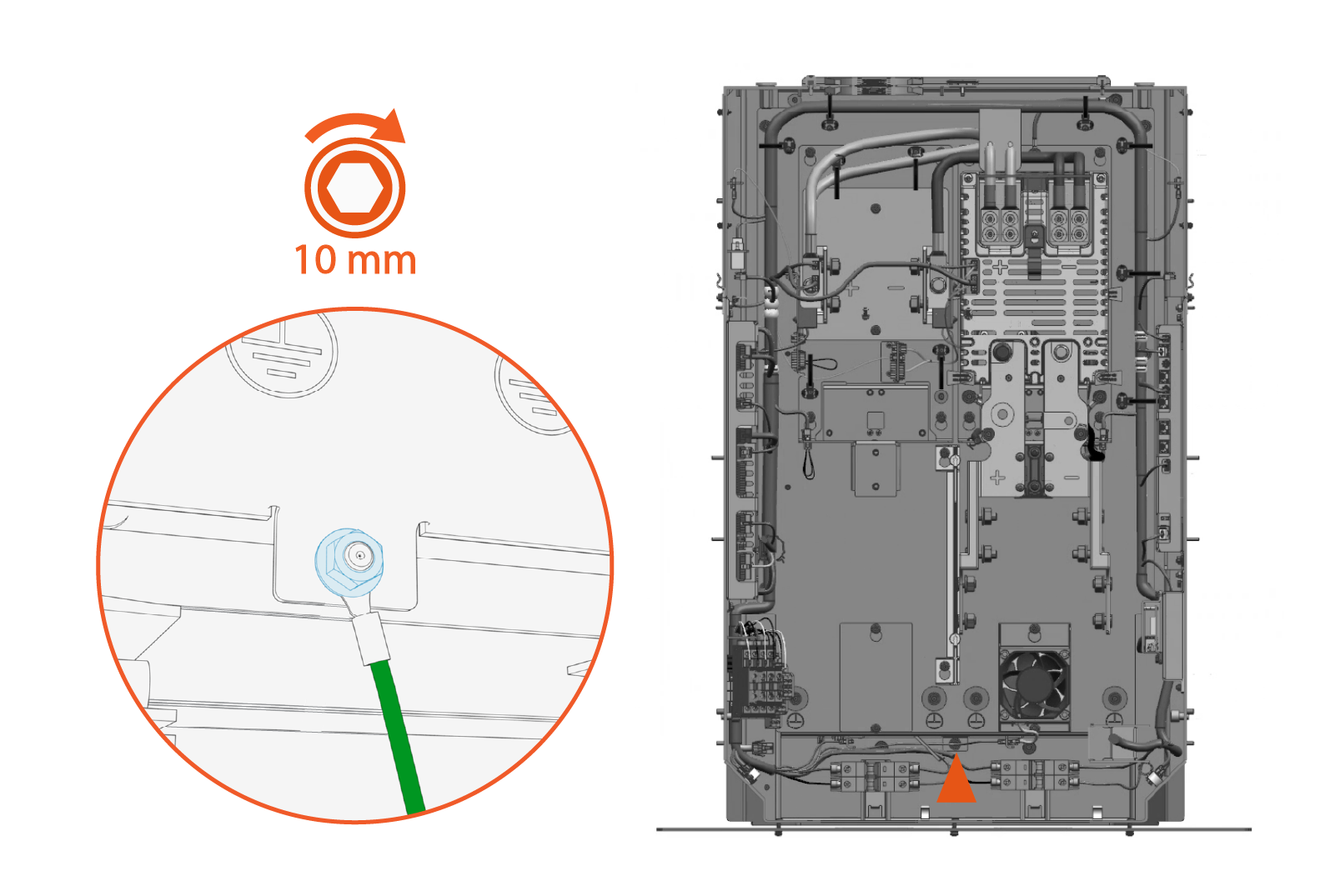
How to connect chassis ground to PD Controller wire
Follow the procedure below for the chassis ground wire.
-
Route the chassis ground wire to the chassis ground stud. Route the wires along the wall of Power Link 2000 enclosure.
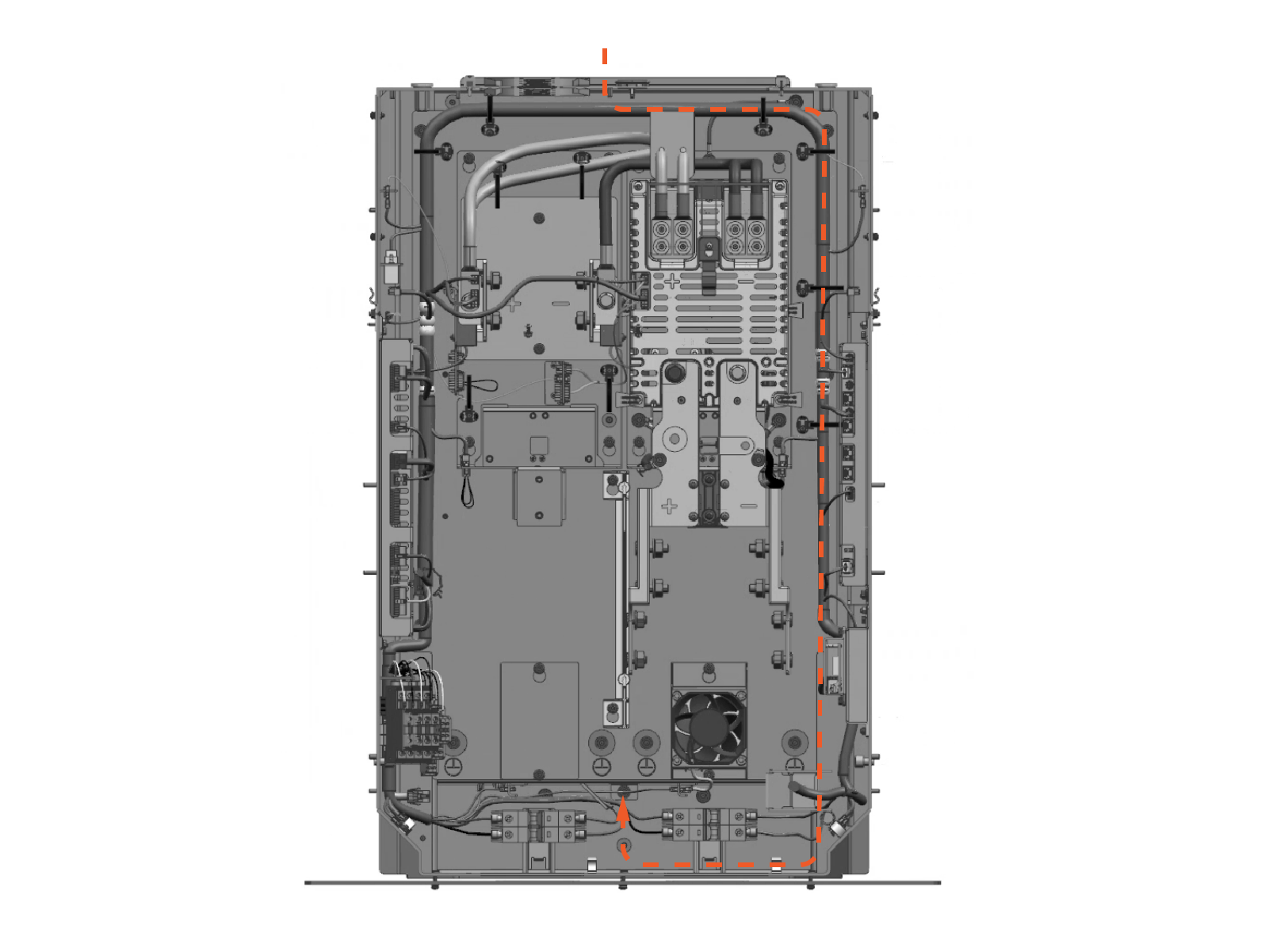
-
Cut wire to length for landing at the chassis ground stud. Take into account the length of the ring terminal that will terminate the wire.
-
Prepare the wire:
-
Strip the ground wire for installation of a ring terminal.
-
Crimp the ring terminal onto the wire end.
-
-
Remove the lug nut from the chassis ground stud.
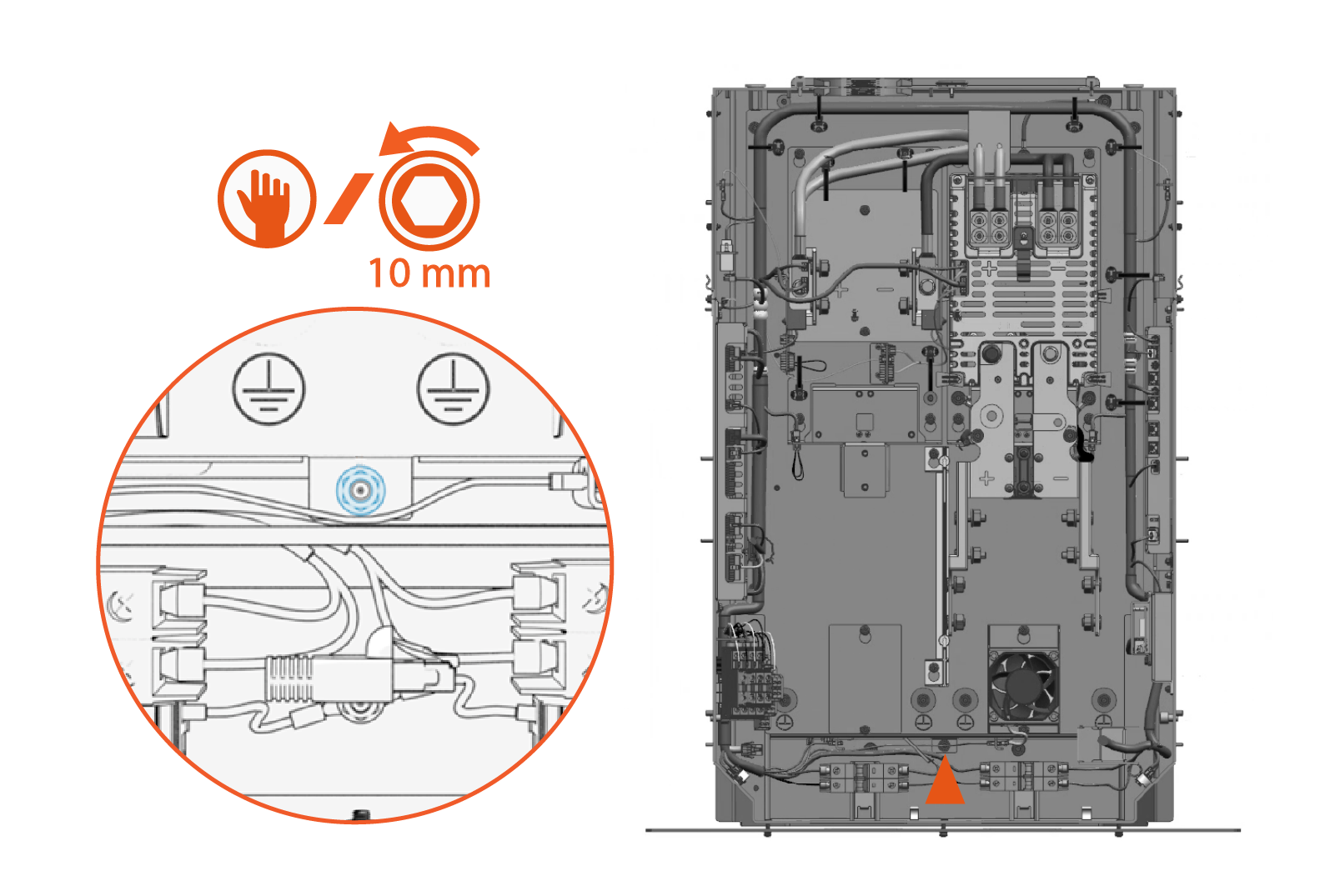
-
Install the prepared wire onto the stud.
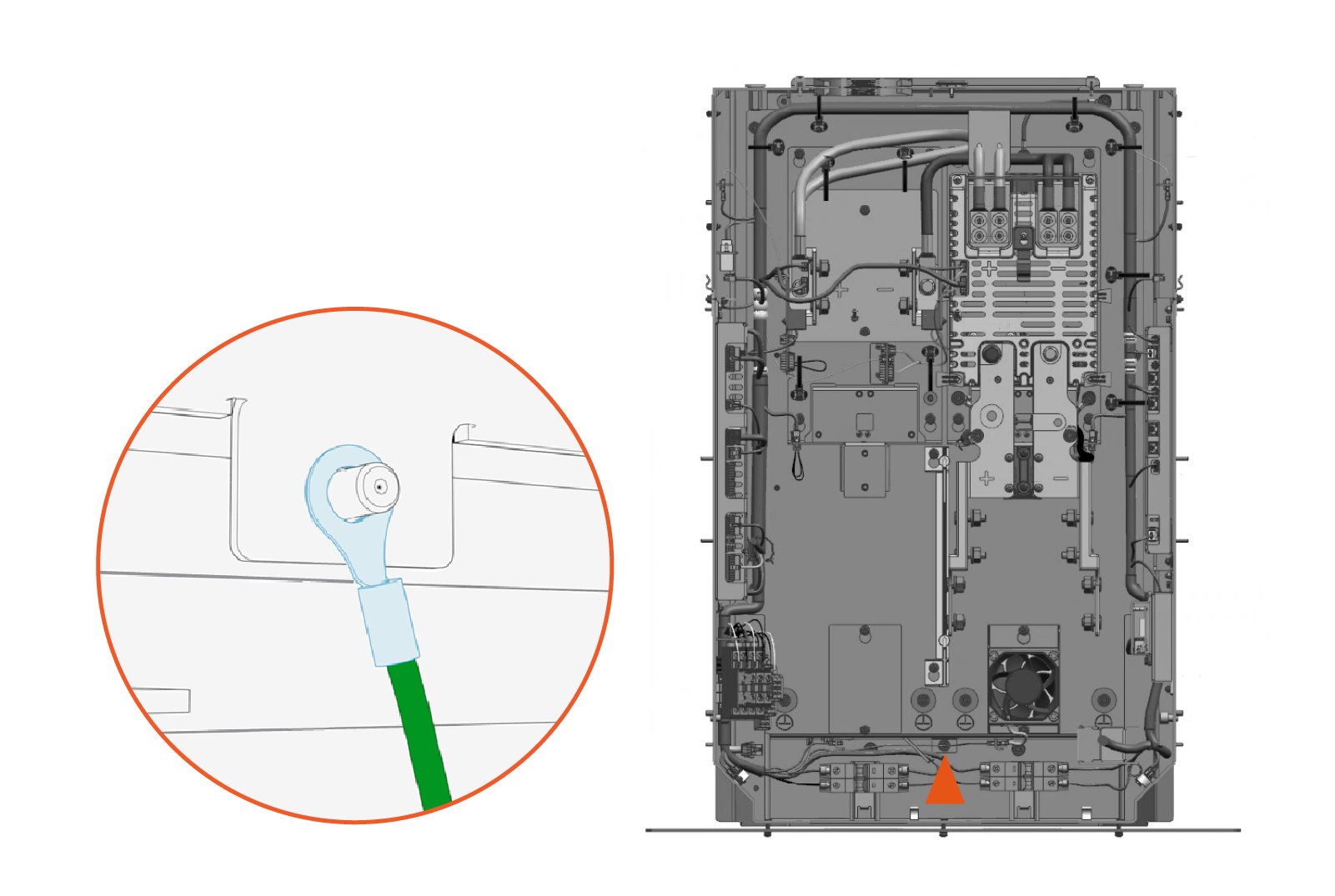
-
Reinstall the lug nut. Torque to 5.6 Nm (50 in-lb).
How to connect Ethernet output to PD Controller cable
-
Route the Ethernet cable to reach the Ethernet Switch (SSLAN
Smart Switch Local Area Network). Keep the cable routed along the Power Link 2000 enclosure wall.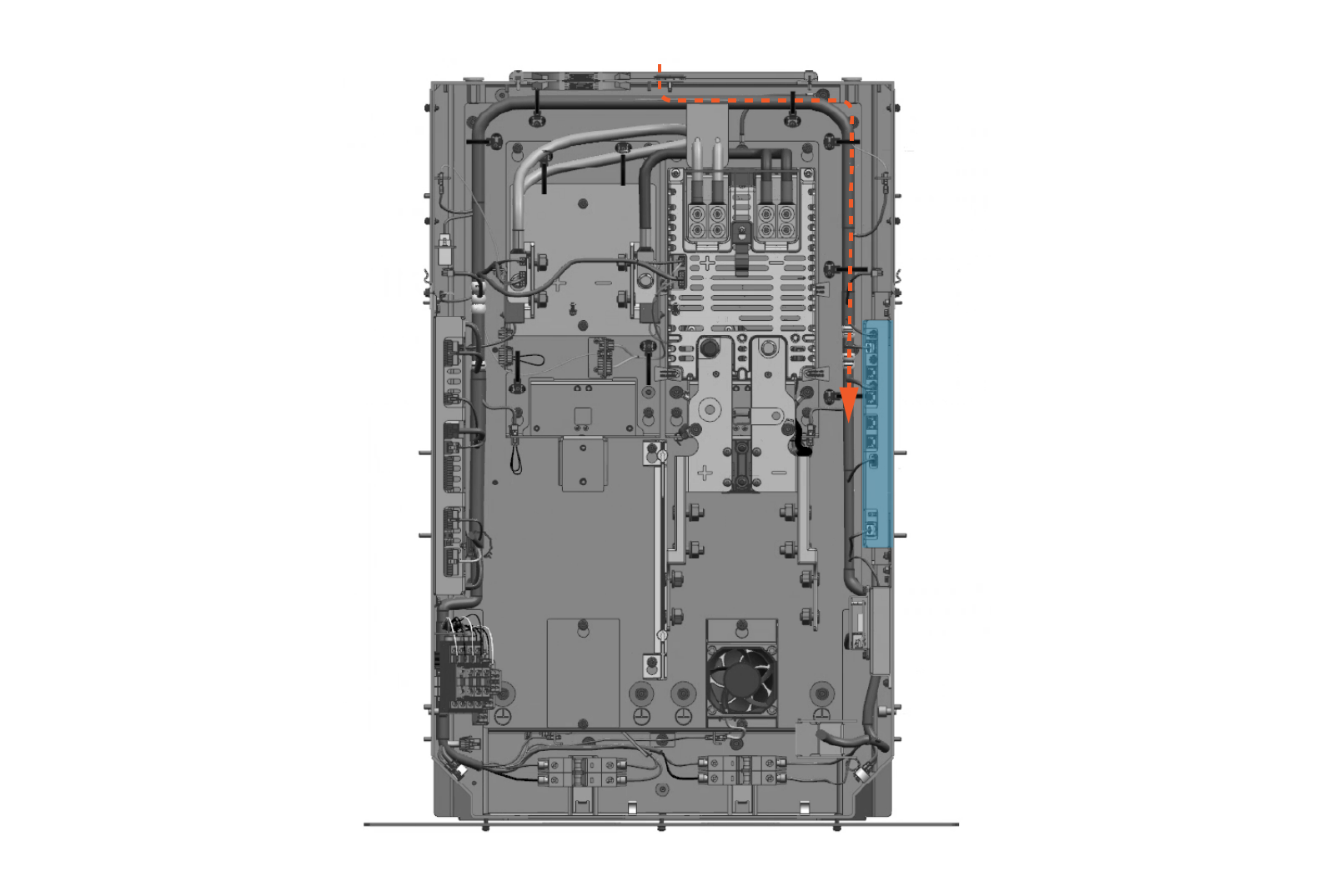
-
Trim Ethernet (Cat6 STP
Shielded Twisted Pair) cable terminal to length, allowing for a service loop. -
Field crimp a shielded RJ45 connector onto the Ethernet cable. Use straight-through T568B pattern.
Ground the shield at this end of the Ethernet cable. Do not ground the shield at the end of the cable that connects to the PD Controller.
-
Test the Ethernet cable for functionality.
-
Connect the Ethernet cable to the Ethernet Switch (SSLAN
Smart Switch Local Area Network). To establish a secure connection, the RJ45 connector latch must connect into the port with an audible click.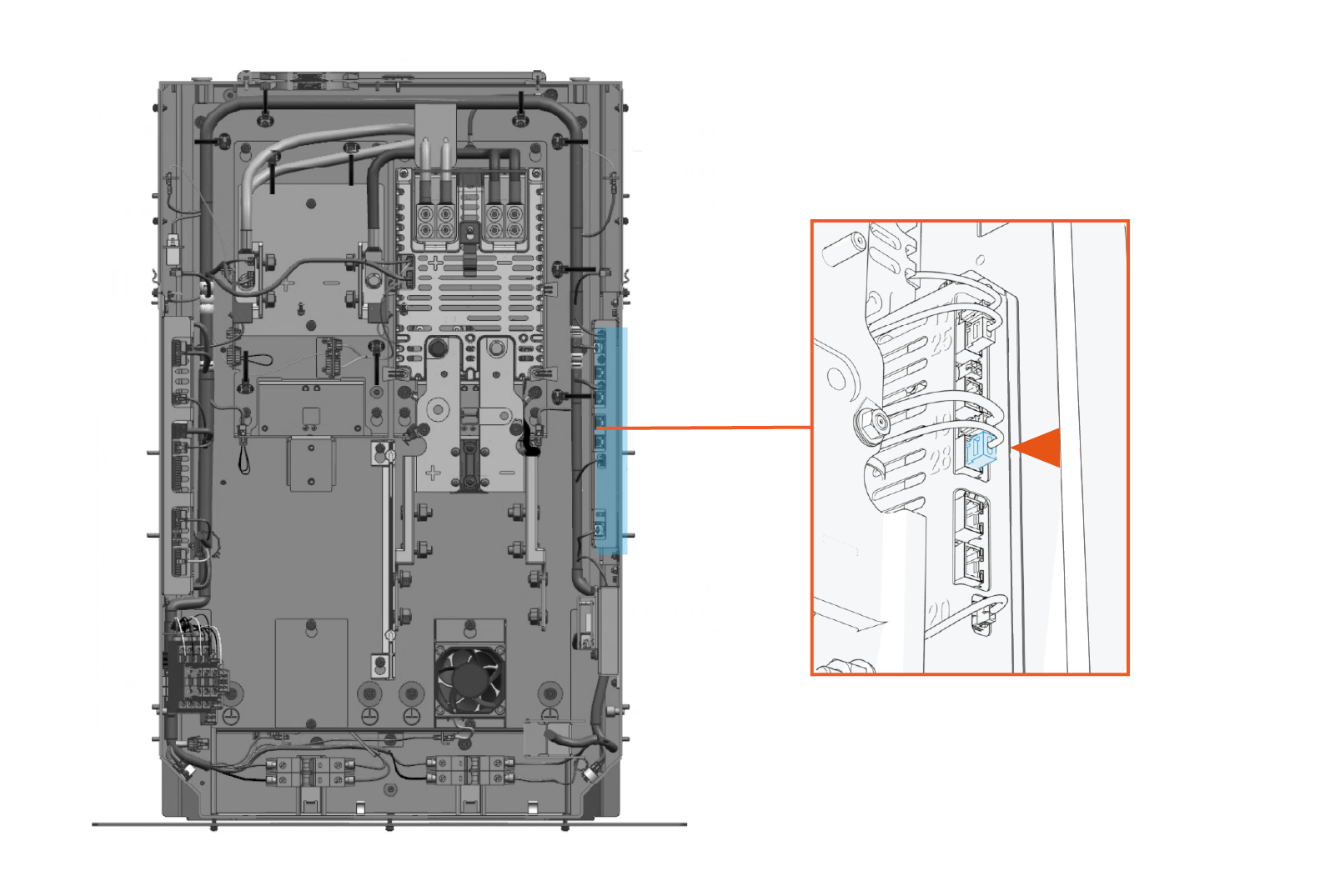
-
To ensure the cable does not make contact with the HV DC
High Voltage Direct Current bus bars, use zip-ties to secure the Ethernet cable to the main cable harness.
Ground to Pantograph Down Mast
-
At the bottom gland plate, install a cable gland at the ground wire exit hole.
-
Route the ground wire through the gland and into the enclosure.
-
Connect the ground wire at any available ground stud. See Wiring Overview for landing locations. See How to Connect High Power Ground Wire for wire landing instructions.
-
Tighten the cable gland.