Connect Schunk SLS 201.102 Wires
Wiring Overview
Before connecting wires at the pantograph, study and understand the wiring information provided below. For wire quantities, sizes, and terminations, see Wires and Terminations Required for Site and refer to the site drawing.
The Schunk SLS 201.102 is configured with the following wiring:
-
HV DC
 High Voltage Direct Current and high power ground power wires connecting from Power Link 2000.
 -
Three sub-cables within the Controller Interface Cable, connecting from the PD Controller:
-
Control pilot
-
Rest sensor
-
Pantograph control
-
-
A ground wire connecting between the pantograph frame and the auxiliary mounting frame
-
A ground wire connecting between the pantograph frame and the top of the mast
The wires land on the pantograph at the locations shown below.

-
High power ground (PE)
-
HV DC
High Voltage Direct Current input, positive (+) -
HV DC
High Voltage Direct Current input, negative (-) -
Control pilot
-
Rest sensor
-
Pantograph frame ground
-
Pantograph control
Parts Needed
To prepare for Schunk SLS 201.102 wiring, find the following parts from the Auxiliary Components Kit:
-
M10 bolt and flange nut (x5 each)
-
Ground wire (0.5 m, 1.6 ft)
-
M8 bolt and flange nut (x1 each)
-
Zip ties
Connect HV DC Wires
Prepare Wires
-
Create a service loop inside the mast arm with the HV
High Voltage DC wires and pull the wire ends through the wire slot towards the pantograph.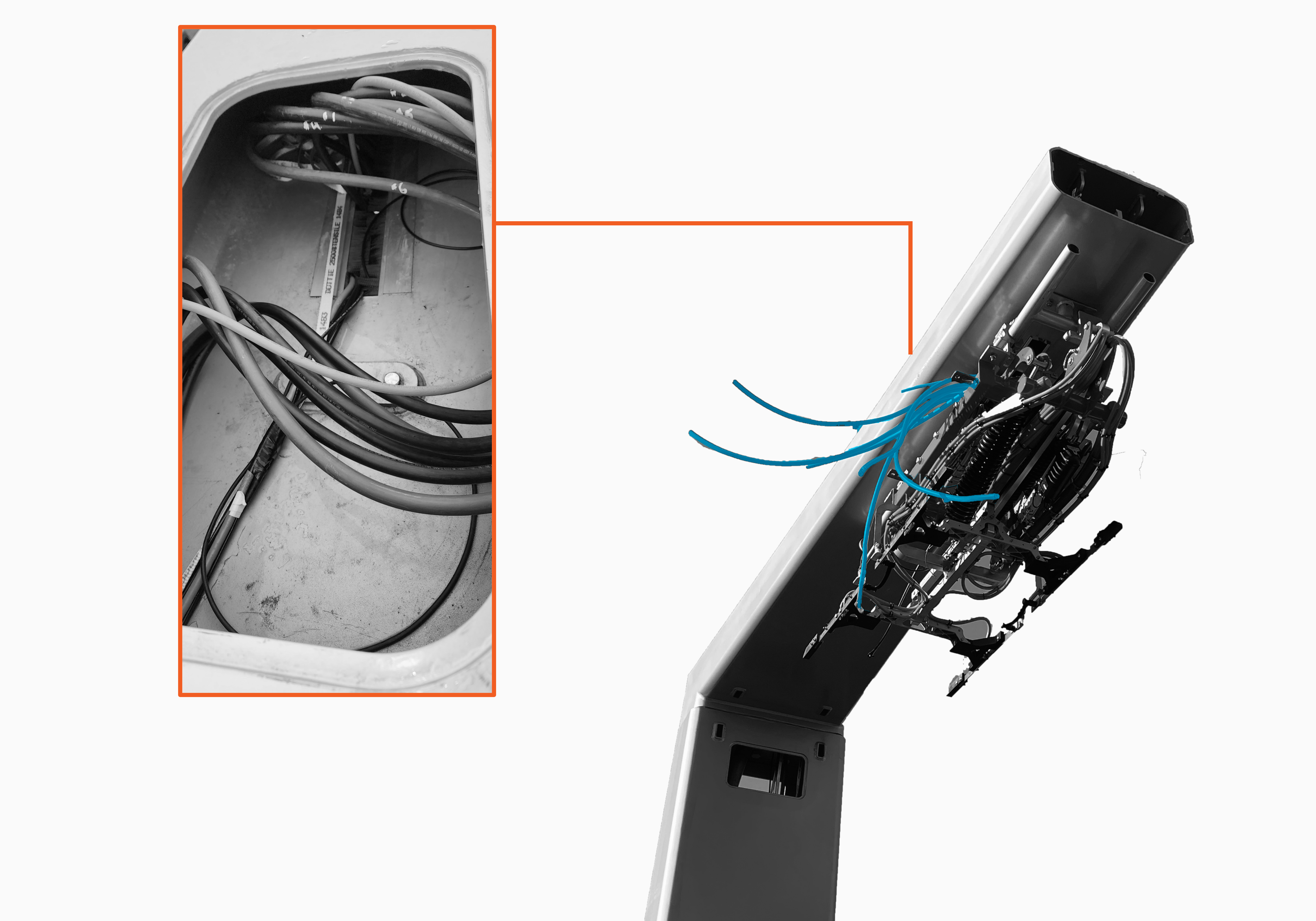
-
Cut the HV DC
High Voltage Direct Current and high power ground wires to length for reaching the bus bars on the pantograph. Account for the length of the lug that will terminate each wire.The positive (+) and negative (-) bus bars each have two holes for fastening wire lugs. One bolt at each hole can secure two wires, with one wire on each side of the bus bar.
-
Install wire lugs.
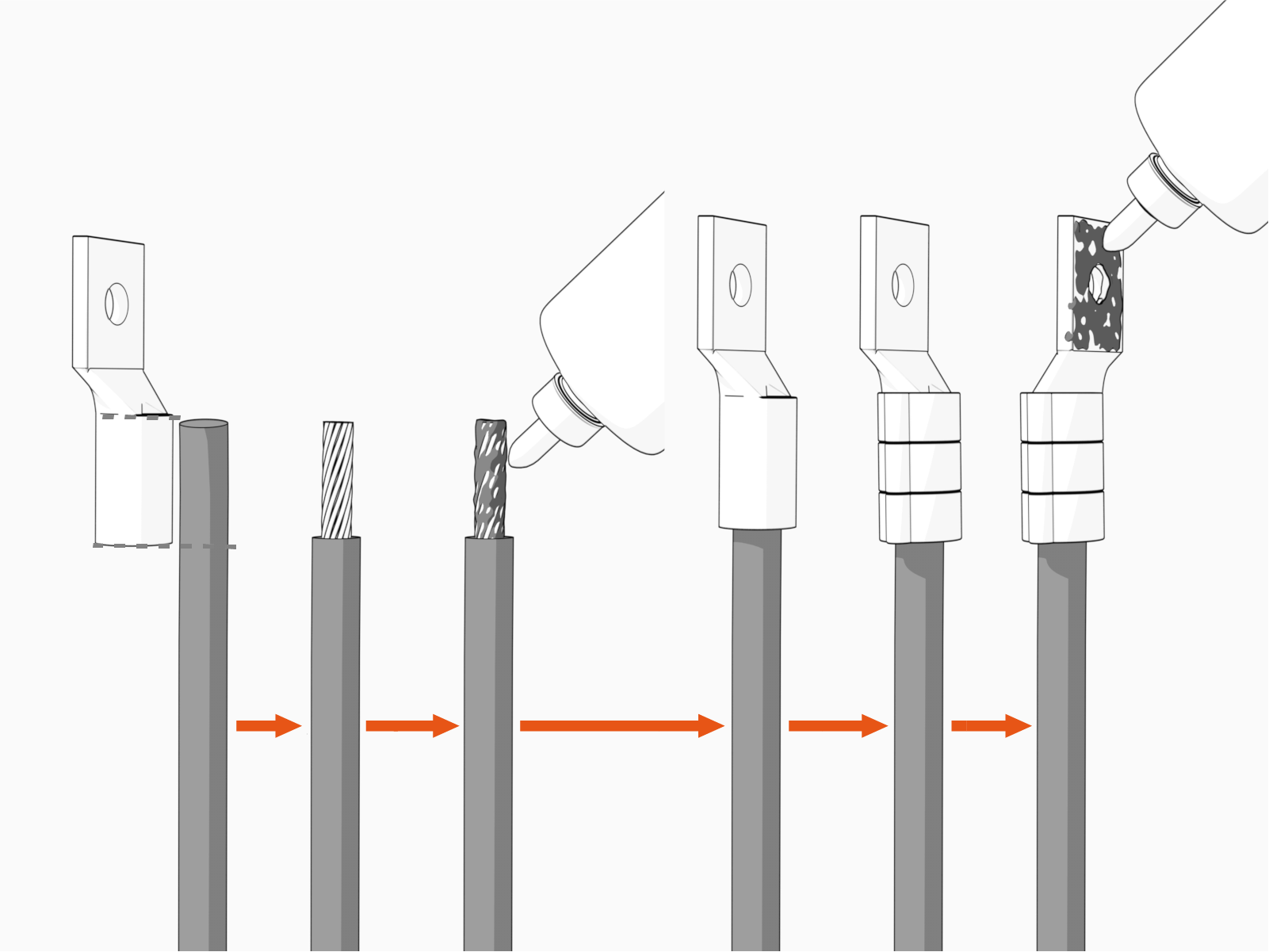
-
Mark the lug's barrel height on the wire terminal.
-
Strip the jacket on the marked terminal. Use a suitable wire stripper, such as Klein tool.
-
If recommended by the wire manufacturer or local code, apply an anti-oxidant joint compound to the stripped wire material to make a gastight joint with the lug.
-
Insert the stripped terminal into the lug's barrel and crimp it. Use a suitable lug crimping tool and/or die recommended by the lug manufacturer.
-
Apply dielectric grease to the lug's tongue surface that comes in contact with the bus bars.
-
Connect Wires
-
Connect HV DC
High Voltage Direct Current wires (positive, negative, and PE). Use provided M10 bolts and flange nuts. Torque to 19 Nm (14 ft-lb).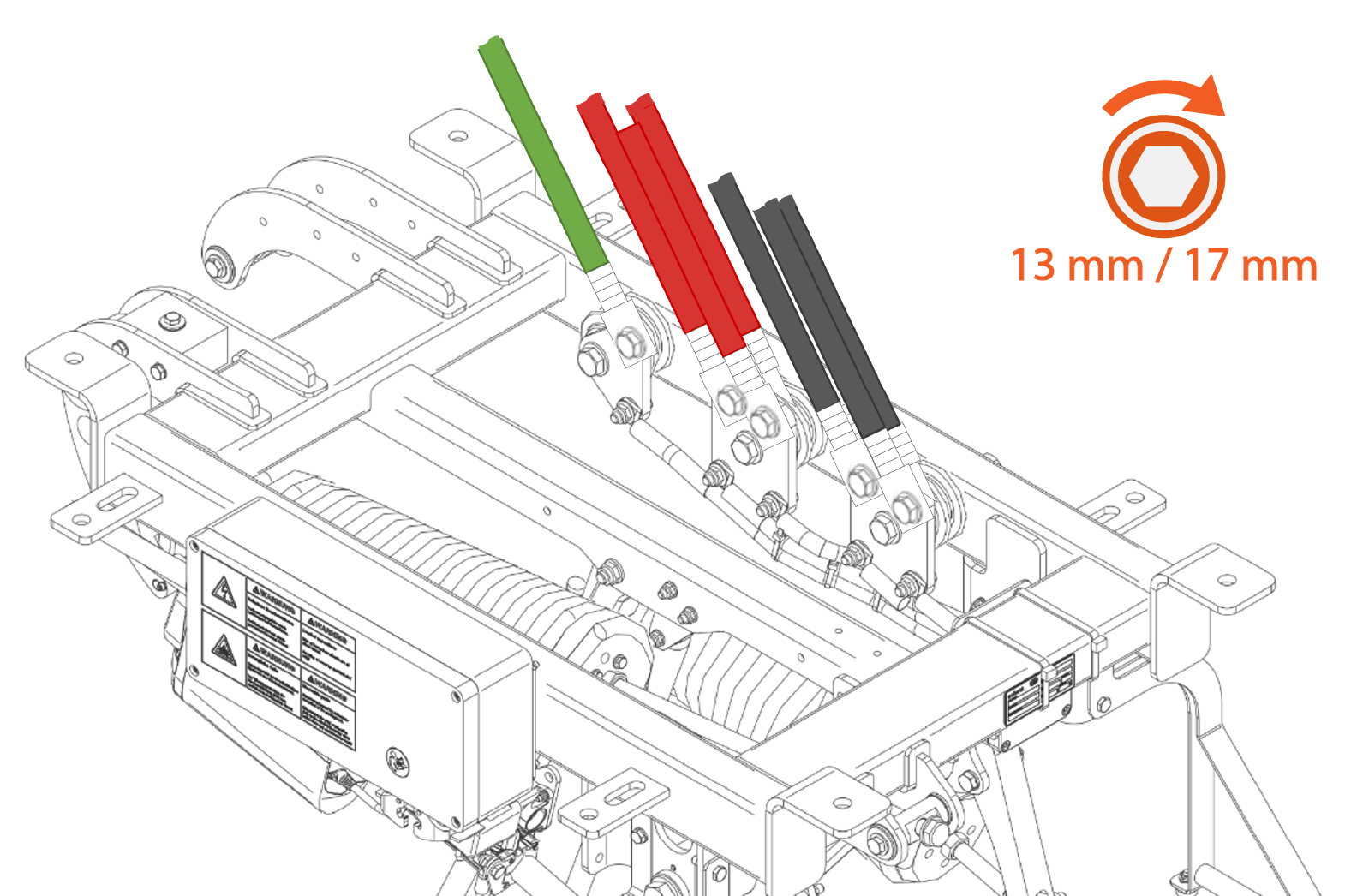
-
Mark all torqued connections. Torque marks are required to pass post-installation inspection.
Connect Pantograph Frame Ground Wires
Prepare Auxiliary Mounting Frame Ground Wire
-
Familiarize yourself with the ground cable from the Auxiliary Components Kit. See Pantograph Frame to Auxiliary Frame Ground Wire.
-
Mark the cable end with the larger ring terminal (sized for M8 (0.31 in) bolt). This is the end that installs at the pantograph.
Prepare Top of Mast Ground Wire
-
Pull the ground wire (contractor-provided) through the wire slot on the mast arm. Route one end of the wire to the pantograph. Leave the other end of the wire inside of the mast arm.
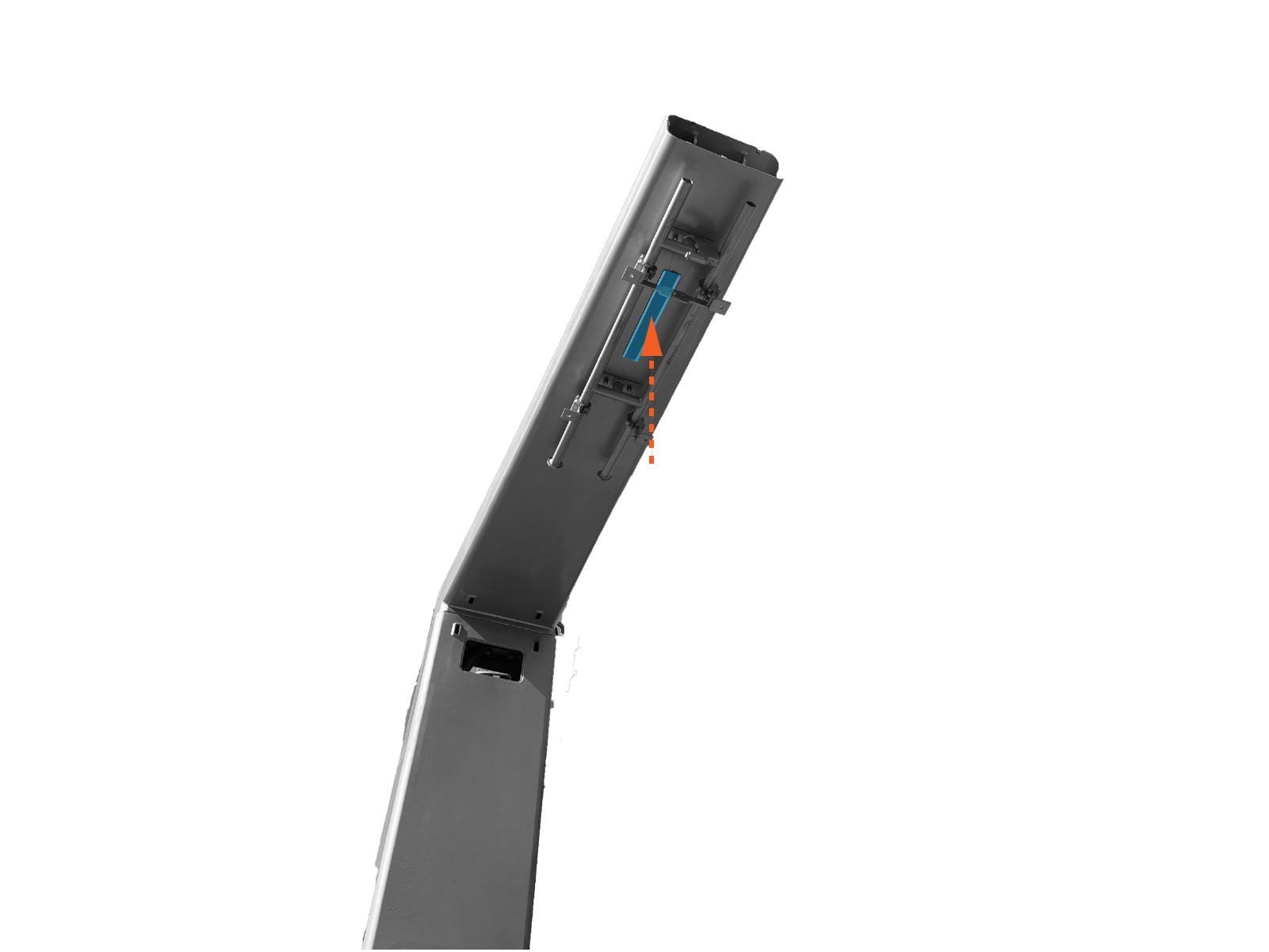
-
Prepare the wire end that will land on the pantograph frame:
-
Strip the wire end.
-
Install a ring terminal sized for M8 bolt.
-
Connect Ground Wires
-
Connect the two ground wires to the pantograph frame ground landing. Use M8 bolt and flange nut. Torque to 12.2 Nm (108 in-lb).
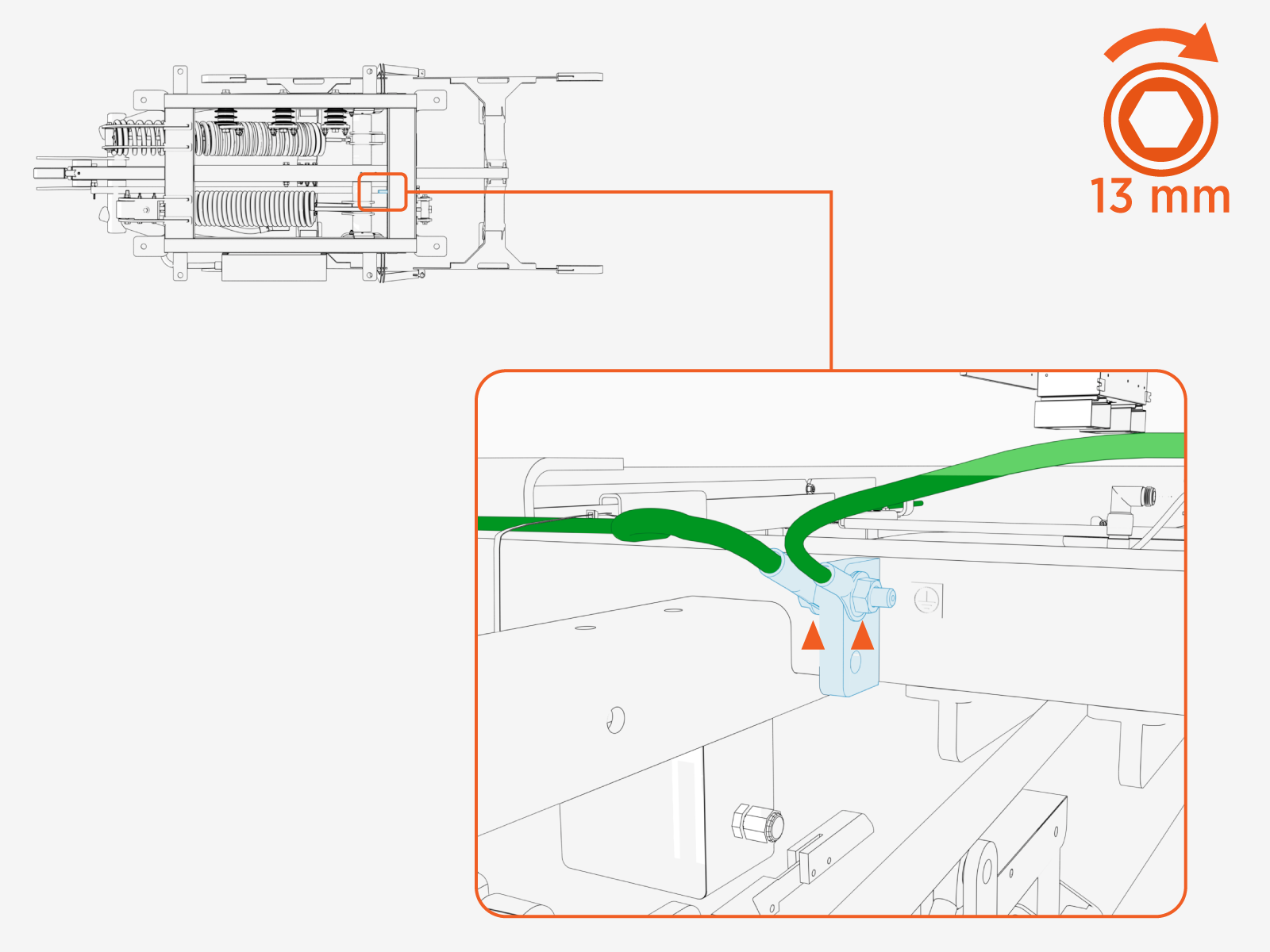
-
Use a zip tie to secure the wires so that they are clear of the pantograph during operation. The wires must be kept away from the pantograph arms and charging rails.
Connect LV DC Cables
Connect Pantograph Control Cable
-
Route the pantograph control cable to the pantograph electric control unit. Ensure the cable is kept clear of high voltage exposed conductors and the pantograph arms through their full movement range.
-
Connect the pantograph control cable.

-
Push down on the latch tabs to secure the connector.
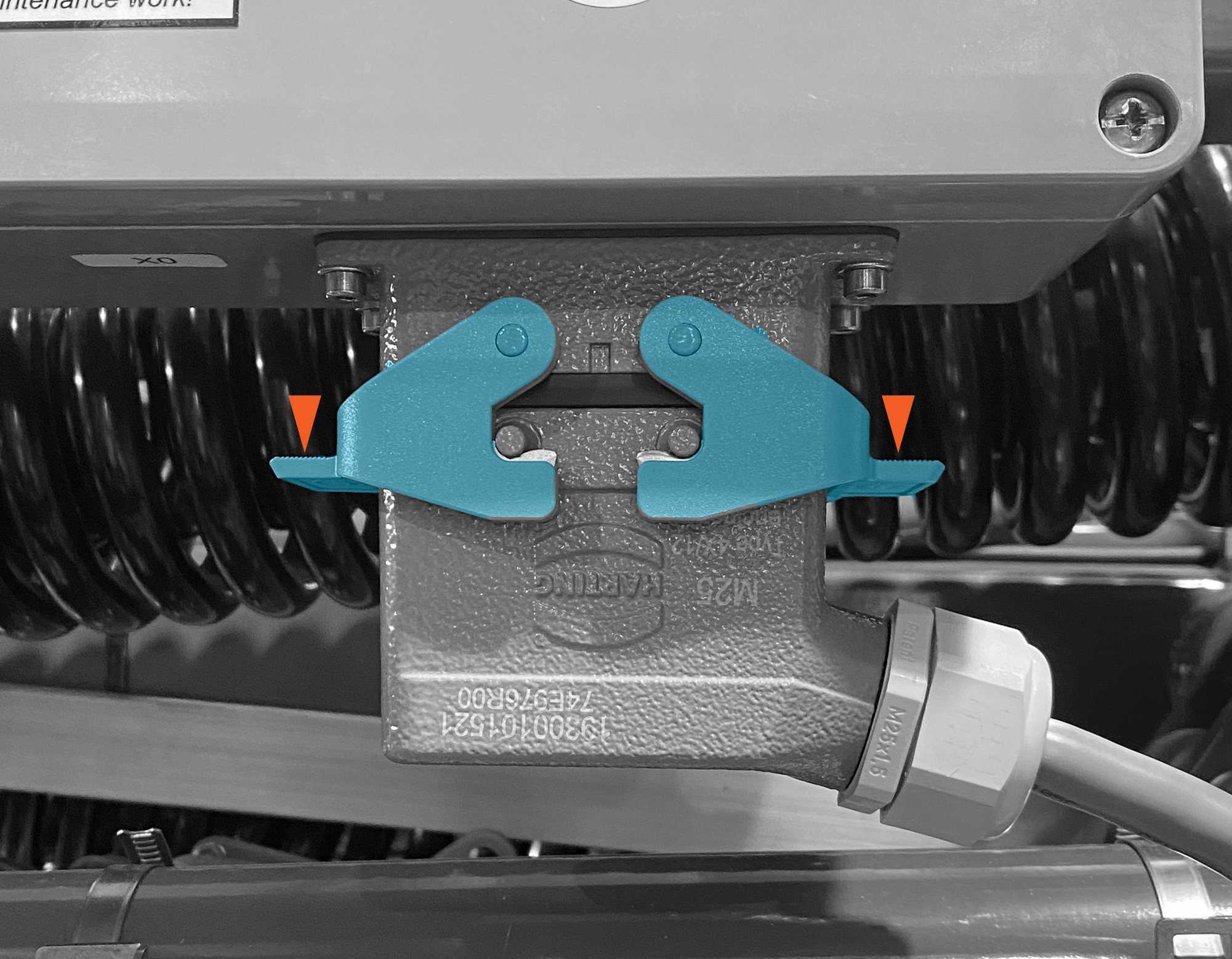
-
Use a zip tie to secure the cable so that it is clear of the pantograph during operation. The cable must be kept away from the pantograph arms and charging rails.
Connect Control Pilot Cable
-
Route the pantograph control pilot cable to reach the pantograph control box. Ensure the cable is kept clear of high voltage exposed conductors and the pantograph arms through the entire movement range.

-
Quarter turn spring latches (x4) to open the pantograph control box.
The latches are operated with a Phillips head screwdriver but they are not screws. Gently push the latch head inwards with the screwdriver and initiate the turn. Part way through the turn, keep the screwdriver in contact with the latch, but discontinue application of inward pressure. Continue turning until the latch pin pops out.
Be gentle when operating the latches. The latches can break if the screwdriver applies significant torque.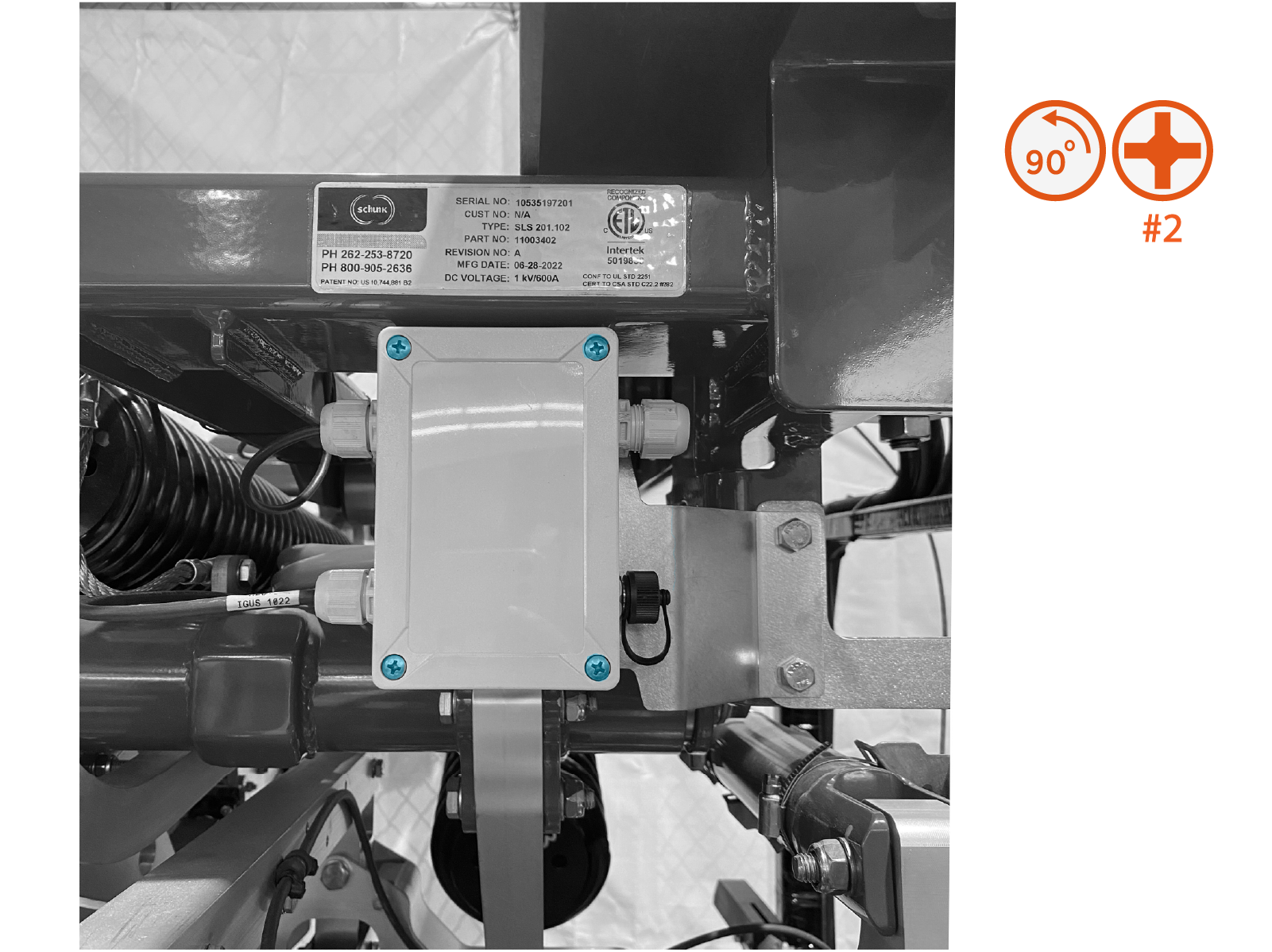
-
Route the control pilot cable though the cable gland.
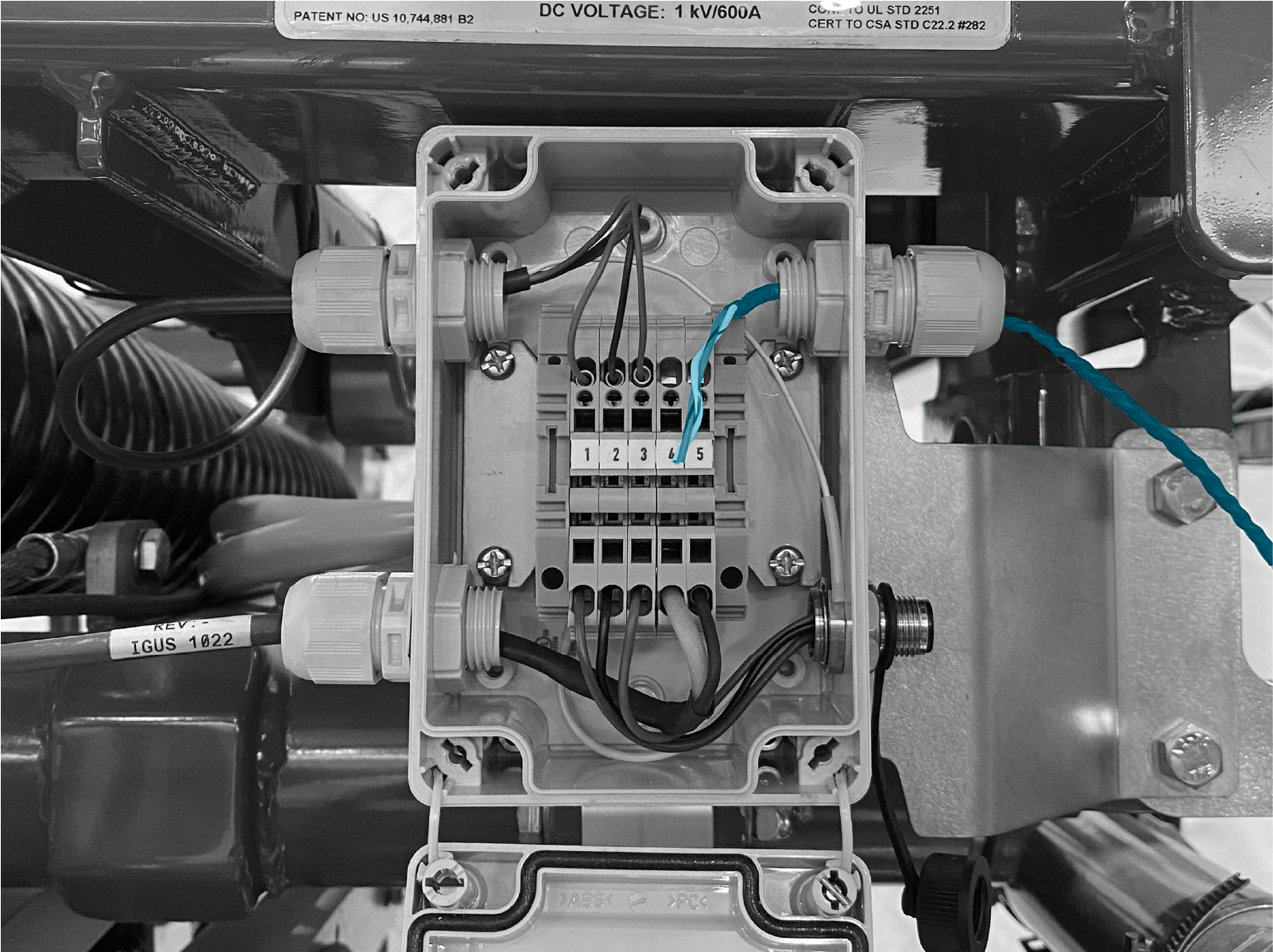
-
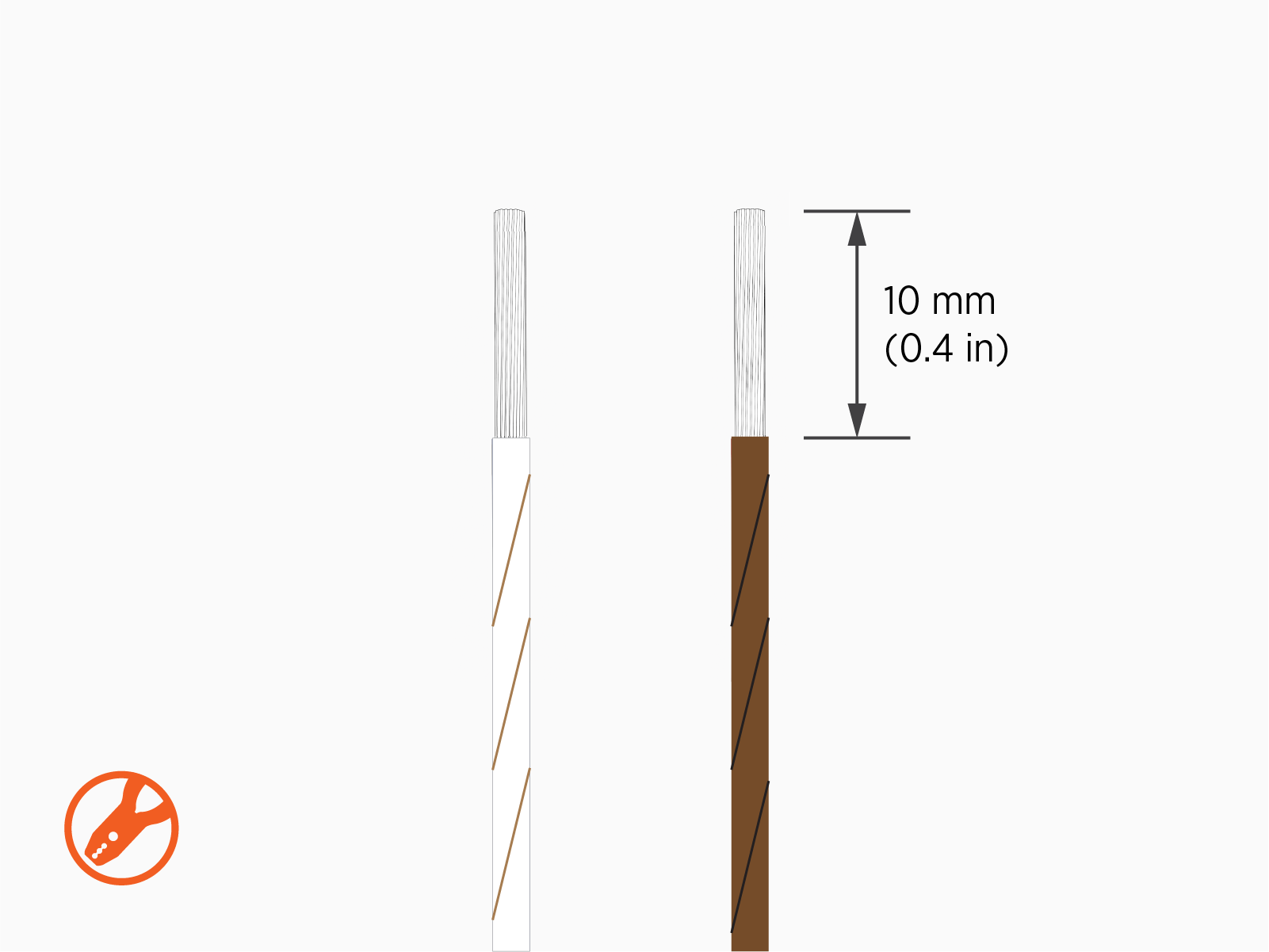
Strip the wire jackets.
-
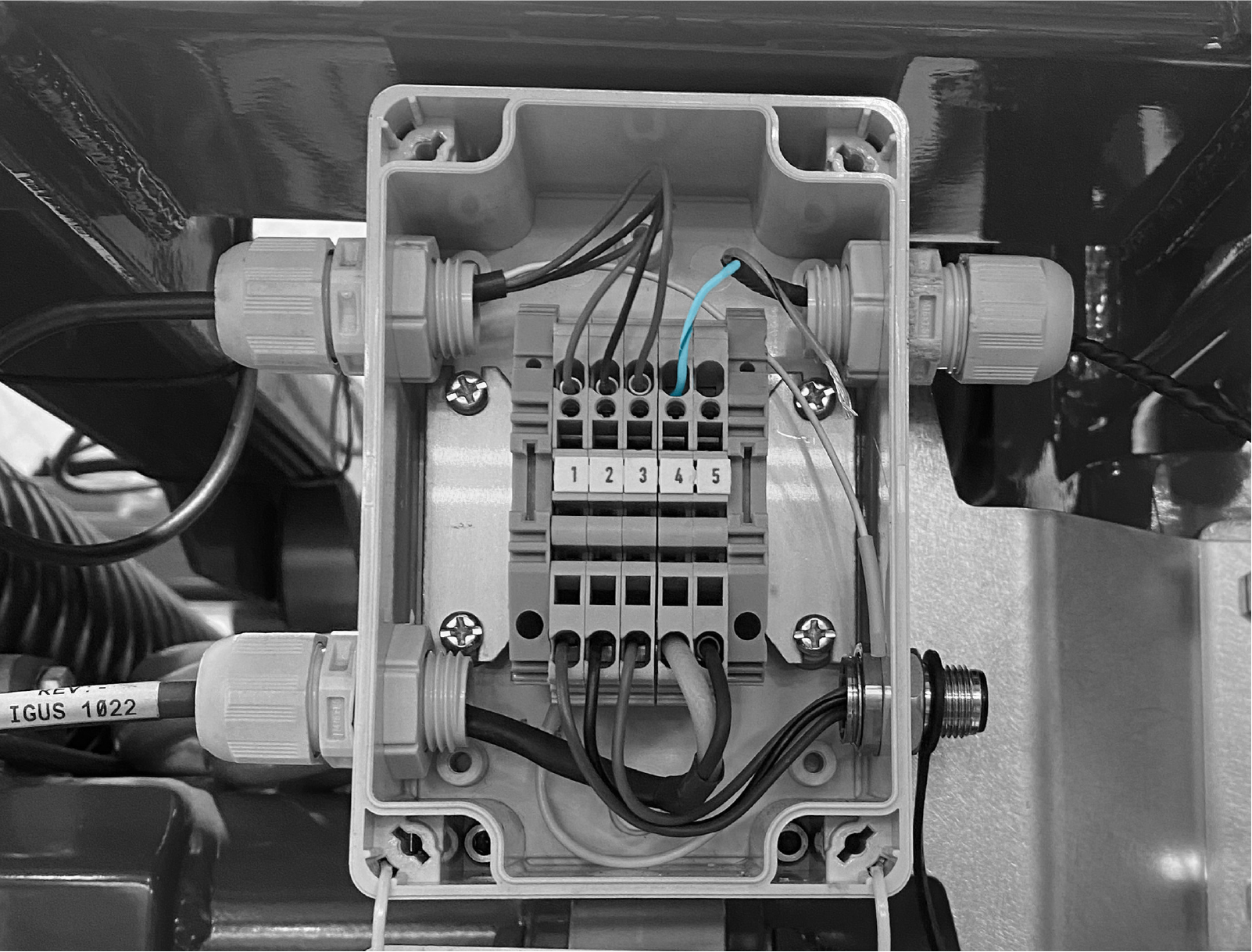
Insert the control pilot wire (white/brown) into terminal 4. Use the provided wire terminal operating tool or a flat head screwdriver to open the terminal port. Push-pull to test the wire is secured.
-
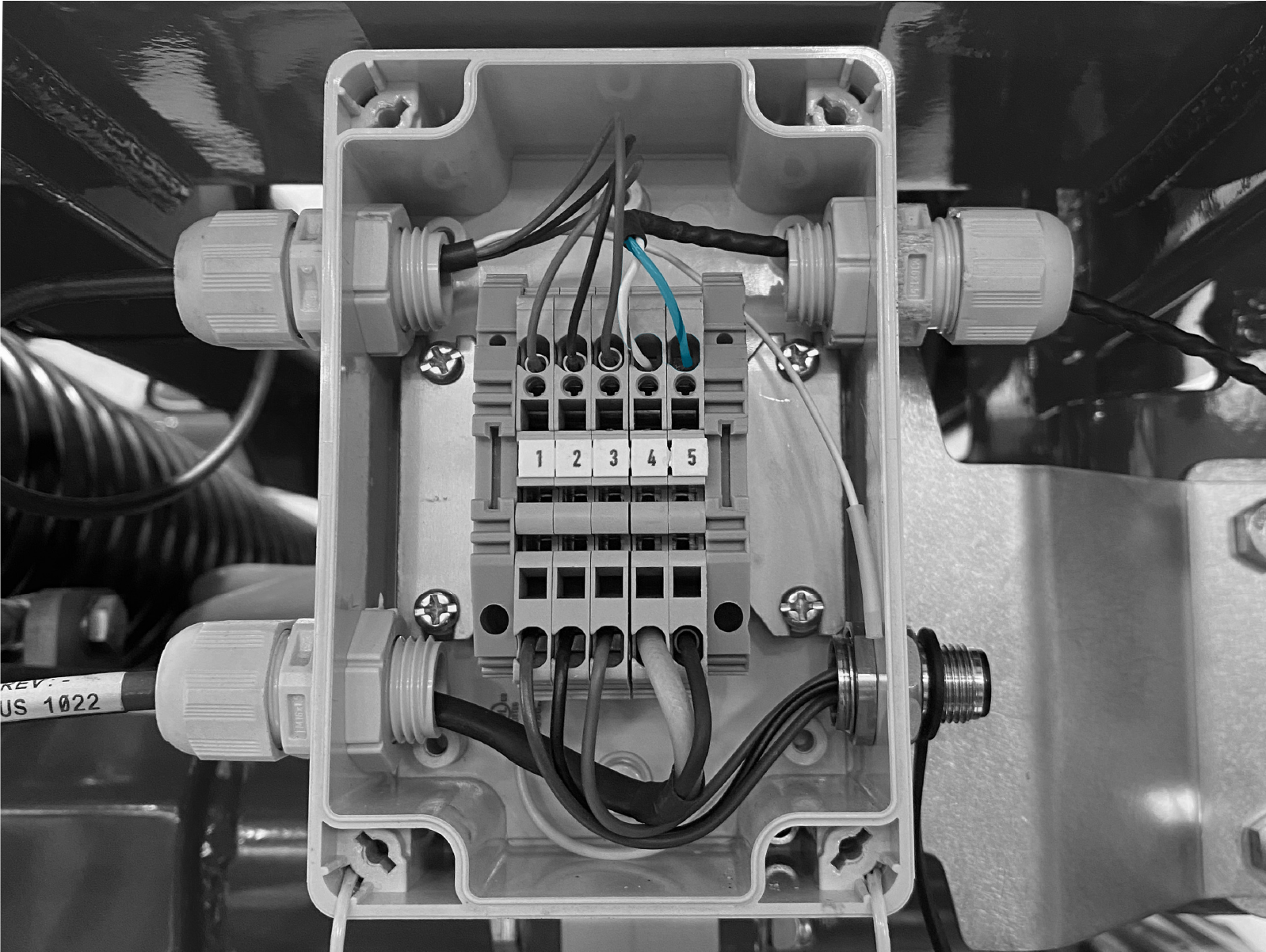
Insert the control pilot shield wire (brown/black) into terminal 5. Use the provided wire terminal operating tool or a flat head screwdriver to open the terminal port. Push-pull to test the wire is secured.
-
Close the box. Quarter turn spring latches (x4).
The latches are operated with a Phillips head screwdriver but they are not screws. Gently push the latch head inwards with the screwdriver and initiate the turn. Part way through the turn, keep the screwdriver in contact with the latch, but discontinue application of inward pressure. Continue turning until the latch pin latches into a locking groove.
Be gentle when operating the latches. The latches can break if the screwdriver applies significant torque.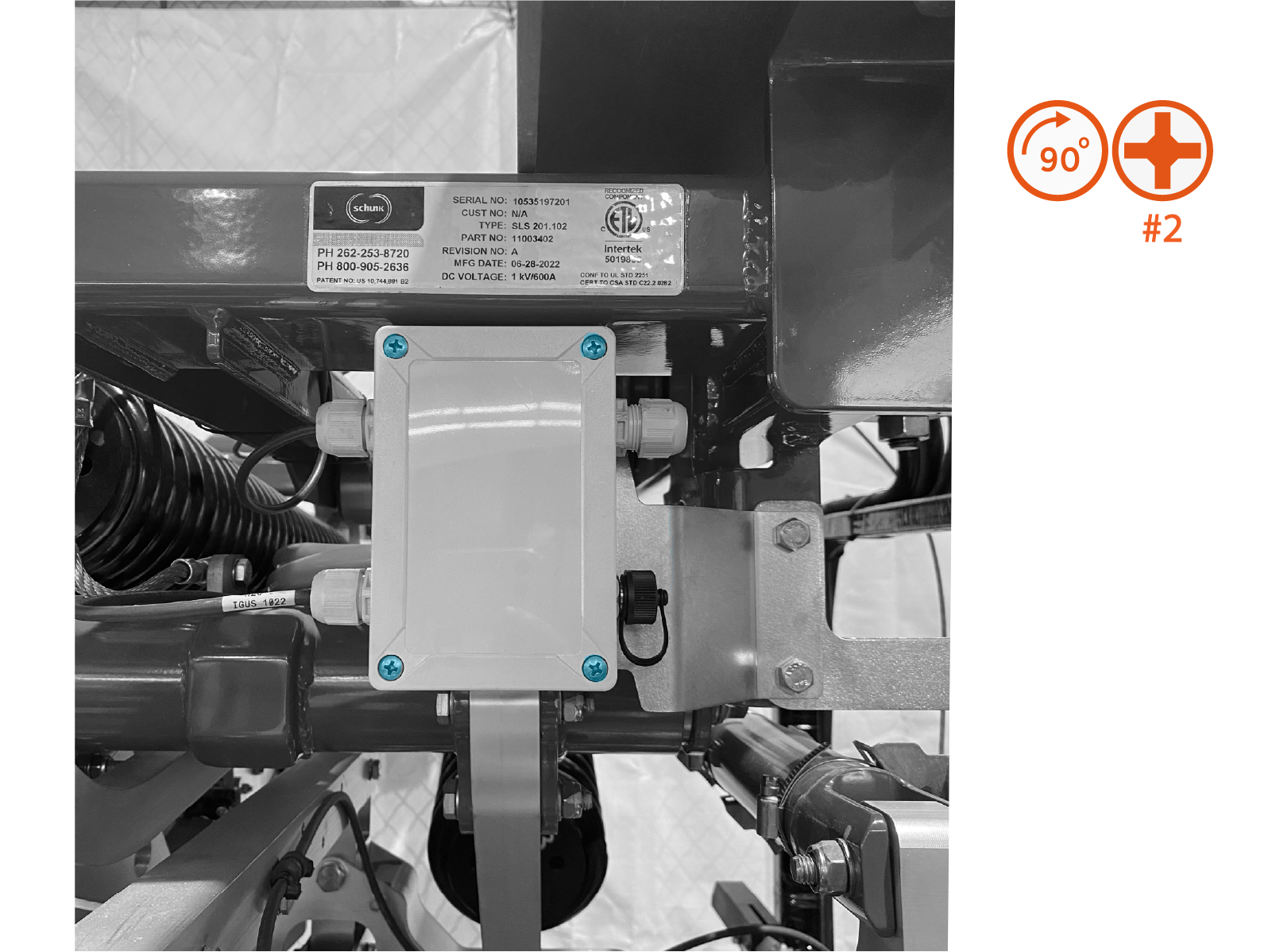
-
Tighten the cable gland. Torque to 1.5 Nm (13.3 in-lb).
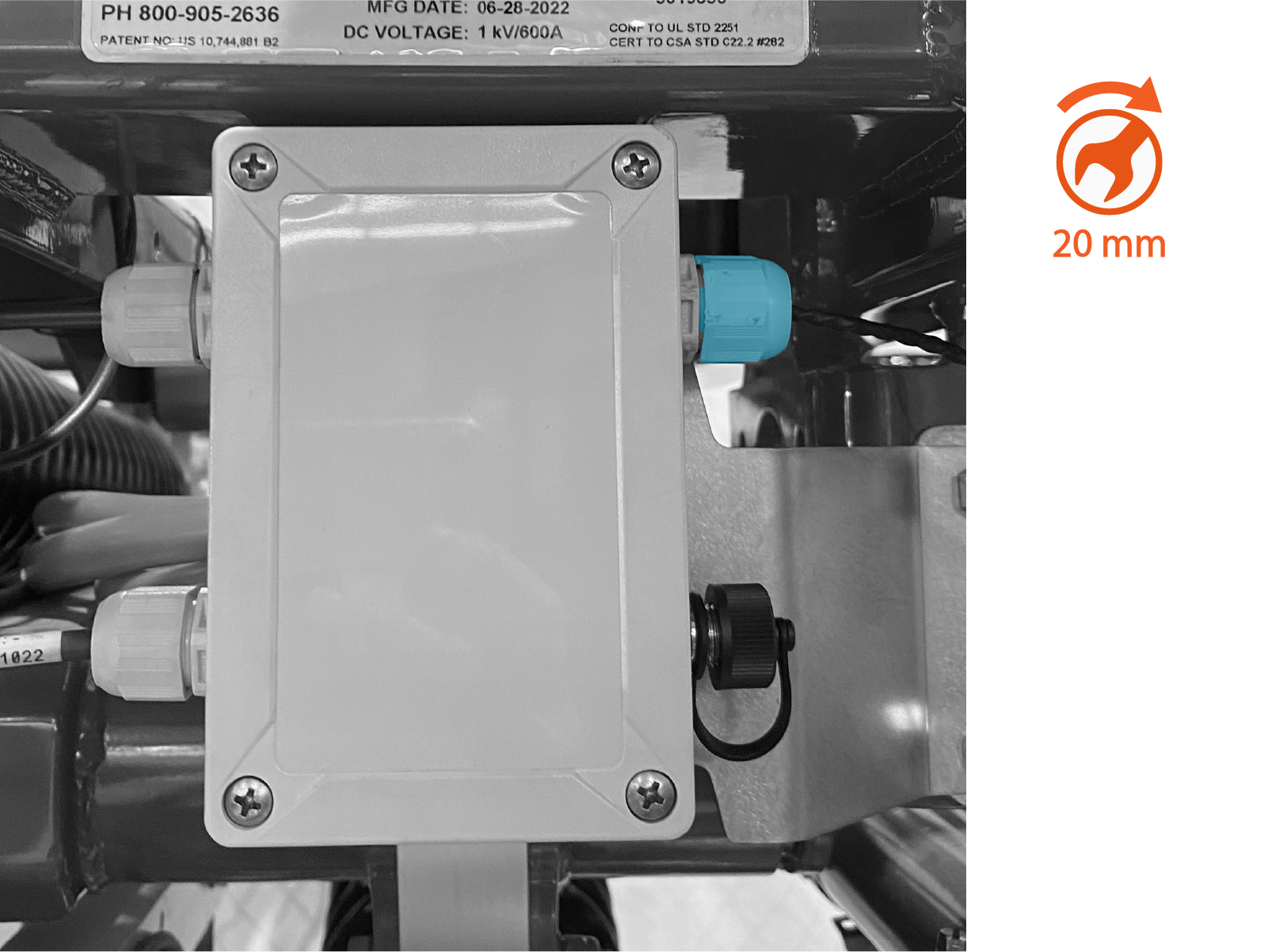
-
Use a zip tie to secure the cable so that it is clear of the pantograph during operation. The cable must be kept away from the pantograph arms and charging rails.
Connect Rest Sensor Cable
-
Route the pantograph rest sensor cable to the pantograph control box. Ensure the cable is kept clear of high voltage exposed conductors and the pantograph arms through their full movement range.
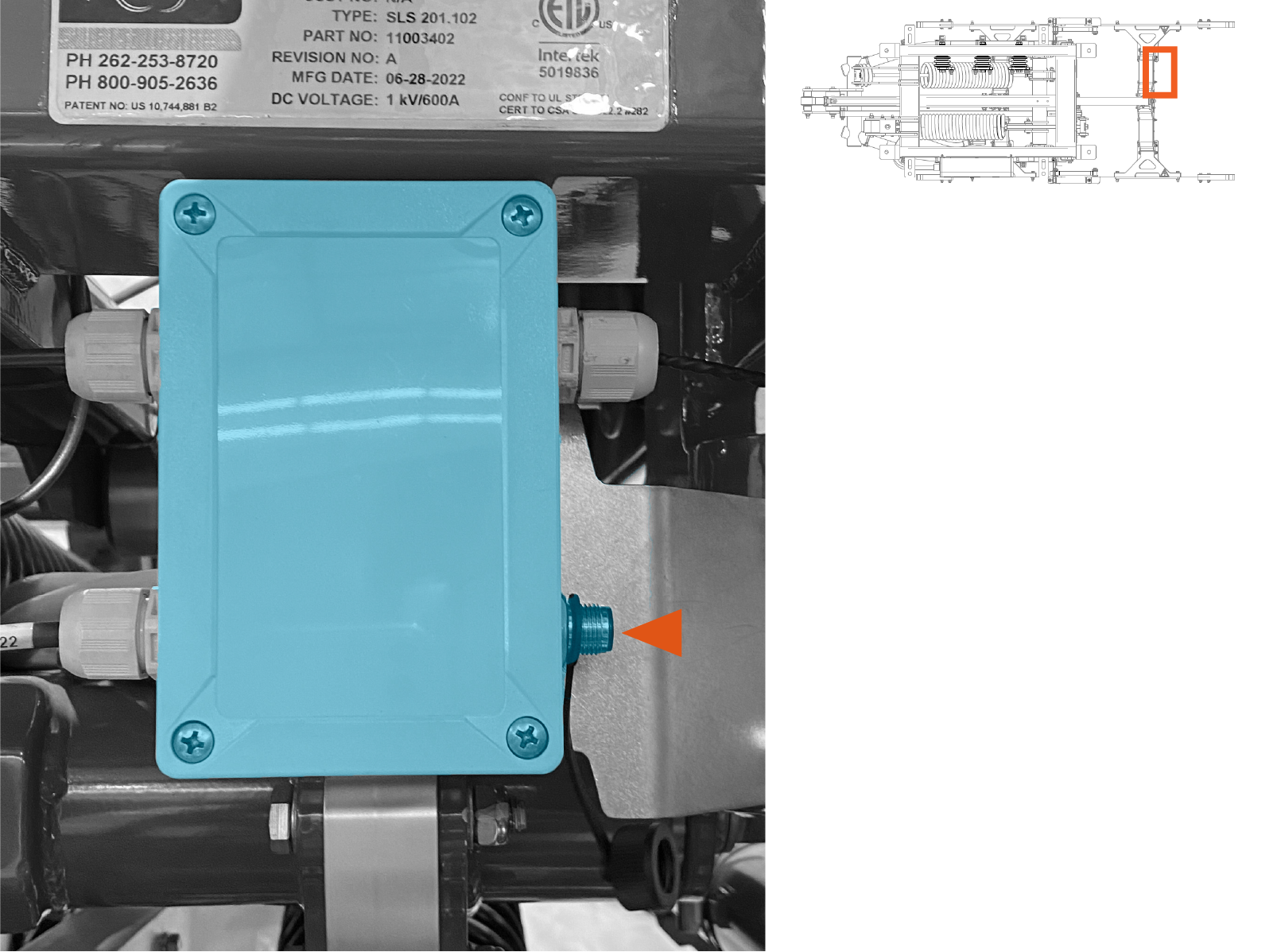
-
Connect the rest sensor cable. Hand-tighten.
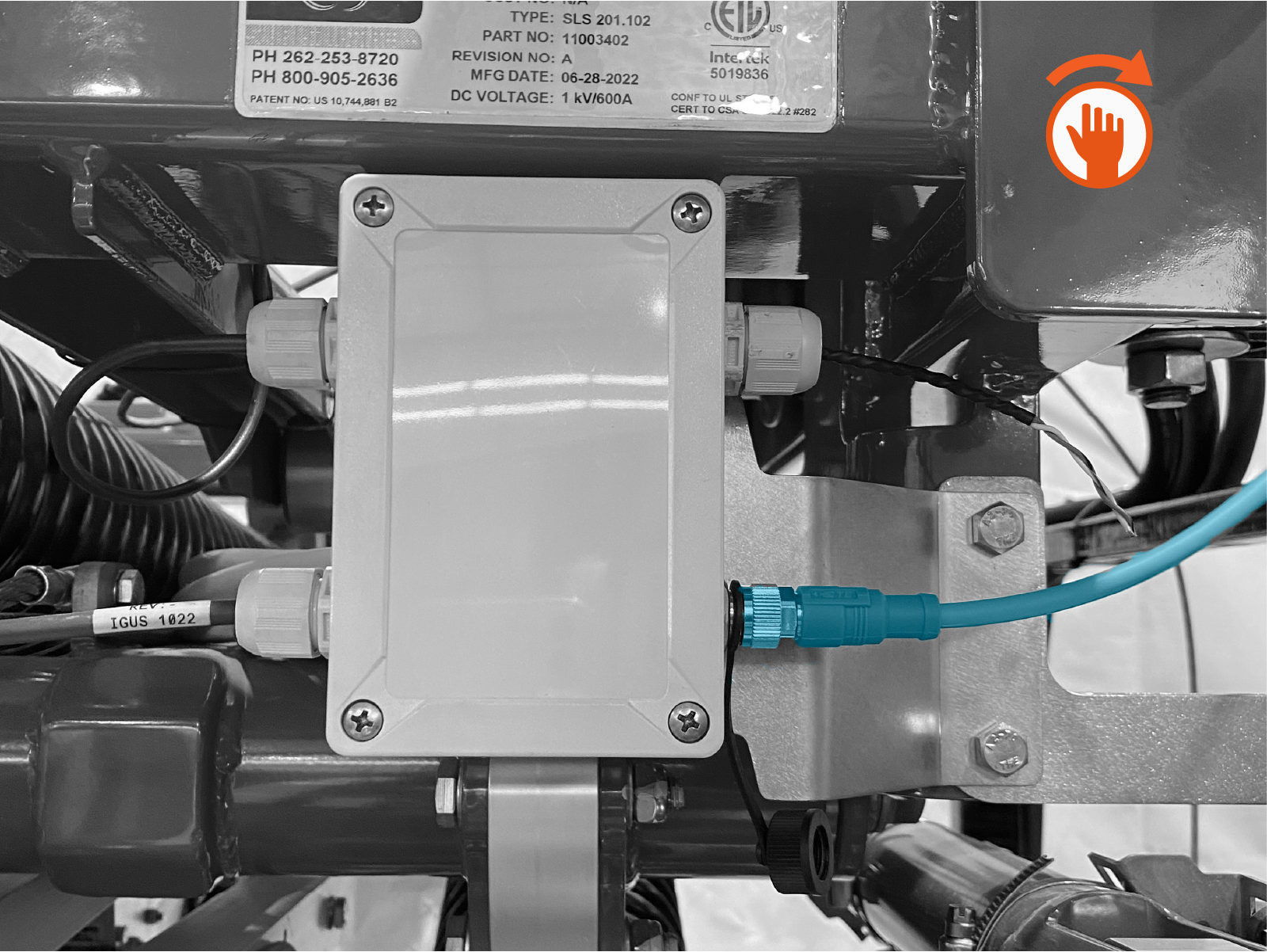
-
Use a zip tie to secure the cable so that it is clear of the pantograph during operation. The cable must be kept away from the pantograph arms and charging rails.